Running the way it should
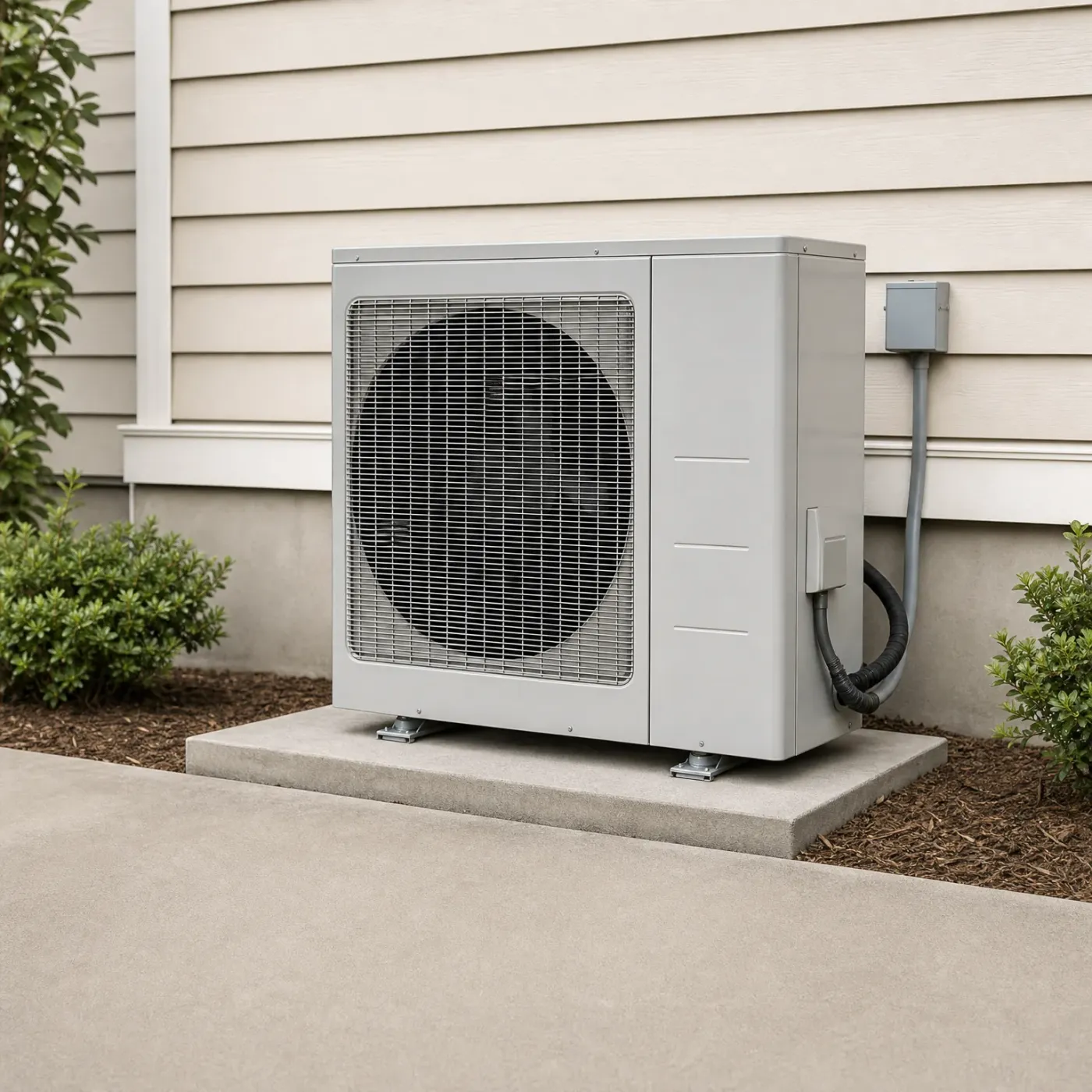
The outdoor unit sits quiet and clear on its pad, fan turning when it needs to, no ice built up past a normal frost. The disconnect box on the siding is dry and closed. Nothing about it asks for your attention.

A heat pump that won't turn on in a Nebraska winter is usually stuck from the cold, not actually broken. Below freezing, a heat pump has to switch into defrost on its own, and if the outdoor coil or the reversing valve isn't cycling that correctly, the whole system can lock out as a safety response rather than run. The thermostat might call for heat and nothing happens, or the outdoor unit sits iced over while the indoor blower stays quiet. It can also be a tripped breaker, a bad capacitor, or a control board that's failed outright. Because most houses here heat with a furnace and keep the heat pump for shoulder-season use, a lockout can go unnoticed for days until the house actually needs it. A contractor can tell within minutes whether it's a defrost fault, an electrical failure, or something in the refrigerant side.
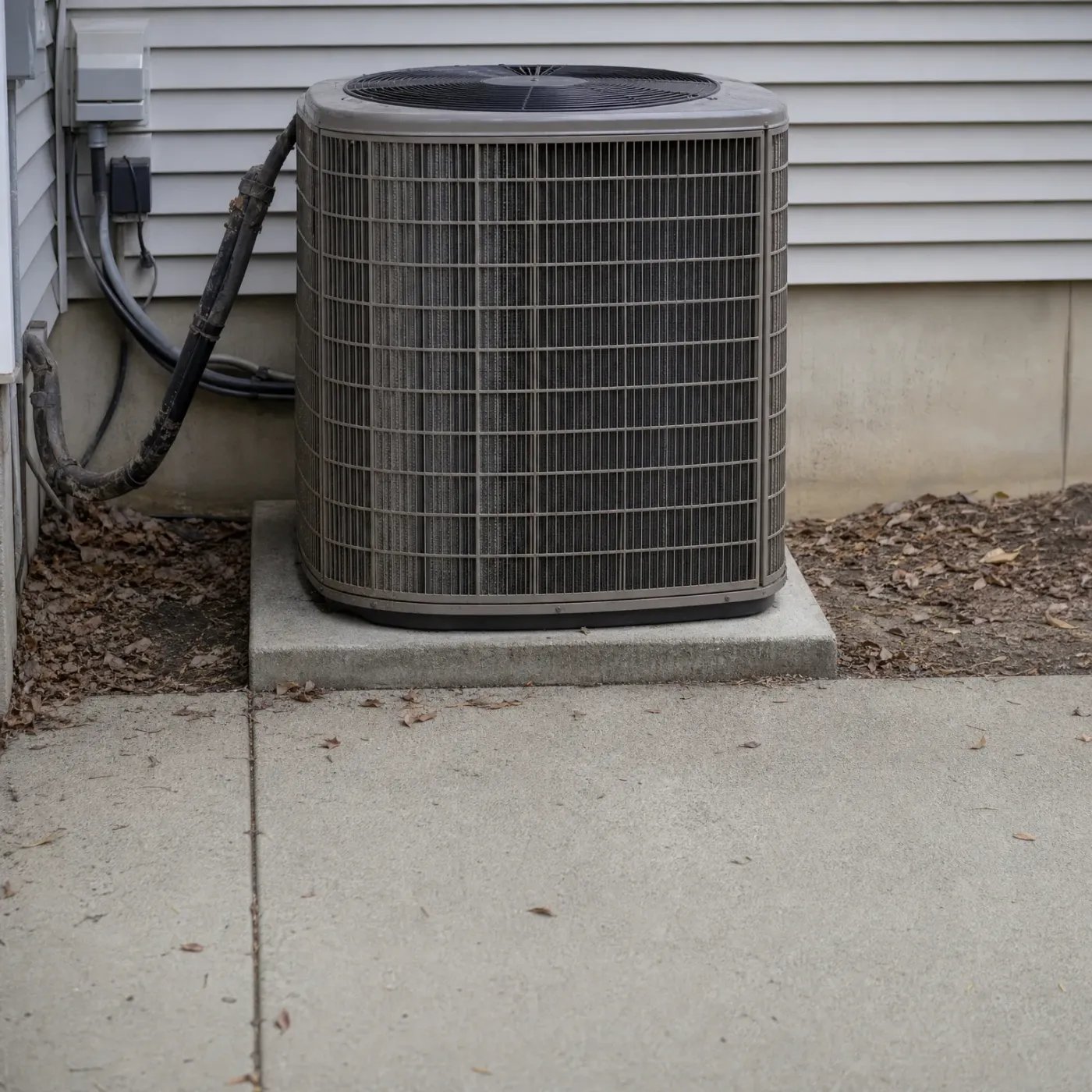
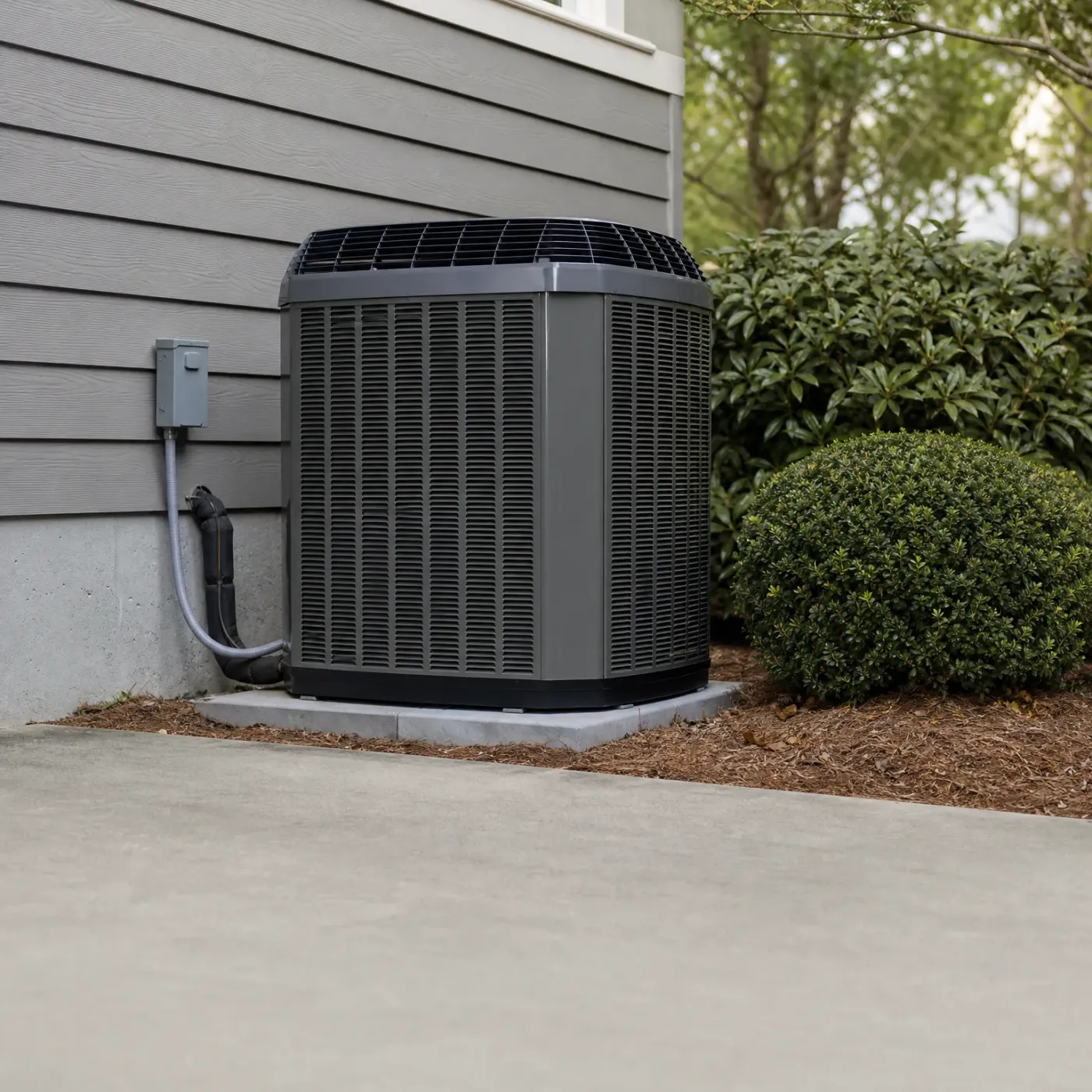
Go outside and look at the outdoor unit. If it's silent and still, you'd expect at least the fan to be moving. If it's caked in ice past what a normal defrost cycle would leave, that's your answer right there. Inside, check the thermostat. If it's calling for heat but nothing's happening, or if the system kicks on for a minute and shuts off again and again, that's short-cycling, and it puts real strain on the compressor every time it happens. Since most homes in Nebraska heat with gas, your furnace may be quietly carrying the load, which is worth checking since it means you might not notice the heat pump is down until your gas bill climbs or the furnace starts running longer than usual.
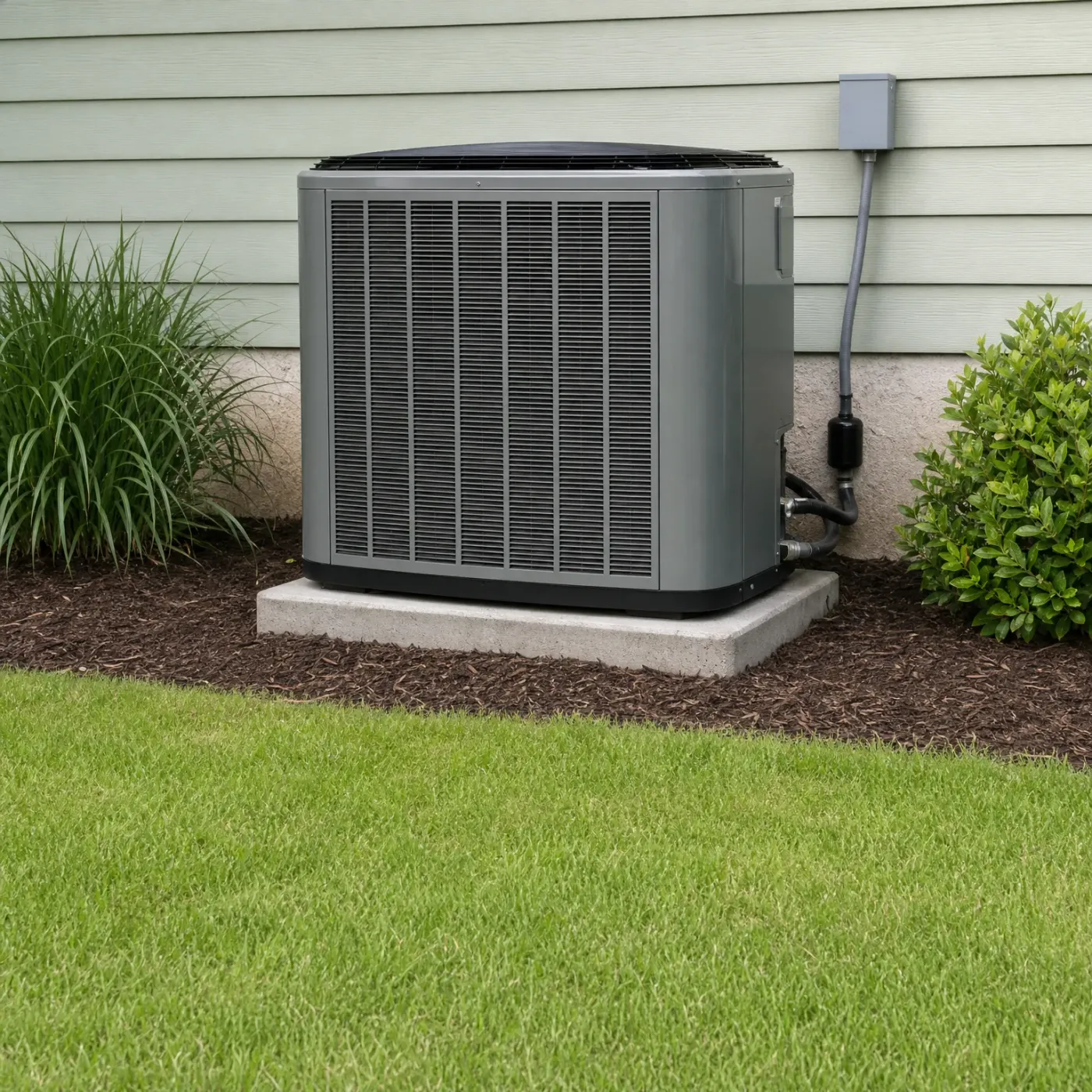
The outdoor unit sits quiet and clear on its pad, fan turning when it needs to, no ice built up past a normal frost. The disconnect box on the siding is dry and closed. Nothing about it asks for your attention.
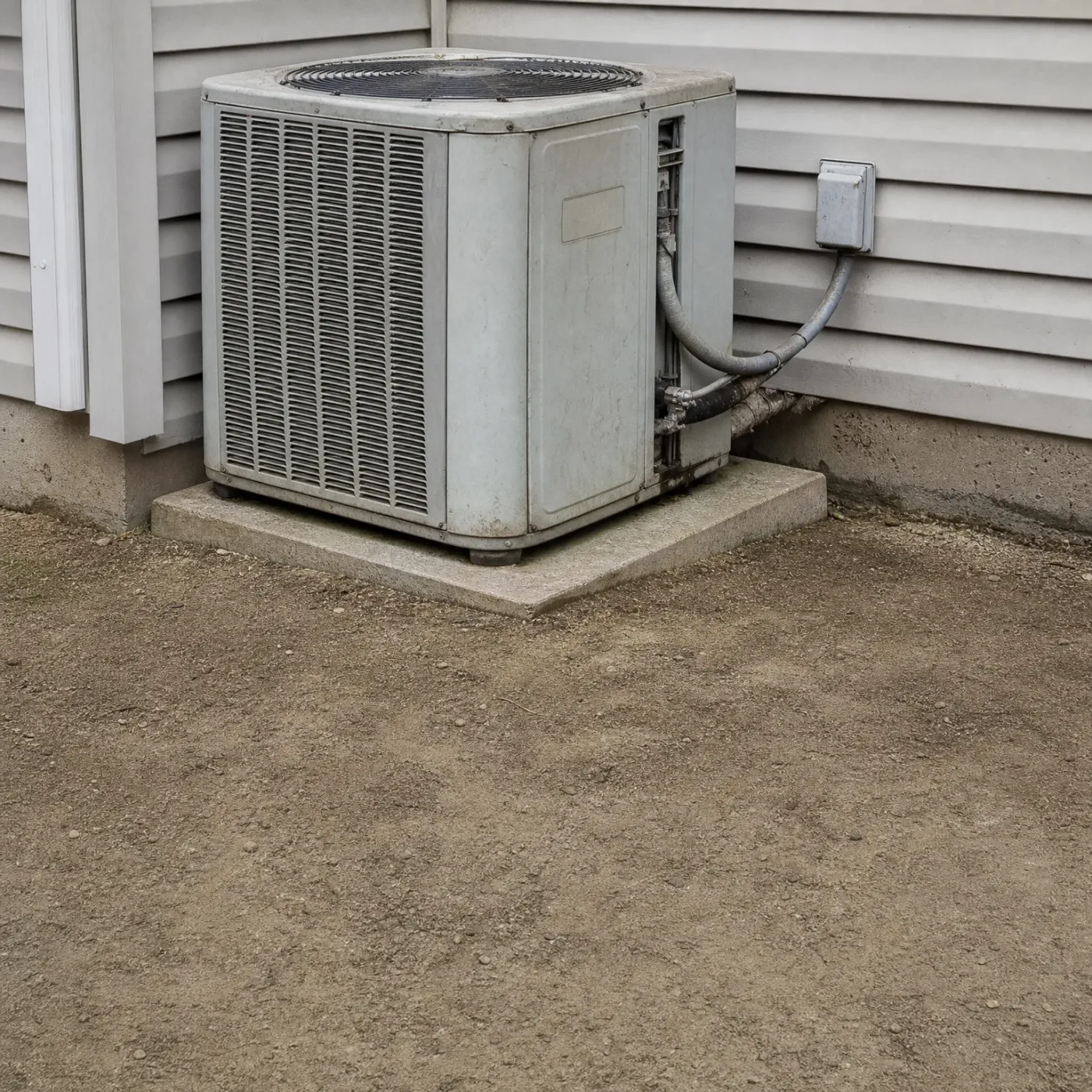
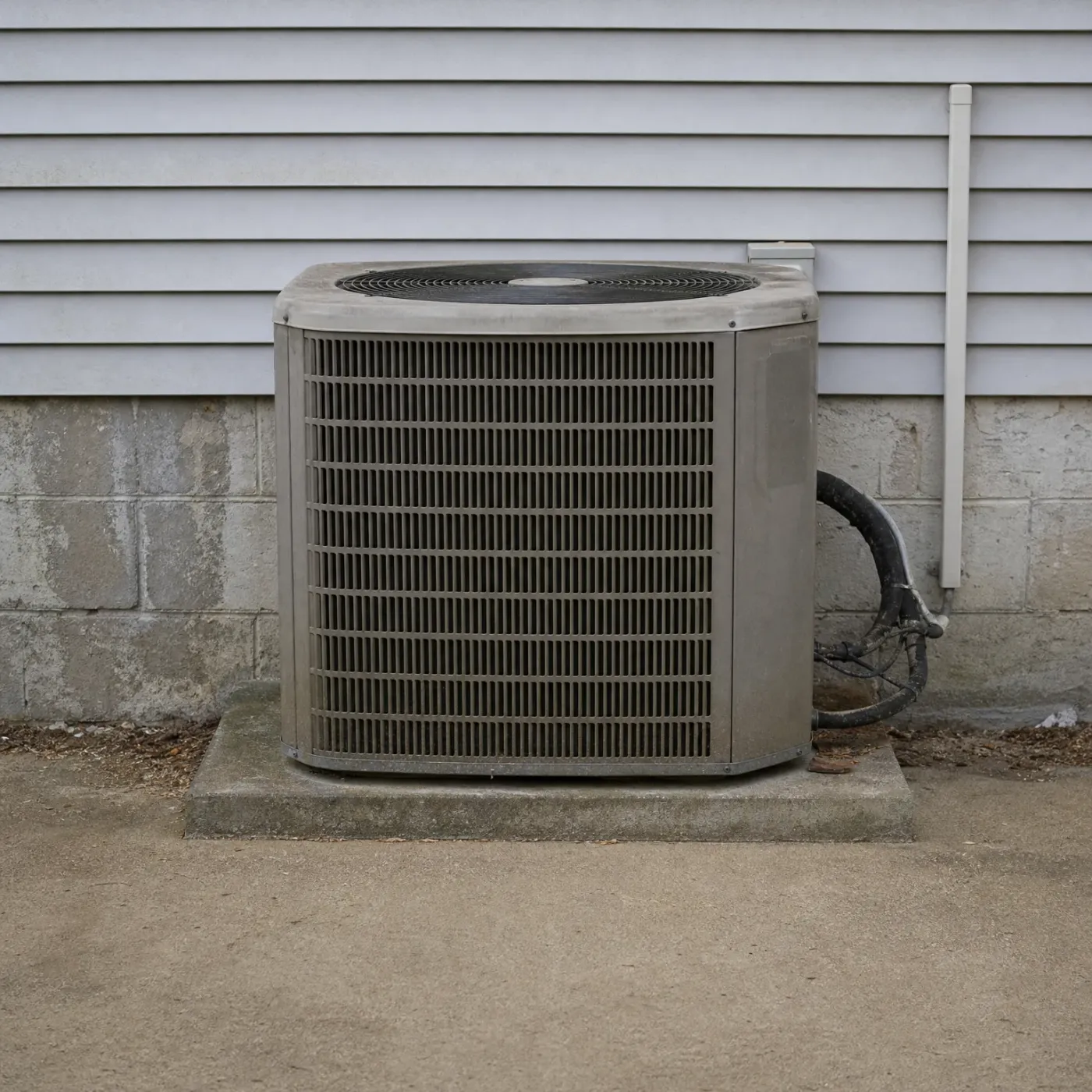
Weathering shows on the cabinet, and the conduit running into the disconnect box is something you'd want checked if you haven't looked at it in a while. An older unit like this one is more likely to stall out on a cold Nebraska morning instead of switching into defrost and starting back up on its own.




One form replaces the calls you'd make to find a heat pump pro.
You're not committing to anything by asking.
A heat pump is really two machines wired to agree with each other, the thermostat and the outdoor unit, and nothing happens outside until the thermostat tells it to. That signal travels on low voltage, and it has to clear the contactor before the compressor or fan will even twitch. If a dead thermostat battery or a lockout code is sitting in between, the outdoor unit never hears from the thermostat at all, and from where you're standing it just looks dead.
Power is a separate question from signal, and it's worth checking both. The outdoor unit and the air handler usually run on their own breakers, so one can trip while the other stays on, which is why the blower might run while the compressor outside stays silent. There's also the disconnect box mounted on the siding near the outdoor unit. Inside it is a pull block, and that block can work loose or get left part-way seated, which cuts power to the unit without tripping anything you'd notice from inside the house.
A system that's been cycling on and off too fast can also lock itself out on purpose. The compressor has an overload built in, and after enough short cycles it'll refuse to restart for a few minutes to protect itself. That's not a failure so much as the unit doing exactly what it's supposed to do. Knowing which of these you're looking at, a signal problem, a power problem, or a safety trip, is most of the diagnosis before anyone touches a tool.
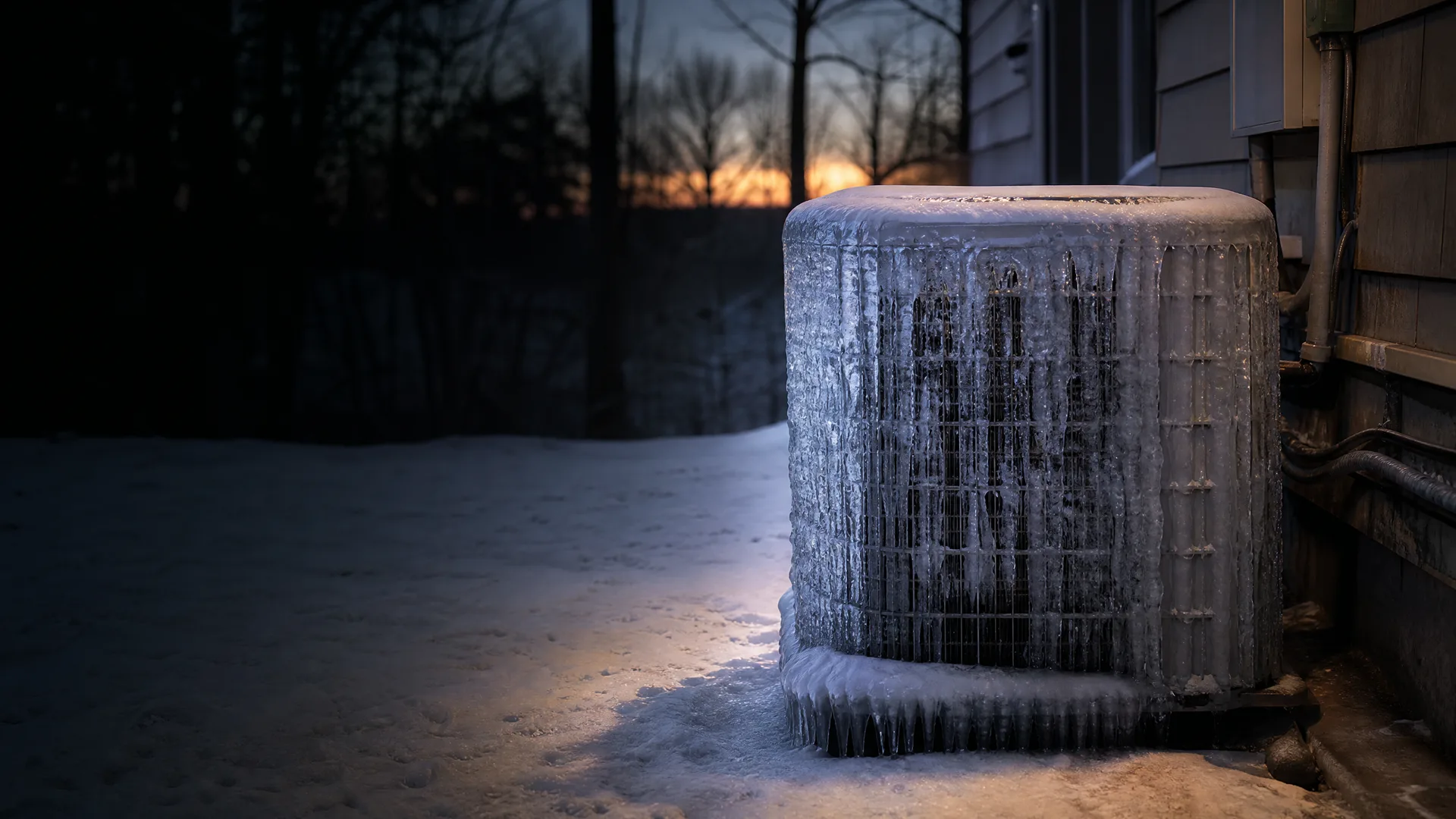
You go out for the paper a little after six, before the sun's up, and the cold catches you first. The outdoor unit sits against the side of the house wearing a thick shell of ice, over the coils, over the fan grille, down the sides toward the base. No hum, no fan turning. Inside, the air coming out of the vents has gone cool, and the thermostat still reads a few degrees under where you set it. You crouch down to look closer at the ice and your breath hangs there in the porch light. Somewhere behind you the furnace kicks on, but the heat pump outside stays exactly as it is, locked under the ice, not moving at all.
At 12.05 cents per kilowatt-hour, running your heat pump isn't what's driving your bill. A repair doesn't need to wait on the cost of power. What's worth checking is whether the unit should be running at all right now.
EIA-861 2025 statewide residential average
Ice on the outdoor unit, a lockout code on the thermostat, a tripped breaker, a dry contactor that never got the signal. Whatever it is, it has a cause, and the cause tells you what comes next. A heat pump sitting dead in a Nebraska cold snap isn't a mystery so much as a system waiting on one part to do its job.
You don't have to figure out which part that is on your own, or spend an evening calling around to find someone who works on heat pumps instead of just furnaces. Once you've got a sense of what's going on with your unit, the next step is getting matched with a contractor who handles this equipment and hearing from them directly, instead of explaining the same problem over and over to whoever picks up the phone.



A heat pump that won't start has a reason behind it, and most of them are fixable once someone's looked at the actual unit outside your house. What you don't need is the hassle of finding who that someone is. Get matched with a contractor who works on heat pumps in Nebraska, and let them call you instead of you calling around, repeating the same description of the problem, and weighing quotes against each other. With gas backup covering the house and power this cheap, there's no urgency driving up the cost of waiting. Get it looked at when it works for you.
Describe what your heat pump is doing once, in one form.
It costs nothing to send, and you don't have to hire anyone.
