Profile view of a bearded man wearing a dark green baseball cap and a dark gray T-shirt against a plain light background.

Why your heat pump bill jumps in a Nebraska winter

Step 1 of 3: Equipment

Why did my heat pump bill jump this winter in Nebraska?

You weren't running the heat pump any harder than usual, or so it seemed, and then the bill came in higher than you expected. In Nebraska, cold snaps push the outdoor temperature low enough that a heat pump has to work differently than it does in fall or spring, and that change shows up on the meter even when the thermostat setting never moved.

Your heat pump switches on backup heat strips when it's cold enough outside

A heat pump moves heat from the outside air into your house. That works fine down to a point, but once outdoor temperatures drop into the teens or lower, the unit can't pull enough heat from the air fast enough to keep up. When that happens, electric resistance strips kick in to cover the gap, and those strips use far more electricity than the compressor does on its own. Most homes in Nebraska heat with gas, so a heat pump running hard through a stretch of real cold is working against a climate it wasn't built around. If your bill jumped during a cold week, the strips likely ran more than usual. A thermostat set too high too fast, or a system short on refrigerant, makes the strips kick in sooner and stay on longer than they should.

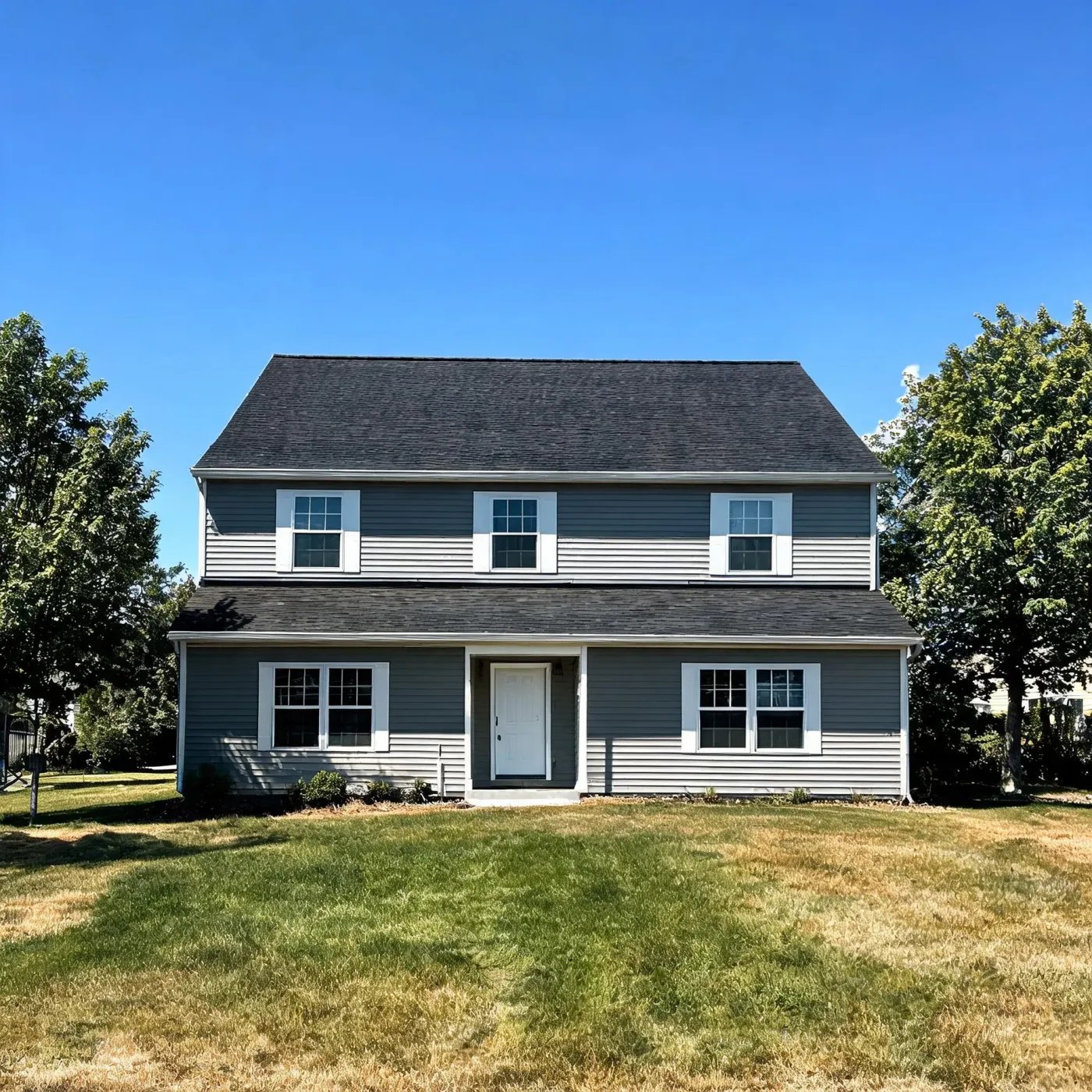
A two-story house with gray and light gray siding, white-trimmed windows and a white front door, flanked by deciduous trees, with a partly browned lawn in front under a clear blue sky.

Summer here runs heavy. The average dew point across June, July and August sits at 61°F, muggy enough that your heat pump spends those months pulling moisture out of the air as much as cooling it. That extra work shows up as longer run times, and a system that runs long all summer carries that wear into winter. A weak capacitor or a compressor under strain in July is a system more likely to struggle when it has to switch over and produce heat in January. The jump in your winter bill often traces back to how hard the unit worked months earlier, not just the cold snap itself.

NASA POWER T2MDEW county cells weighted by homes

Why It's Running Hard, Or Get It Checked

Heat pump keeps running

  • Below a certain outdoor temperature, the heat pump loses its edge over the strip heat or furnace it's paired with, and it runs longer to make the same warmth.
  • Frost builds on the outdoor coil on cold, damp days, and the unit has to pause and run a defrost cycle, which draws extra power each time it kicks in.
  • A dirty filter or a coil that needs cleaning makes the system work harder to move the same air, so you pay more for the same heat.
  • A thermostat left on a wide swing, or a setback programmed too deep, makes the system catch up hard rather than hold steady.
  • If the refrigerant charge is low or a sensor is drifting, the heat pump can run most of the day without you noticing anything is wrong until the bill shows it.

Call someone out now

  • A contractor who works heat pumps through a Nebraska winter knows which parts give out first in this kind of cold, and checks those first.
  • A quick look can tell you whether the unit is actually struggling or whether this is just what a hard cold snap costs to heat through.
  • Catching a low charge or a failing sensor now keeps it from turning into a compressor replacement later in the season.
  • Once you send the request, you're matched with one local, licensed contractor, not a string of companies competing for the job.
  • That contractor already knows this equipment and this weather, so the visit is about fixing what's wrong, not explaining Nebraska winters to someone new to them.
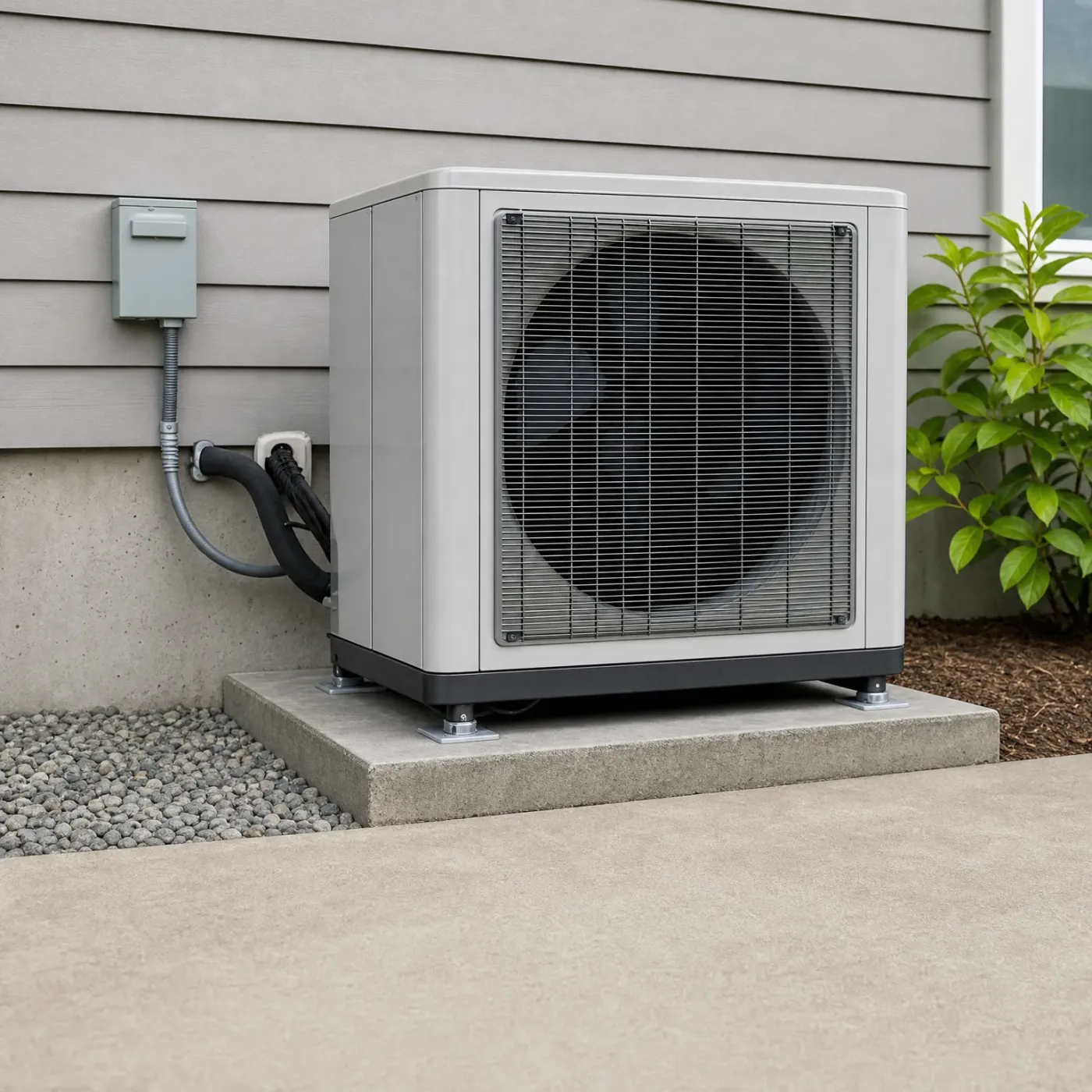
A light gray outdoor heat pump unit mounted on a concrete pad beside a house with horizontal lap siding, with refrigerant lines and conduit running to a wall-mounted electrical box, gravel and a leafy shrub nearby.

Running the way it should

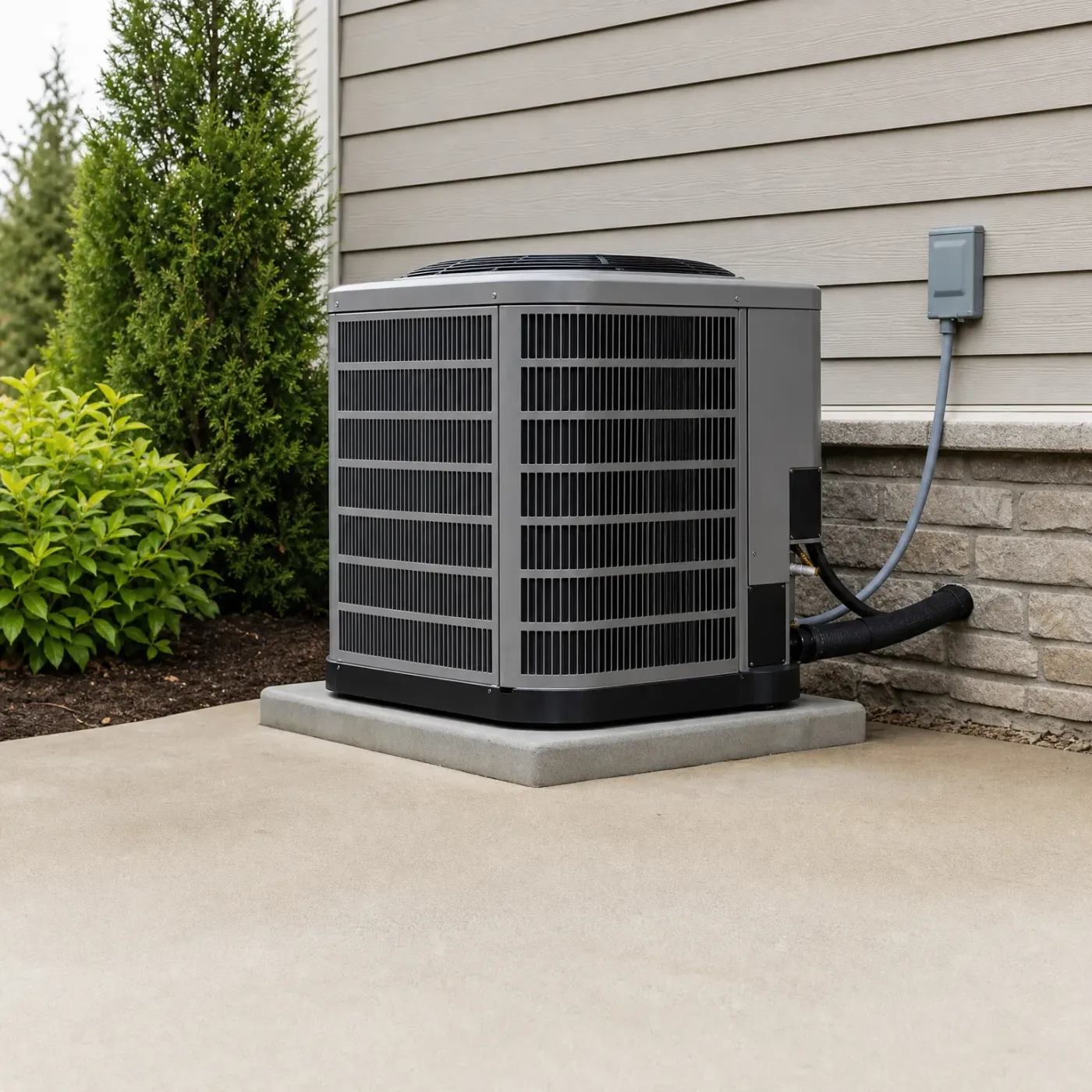
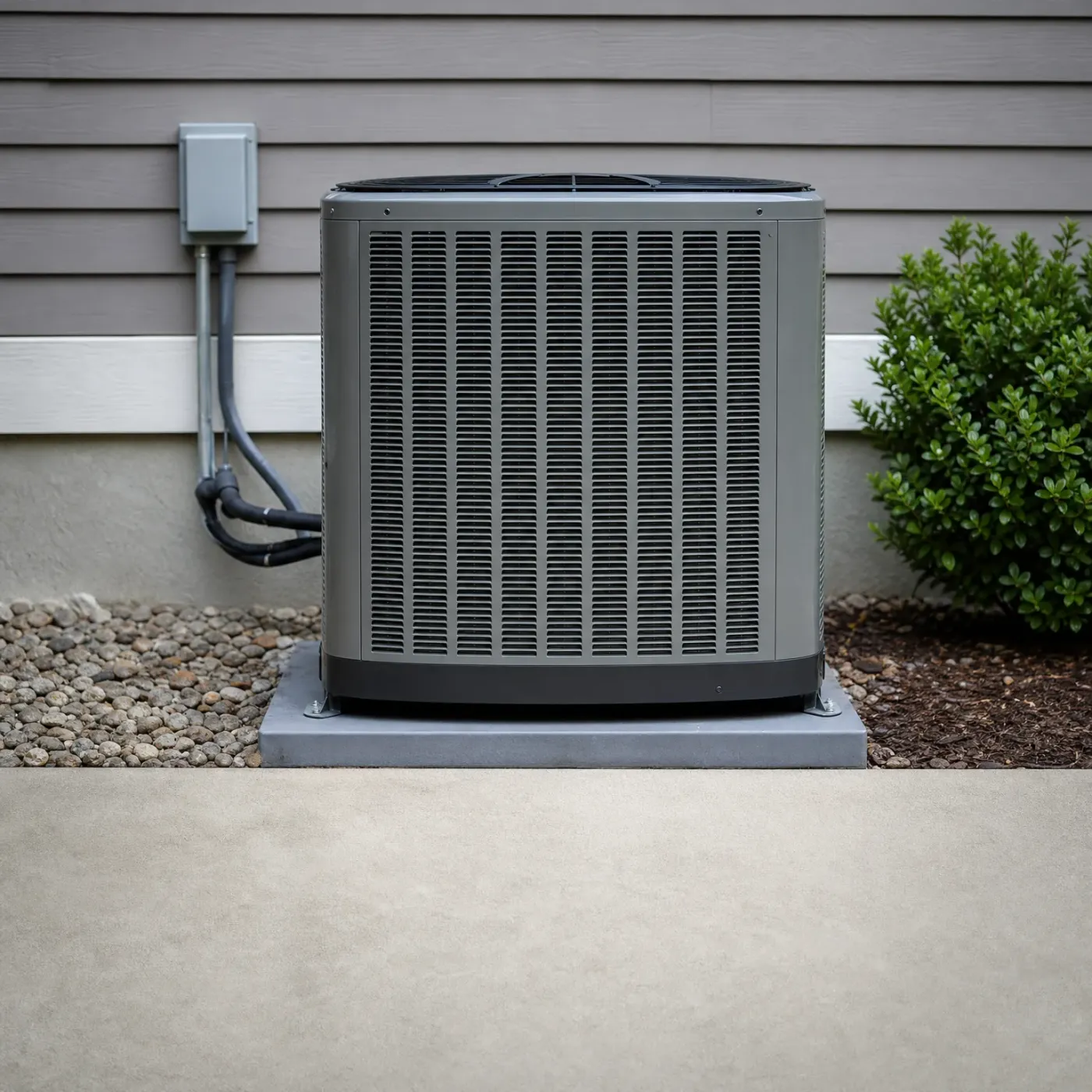
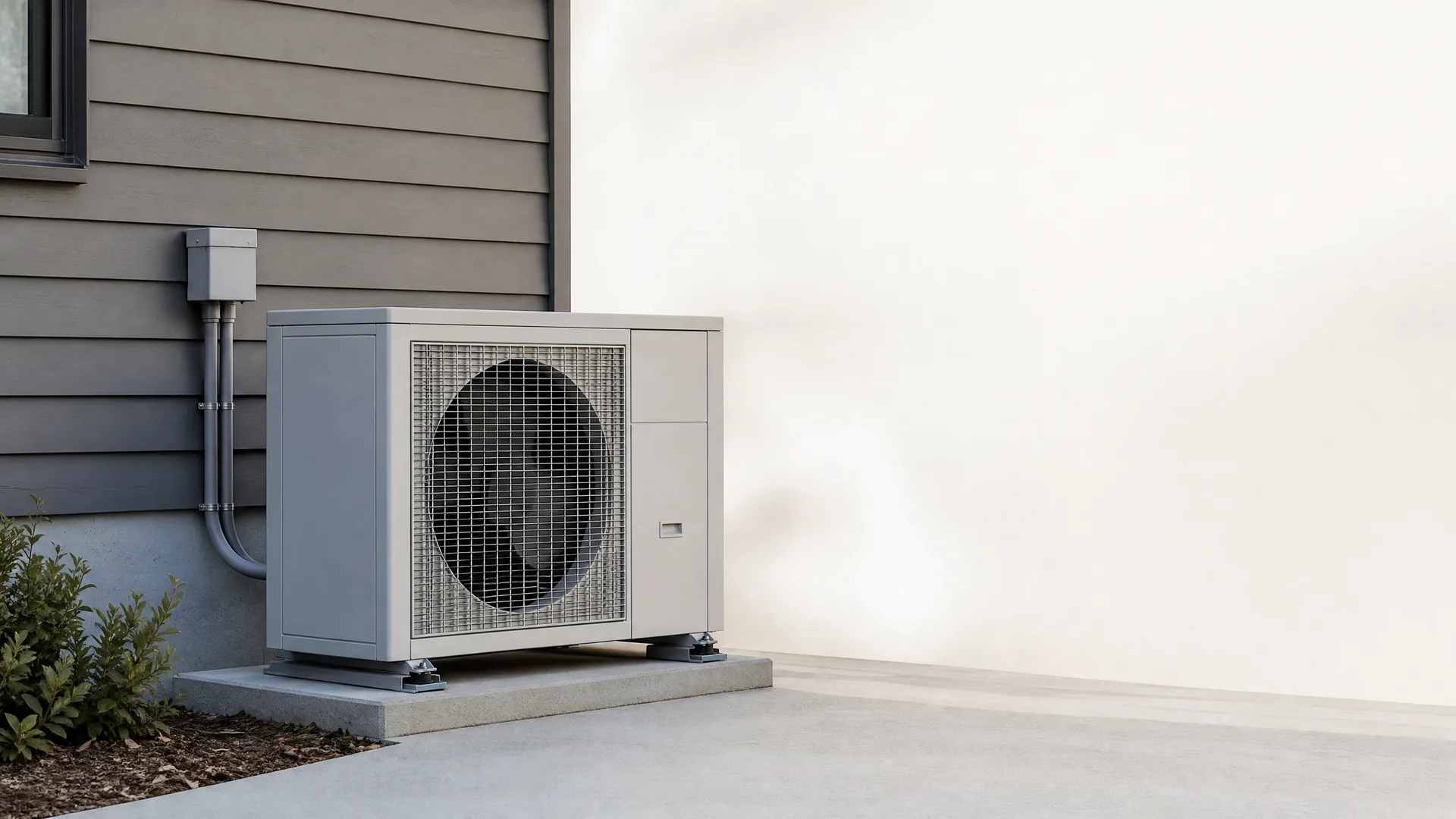
The outdoor unit sits clean on its pad, coil clear, lines and wiring running straight to the disconnect box. Air moves through it without a fight. On a cold morning it cycles on, does its work, and shuts off. Nothing in its path is blocking the airflow it needs.

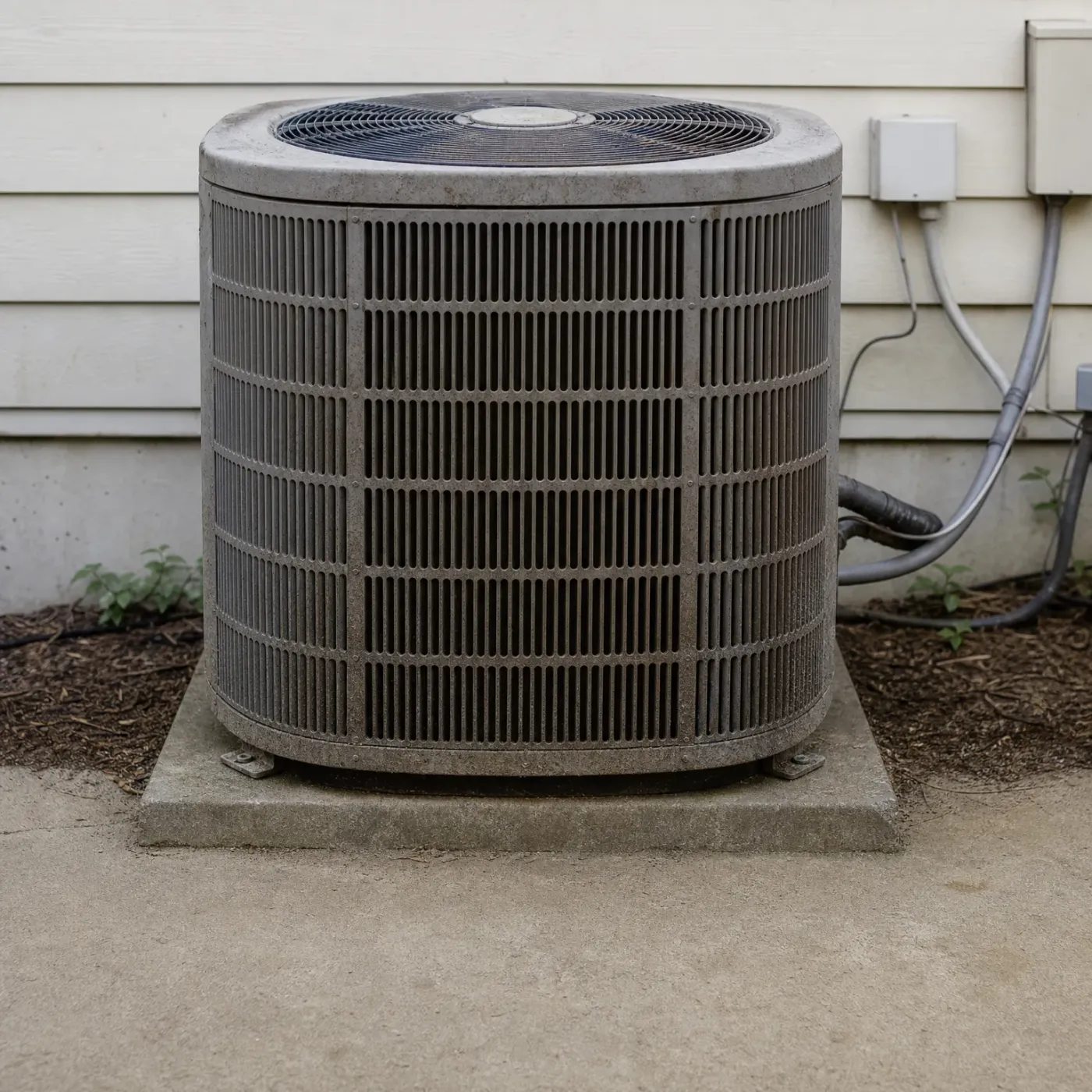
An outdoor air conditioner condenser unit on a concrete pad beside a house with horizontal siding, with conduit, cables and an electrical box on the wall and mulch beds at either side.

Working harder than it should

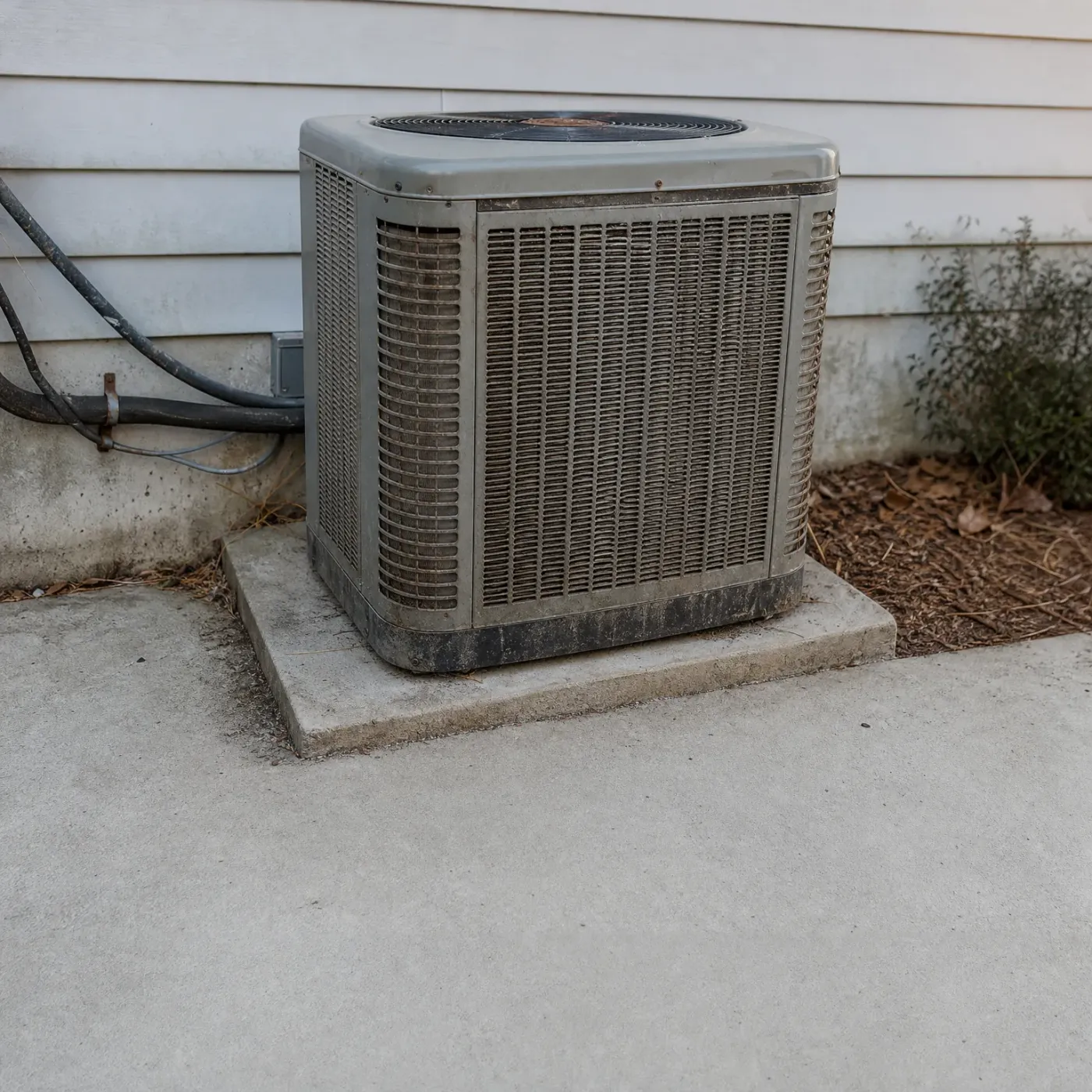
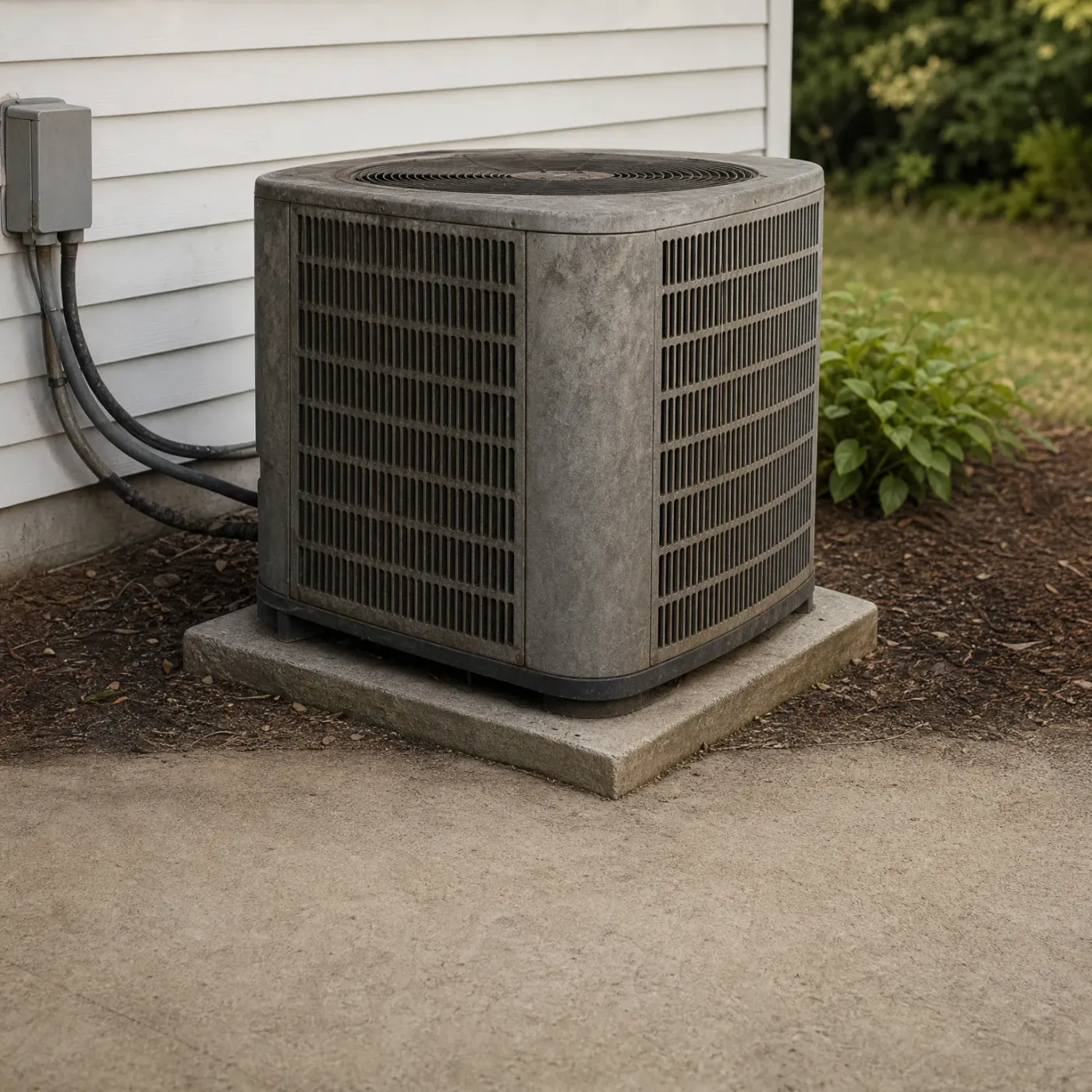
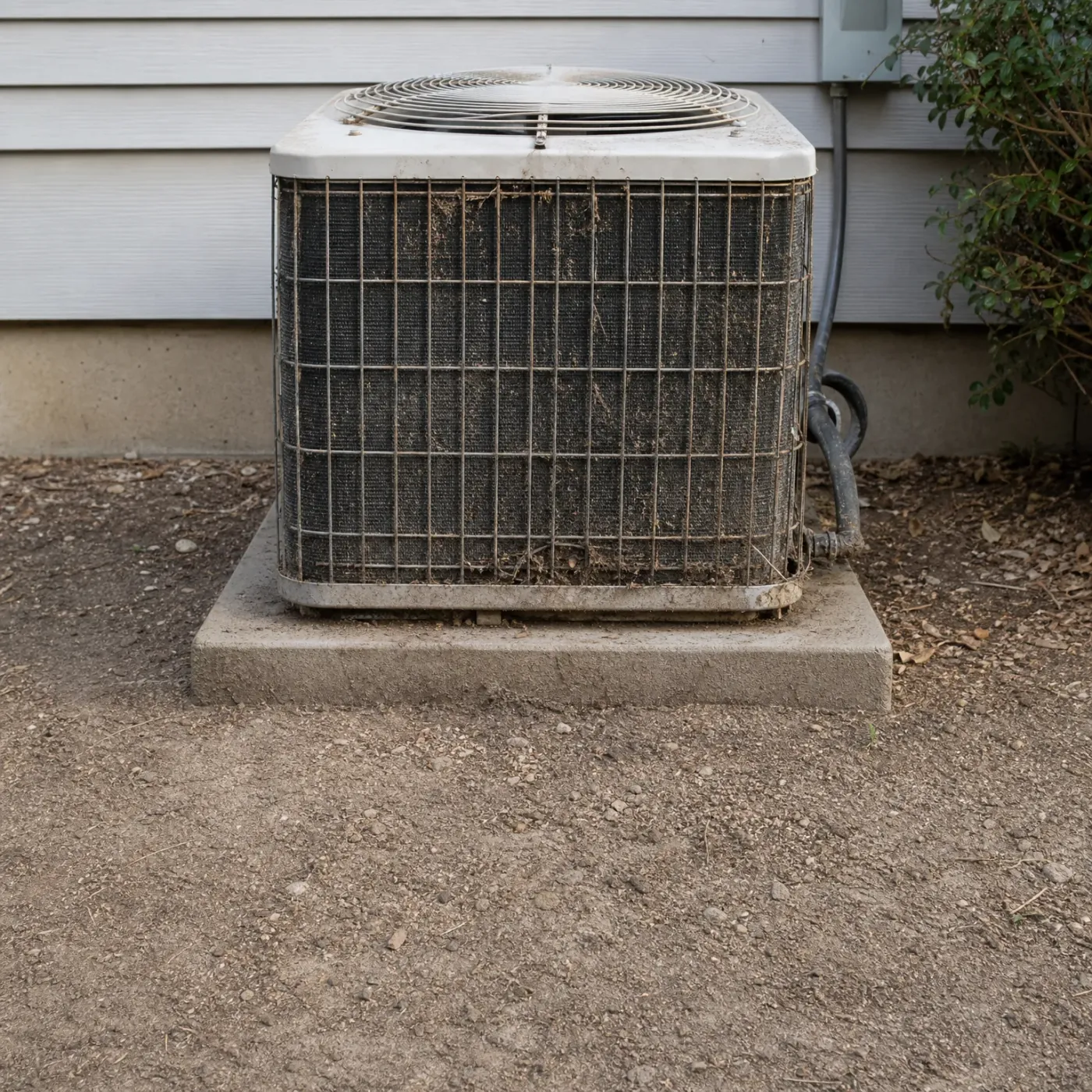
Dust and grime cover the cabinet, and a coil caked like that can't shed heat the way it was built to. The unit draws more power to pull the same warmth through it. If yours looks like this, that buildup is likely part of why this winter's bill ran higher.

A smiling man in a gray long-sleeved shirt stands in a kitchen looking to the side, with open shelves of dishes, a white mug on the counter, a potted plant, and a view through a doorway into a living room.
A smiling bearded man in a green sweater sits at a white marble kitchen island with a mug, potted plant and bowl of fruit, in a bright white interior with open shelving and an arched doorway.
A smiling man with dark curly hair and a beard, wearing a dark green knit sweater, stands at a white marble kitchen counter with a dark blue mug, with open shelving, pendant lights and a houseplant behind him.
A smiling man in a green ribbed sweater stands behind a wooden table holding a ceramic mug of coffee in a kitchen with white subway tile, shelves of potted plants, and a bowl of fruit.
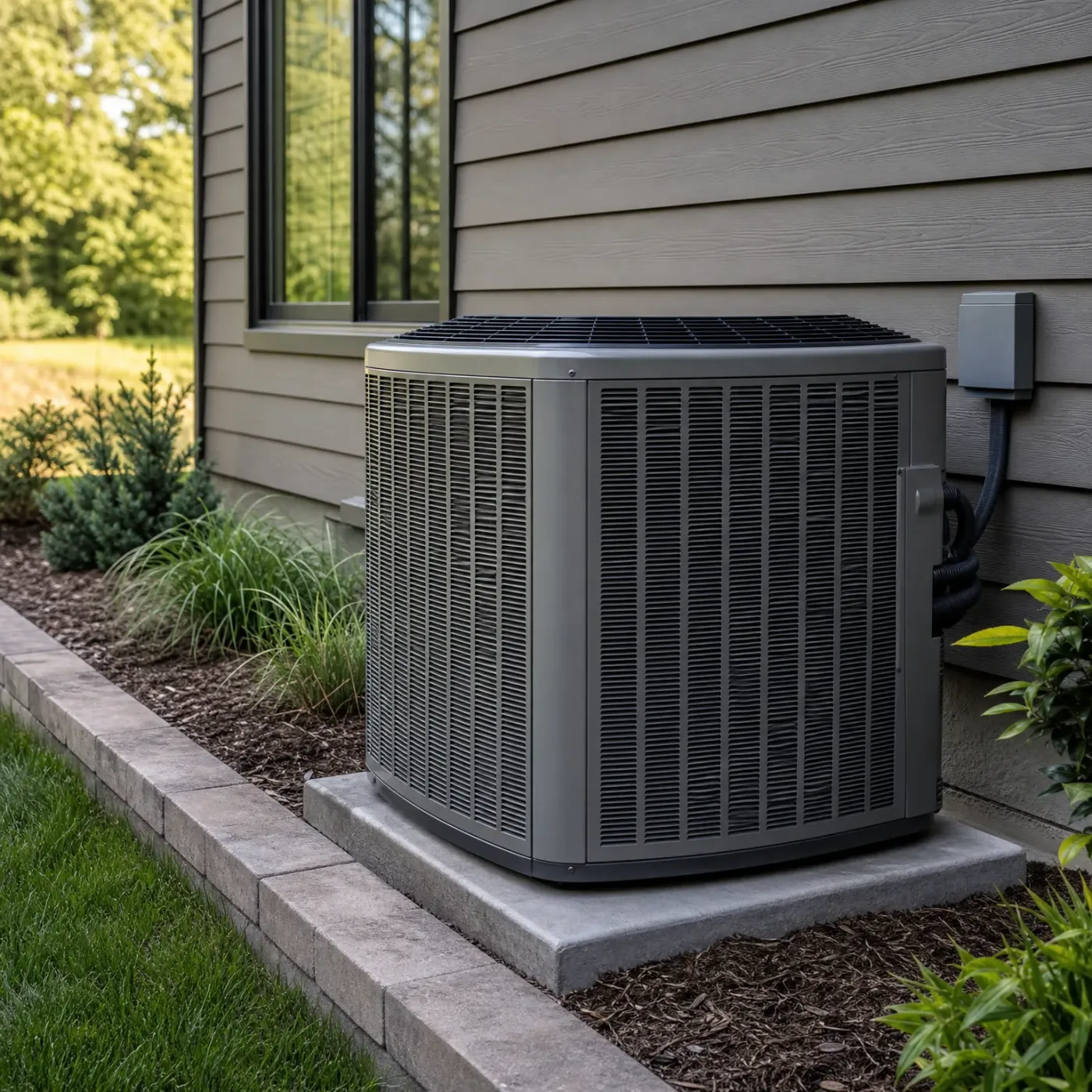
A gray outdoor condenser unit of an air conditioner or heat pump sits on a concrete pad beside a house with horizontal lap siding, with a wall-mounted disconnect box and conduit above it, mulched beds, shrubs and grass nearby.

It's off your list after this

The pro who reaches out is licensed in Nebraska.

Send the request today and stop worrying about who to call.

Reach a local pro

There's no charge for the request.

Is your heat pump running longer than it used to?

Walk past the thermostat and check the time it takes to stop calling for heat. If the outdoor unit used to cycle off and now seems to run through most of a cold morning, that's the bill climbing in real time. Listen at the outdoor unit too. A hum that won't quit, or a defrost cycle kicking on more than a few times a day, means it's fighting the cold harder than it should. Look at the coil on a frosty morning. Light frost that clears on its own is normal. A thick, solid layer that stays past midday is not, and a unit running that hard for that long is pulling a lot more power than the one that shuts off and rests. Left alone through a Nebraska winter, that strain is what turns one high bill into a pattern.

A dimly lit bedroom at dusk with a made bed, a table lamp on a nightstand, and a condensation-covered sash window with a dark curtain.

It's a January morning, six, maybe six thirty, still dark outside. You're in the kitchen waiting on the coffee, and you can hear the outdoor unit running through the wall. It was running when you got up. You stand there another minute, listening, and it's still going. Through the window the backyard is gray, frost heavy on the grass, and you can see the unit's fan turning, slow and steady, no sign of stopping. You go check the thermostat. Still calling for heat, same as it was last night. You top off your coffee and head to get dressed, and when you walk back through twenty minutes later, it's still running.

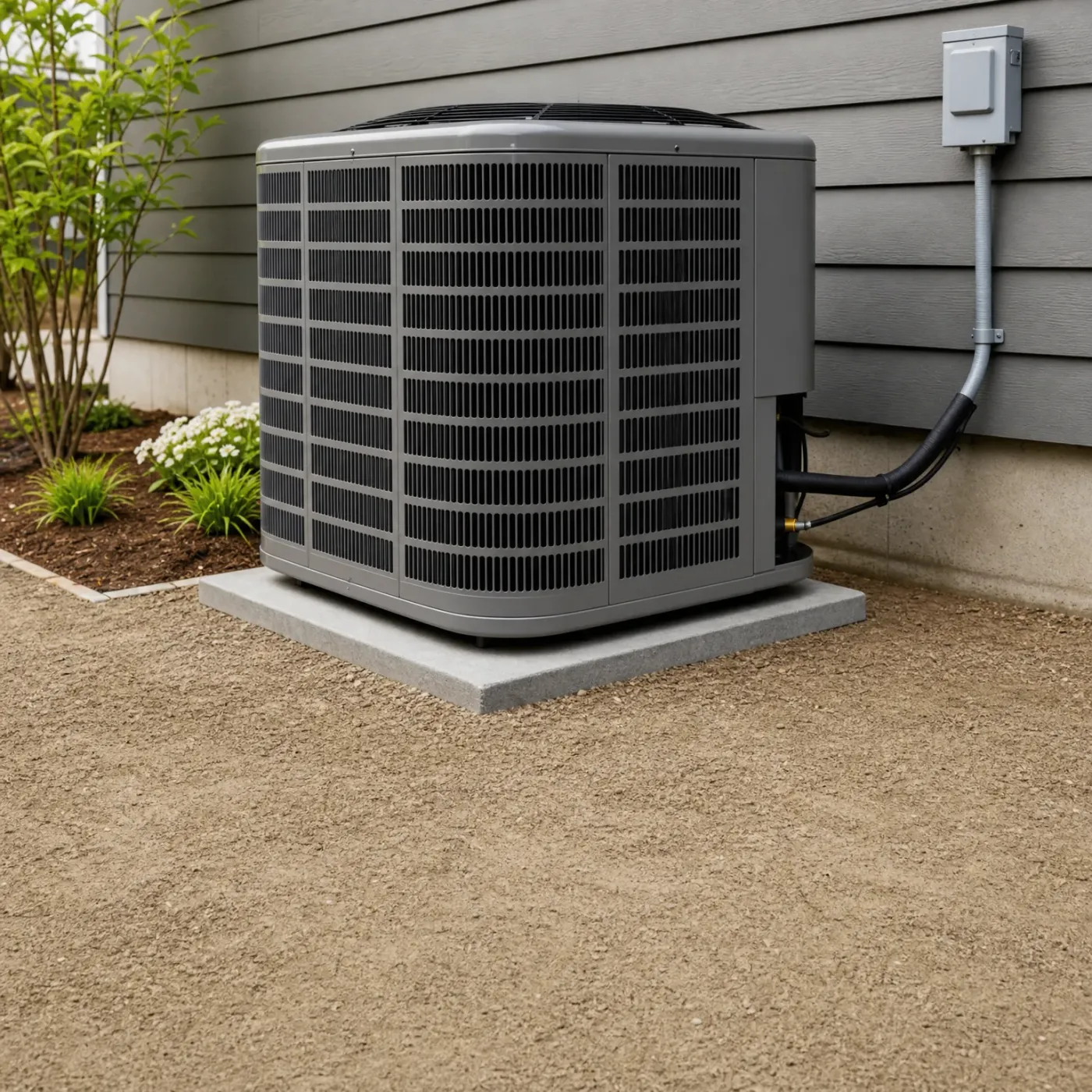
A gray outdoor condenser unit on a concrete pad beside a house with horizontal lap siding, with an electrical disconnect box and insulated refrigerant lines on the wall, gravel in the foreground and a planting bed at left.
The coil is clear and the unit sits clean on the pad, so cold air moves through it without a fight.
A weathered gray outdoor condenser unit sits on a concrete pad beside a house with horizontal siding, with refrigerant lines entering the wall at left and a mulched shrub bed at right.
Dirt packed into the fins blocks airflow, and the unit has to run longer to pull the same heat out of the winter air.
A man in a blue T-shirt sits on a light gray sofa, laughing while looking at an open laptop in the foreground, with a framed picture, lamp and potted plant behind him.
A bearded man in a blue and brown plaid flannel shirt stands indoors looking out a window at snow-covered trees, with a ceramic mug on the windowsill.

Defrost cycle running too often

A heat pump defrosts itself by reversing briefly and running heat strips. If that's kicking on too much, it's burning power without warming the house.

Find a licensed heat pump pro

Refrigerant charge off

A heat pump low on refrigerant has to run longer to move the same heat indoors, and the outdoor coil can ice over faster than it should.

Find a licensed heat pump pro
An outdoor air conditioning condenser unit sits on a concrete pad beside a white horizontal-siding house, with a gray electrical disconnect box and insulated refrigerant lines on the wall, mulch and green shrubs to the right, and a concrete slab in the foreground.
Before you get your heat pump repair
A gray outdoor air conditioner condenser unit on a concrete pad beside a house with horizontal lap siding and a stone veneer base, with a conduit running to a wall-mounted disconnect box and shrubs and evergreen trees to the left.
After you get your heat pump repair
A gray outdoor condenser unit on a concrete pad beside a house with horizontal lap siding, with a metal disconnect box and refrigerant lines on the wall, river rock and mulch to the sides, and a green shrub at right.

Clean and clear

The outdoor unit sits on its pad with the fins open and the grille clear. Air passes straight through the coil, so the heat pump pulls warmth out of the cold air without extra effort. It cycles on, runs its course, and shuts off.

A dirty outdoor air conditioner condenser unit with debris on its coil grille, sitting on a concrete pad beside a light-colored horizontal siding wall, with bare dirt ground in front and a shrub at right.

Clogged and straining

Dirt, leaves and plant matter have packed into the grille and fins. The coil can't pull air through like it should, so the unit runs longer to get the same heat out of the house. That's power spent for less warmth, and it's worth a look before the next cold snap.

Power costs 12.05 cents per kilowatt-hour statewide

At 12.05 cents per kilowatt-hour, every extra hour your heat pump runs shows up fast on the bill. Power here is cheap compared to a lot of the country, which is exactly why a struggling unit can run long and still feel affordable, until the bill arrives and it wasn't.

EIA-861 2025 statewide residential average

A gray outdoor heat pump unit on a concrete pad beside a house with gray horizontal siding, with conduit and an electrical box on the wall and a shrub at left.

Gas furnace backup still kicks on

Most homes in Nebraska heat with gas, and a lot of heat pumps here are paired with a gas furnace rather than strip heat. When the outdoor temperature drops far enough, the system hands off to the furnace, and that's normal. What isn't normal is the handoff happening too early, on mild days it shouldn't need to, because the heat pump is struggling to keep up with a dirty coil or a low charge.

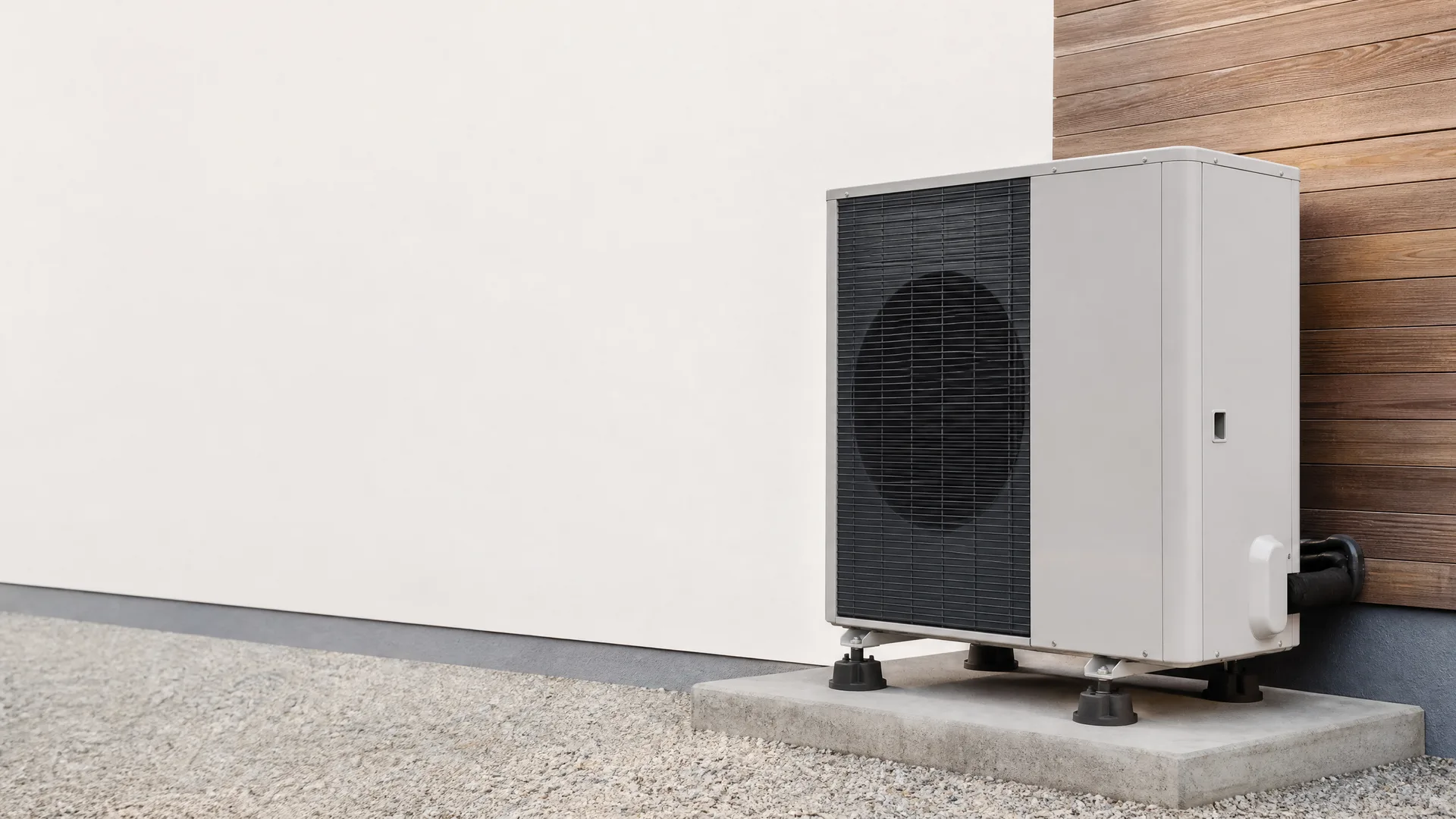
An outdoor air-source heat pump unit with a dark grille stands on a concrete pad beside a white wall and wood-clad facade, surrounded by gravel.

Electric strip heat as the backup

Some systems lean on electric strip heat instead of a furnace once the outdoor air gets too cold for the heat pump alone. Strip heat pulls a lot of power compared to the compressor running on its own, so a system leaning on it more than it should will push your bill up fast. Power here runs about 12 cents a kilowatt-hour, cheap enough that the jump can surprise you before you notice why it's happening.

The bill jumped because the heat pump had to run longer to make the same heat, and something in its path, frost that won't clear, a charge that's low, a defrost cycle that runs too often, made that happen. That part doesn't fix itself. A technician who works on heat pumps in Nebraska winters all season knows the handful of things that usually cause this, because they're the same things every year: the coil, the charge, the defrost board. You'll get matched with one licensed contractor near you, not a handful of companies calling you back at once, someone who can look at your unit, find what's actually wrong, and get it running the way it did before. You already know the signs now. The outdoor unit running longer than it used to, the furnace kicking in more than usual, the bill that doesn't match the weather. What's left is getting someone out to look at it before the next cold snap makes it worse.

A dark wood cabinet with a paneled door and a ceramic pot of green foliage on top stands in a beige-walled room with white baseboard, a window at left, hardwood floor, and a patterned area rug.
A dark wood glass-front cabinet holding folded towels, woven baskets and a ceramic vase stands in a bathroom corner beside a window, with a potted fern and stacked towels on top and a freestanding tub partly visible at left.
A woven basket holding a green cushion and a cream fringed knit throw sits on a wood floor in a room corner beside a window and a dark wooden cabinet.
Corner of a room with a dark wood cabinet topped by a round vase, a linen curtain at a window, white baseboard, oak plank flooring with sunlight patches, and a woven jute rug in the foreground.
A dark wood sideboard against a pale wall holds a shallow stone bowl and a round ceramic vase with leafy branches, with sunlight from a curtained window falling across the wall, wood floor and woven rug.

Stop chasing a heat pump pro

Your request stays with one local pro.

Get one local pro

Asking costs nothing, and the choice to hire stays yours.