Describe the project once instead of to every installer.
A heat pump in Dodge County earns its keep in two seasons that don't ask the same thing of it. It has to handle muggy summers and then turn around and carry the load on a hard winter night, sometimes with help from a gas furnace, sometimes alone. When it starts falling short in one season or both, you're usually left guessing whether it's worth fixing again or whether it's time to replace it.
That's not a guess you should make off a search result. It depends on the age of the unit, what a contractor finds when they actually look at it, and what it's been costing you to keep it running. The answer is different for a heat pump that's eight years old and still under warranty than for one that's been patched twice already.
What's hard is getting someone qualified to look at it without the usual run around. Most people end up searching for contractors, calling a few, explaining the same problem to each one, then sitting on quotes trying to compare them against each other with no way to know who's actually right.
This page connects you instead with one licensed contractor working in Fremont and the rest of Dodge County, someone who services this kind of equipment through the local summers and winters and has a good sense of what tends to fail and when replacement makes more sense than another repair. You explain the situation once. They come look at your actual system and tell you where it stands.
What follows is what actually determines whether a heat pump in this area is worth replacing. When you're ready to get a straight answer about your own unit, the request below goes to that one contractor.
Most heat pumps in Dodge County last 10 to 15 years, and age is usually what settles the question. Past that point, the compressor has done its work through a lot of hard winter nights and muggy summers, and repairs start costing more while fixing less. The clearest sign is a unit that can't keep up when it's coldest out, running constantly or leaning hard on backup heat to make up the difference. Rising bills without a change in how you use the system point the same direction, since a worn compressor pulls more power to do the same job. Frequent repair calls, especially for the compressor or the reversing valve, usually mean the system is wearing out rather than suffering one bad part. If your heat pump is in that age range and showing any of this, replacing it now is usually cheaper than keeping an old one alive.
No calling every shop in Dodge County
A licensed pro who works in Dodge County gets your request.
Skip collecting and comparing quotes for the new heat pump.
How hard does your heat pump have to work in Dodge County?
Winter nights average 16°F
Winter nights average 16°F. An older unit may lean on its backup heat earlier in the night, and that backup costs more to run than the heat pump itself.
Heat runs October through May
Heat runs October through May. That's eight months of the year asking the compressor to perform, which is most of what wears one out before the 10 to 15 year mark.
Cooling runs June through September
Cooling runs June through September. Four months of muggy heat on the same compressor that just carried winter, with barely a break between them.
NOAA nClimDiv 1991-2020
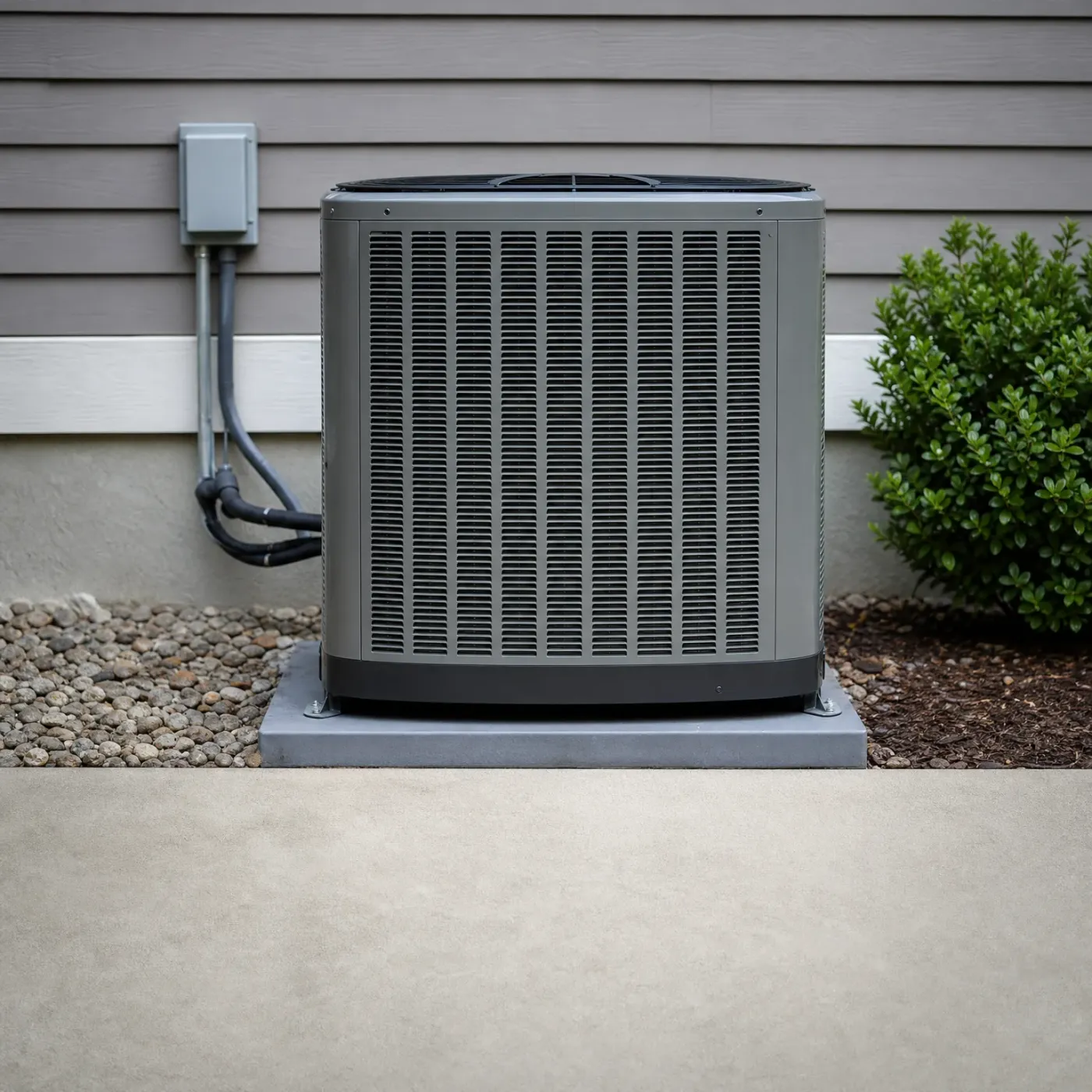
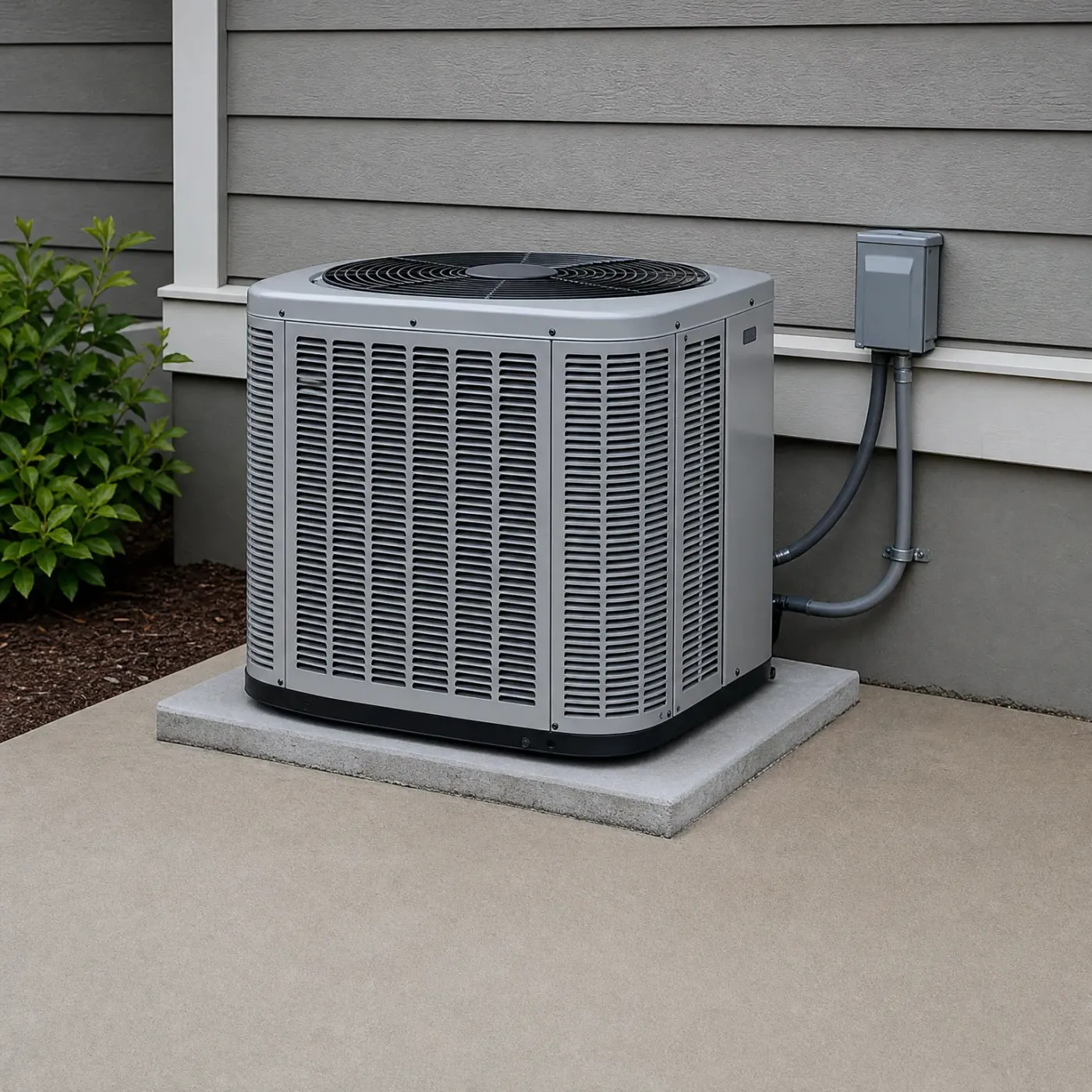
Running the way it should
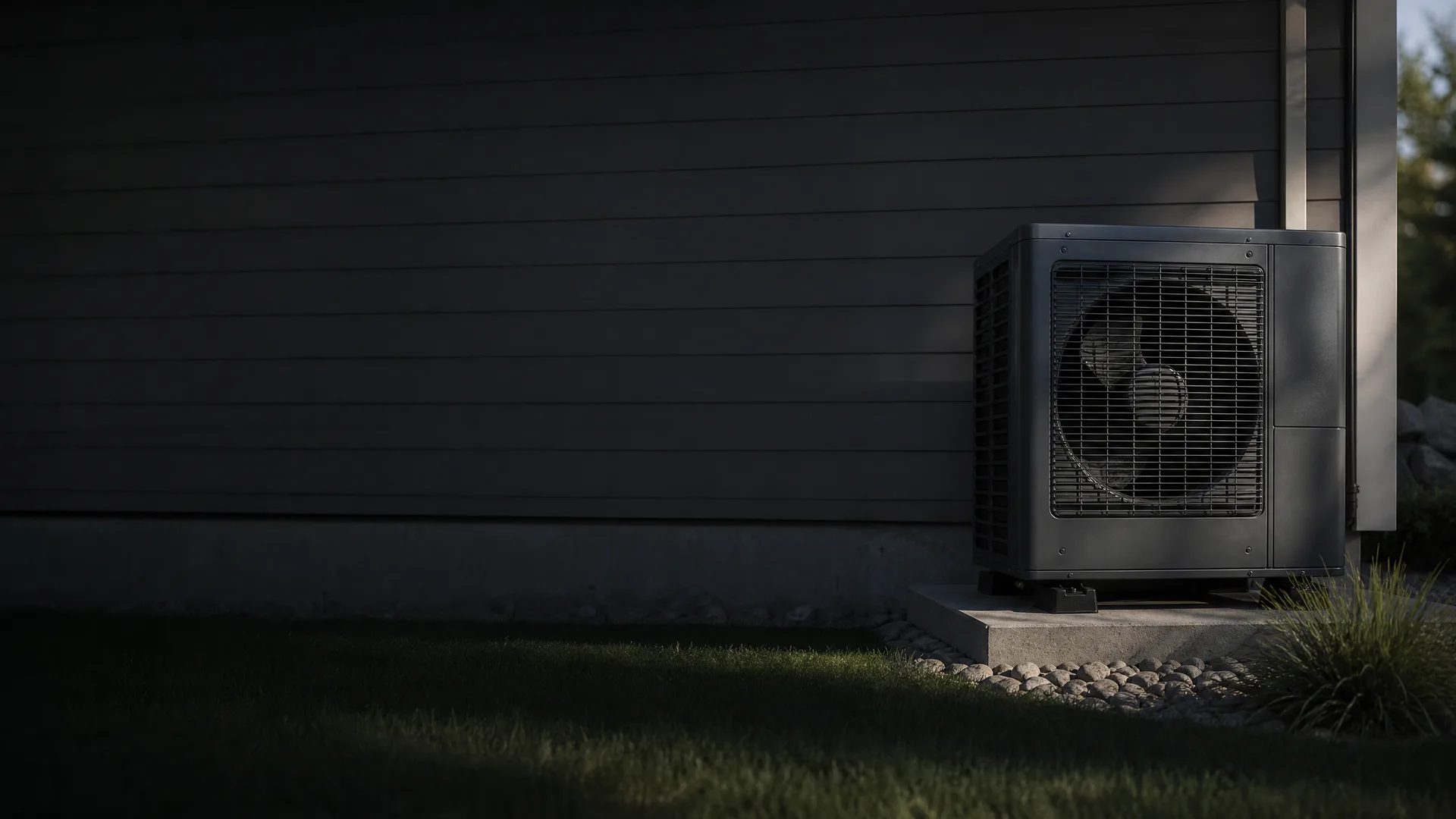
This unit sits clean on its pad, conduit and disconnect box secure on the wall. No rust streaking down the cabinet, no buildup on the fins. It holds steady through a muggy Fremont afternoon and comes back for the next cold snap without complaint.
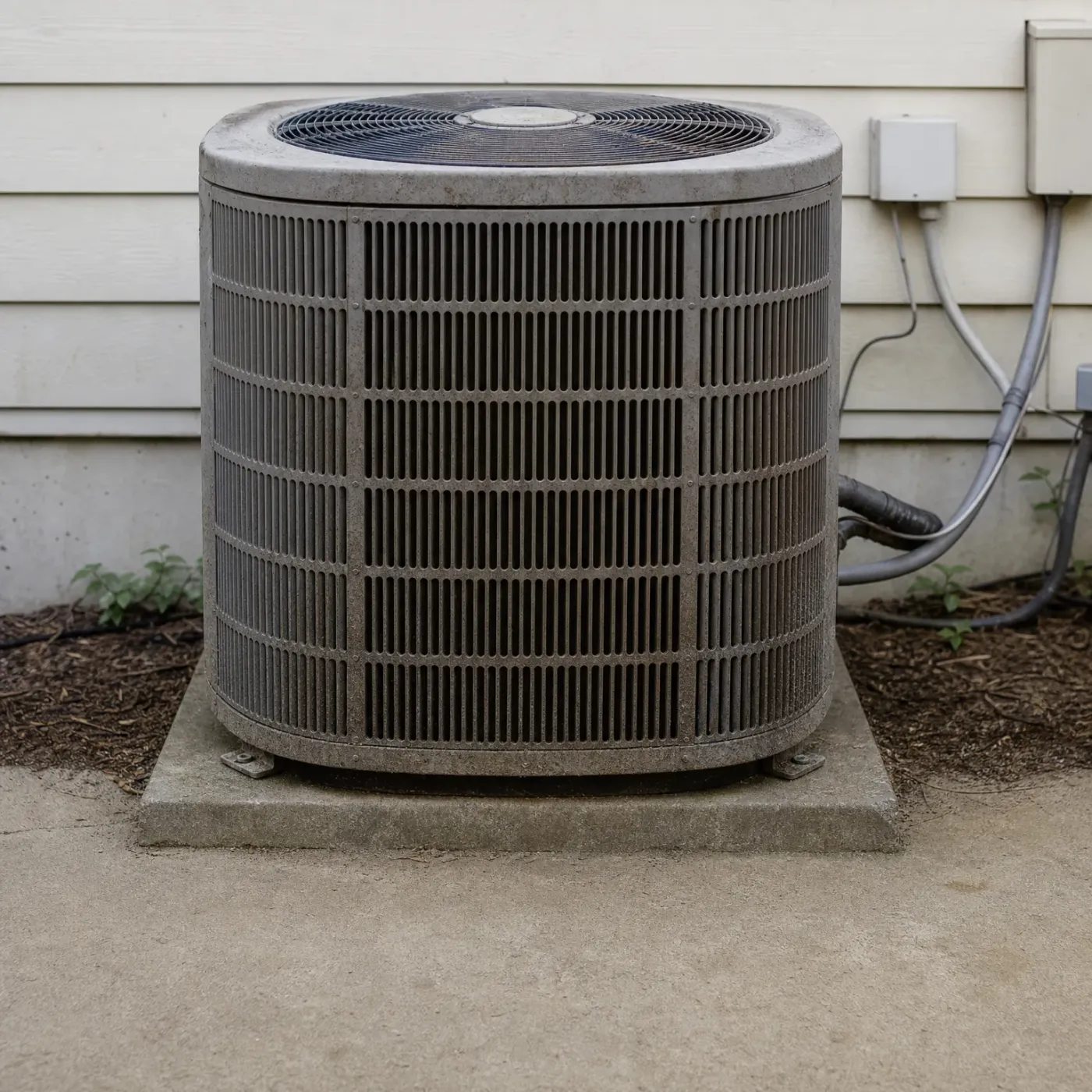
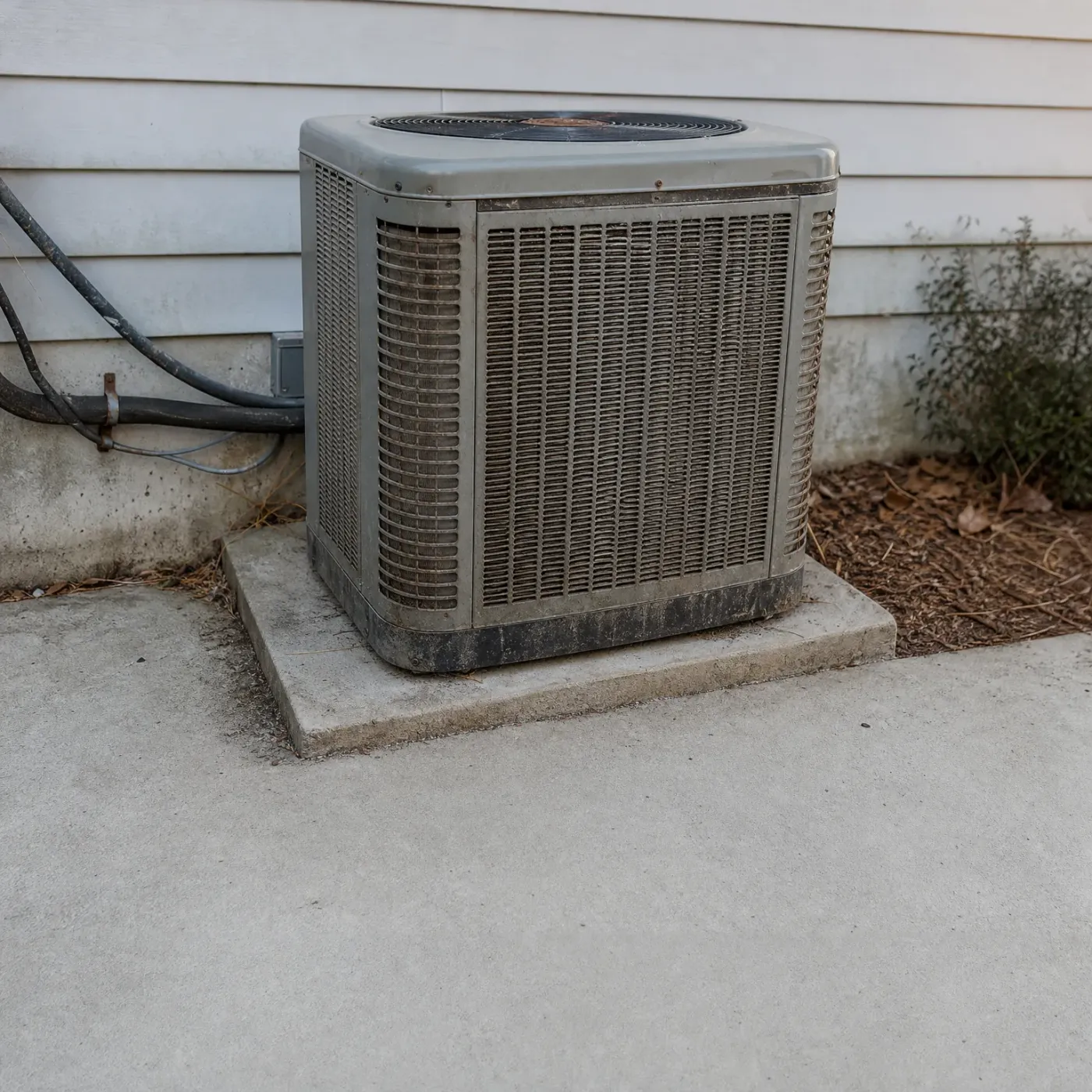
Signs of strain
Dust and grime cover this cabinet thick enough to see from a few feet away. That buildup chokes airflow across the coil, so the unit works harder in July heat and loses ground faster on a hard winter night. A cleaning can help, but grime like this often points to years of wear underneath it.
Does your heat pump sound or feel different lately?
You might notice it running longer than it used to, pushing air that feels cooler than it should on a muggy afternoon or less warm than it should on a cold night. The outdoor unit may click on and off more than it did last year, or you catch the backup heat kicking in sooner into a cold snap, which shows up as a higher bill before you've connected the two. Frost that doesn't melt off during the defrost cycle, a hum or rattle from the outdoor unit, or a musty smell from the vents are worth paying attention to. Left alone, a struggling heat pump can mean a night where it can't keep up with a hard freeze, leaving the house colder than you'd want it to be.
Still doing its job
The cabinet is clean and the fins are clear, so air moves through the coil the way it was designed to. Conduit and disconnect box are solid on the wall. A unit kept like this holds its charge and runs the compressor less to get the same cooling or heat, through a sticky July or a January night below zero.
Working against itself
Grime packed into the fins and base blocks airflow, so the compressor runs longer to move the same heat. Dirt holds moisture against the cabinet and the base pan, which is how rust gets started. A heat pump running dirty through a Dodge County summer and winter is already working harder than it should.
So where does that leave you
If your heat pump is in its first decade, keeping its charge, and holding steady through a muggy afternoon and a cold night alike, it's doing its job. If it's older than that, leaning hard on backup heat, or costing more each time something gets fixed, replacing it is the sounder call. Dodge County winters don't give a struggling unit much room to recover.
Either way, you don't have to sort through this alone. Instead of calling around to different companies, explaining your system over and over, and weighing quotes that aren't quite comparable, you get matched with one licensed local contractor who installs and services heat pumps in this area all year and knows what tends to fail first in weather like this. That's one call instead of several, and one straight answer about your unit.
No quotes to chase
A licensed installer who works in Dodge County gets your project.