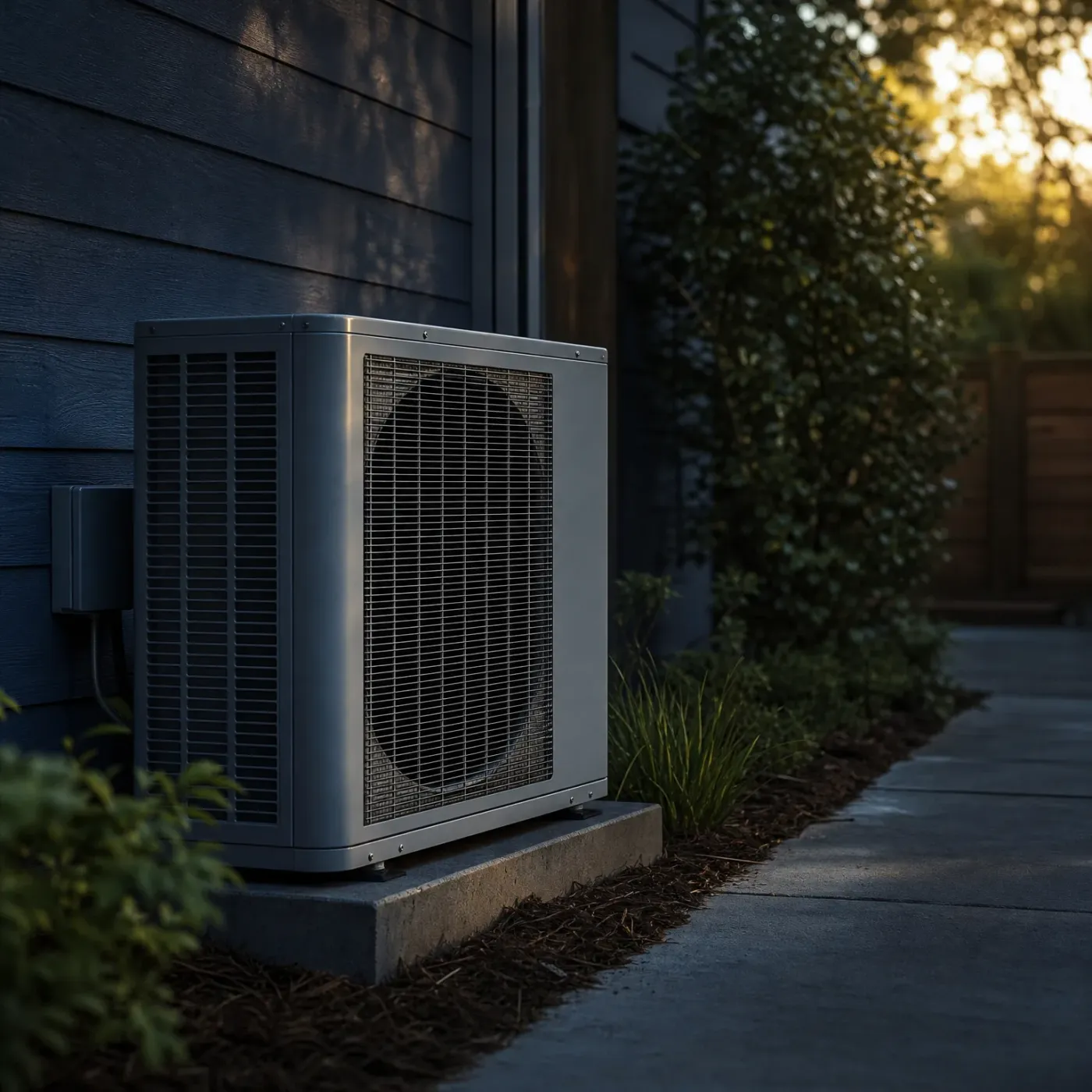
A gray outdoor heat pump unit on a concrete pad beside a dark horizontal-siding wall, with a small electrical box on the wall, shrubs and a concrete walkway to the right at dusk.

Hand off the heat pump problem

What emergency heat means on a Nebraska heat pump

Your heat pump has a switch or a setting for "emergency heat," and it matters to know what flips it on and whether it should be running right now. This page covers what that mode does, why your thermostat might have switched to it on its own, and what that tells you about the heat pump itself. If something's wrong, send the form below and the search for a contractor is off your plate.

Hand off the search

Emergency heat means your heat pump has stopped pulling warmth from the outdoor air and your thermostat has switched over to the backup heat strip instead. In Nebraska, a heat pump can ice up in cold snaps, and once that happens it can't do its job until it defrosts or gets looked at. Some thermostats will flip to emergency heat by themselves when they sense the outdoor unit isn't keeping up. Other times the switch is manual, something you or someone before you turned on and forgot about. Either way, that backup strip is weaker and pricier to run than the heat pump itself, and it isn't built to carry your house for long stretches. If it's running now and you didn't set it there, something outside has likely frozen over or failed, and that's worth having checked rather than left to run through the night.

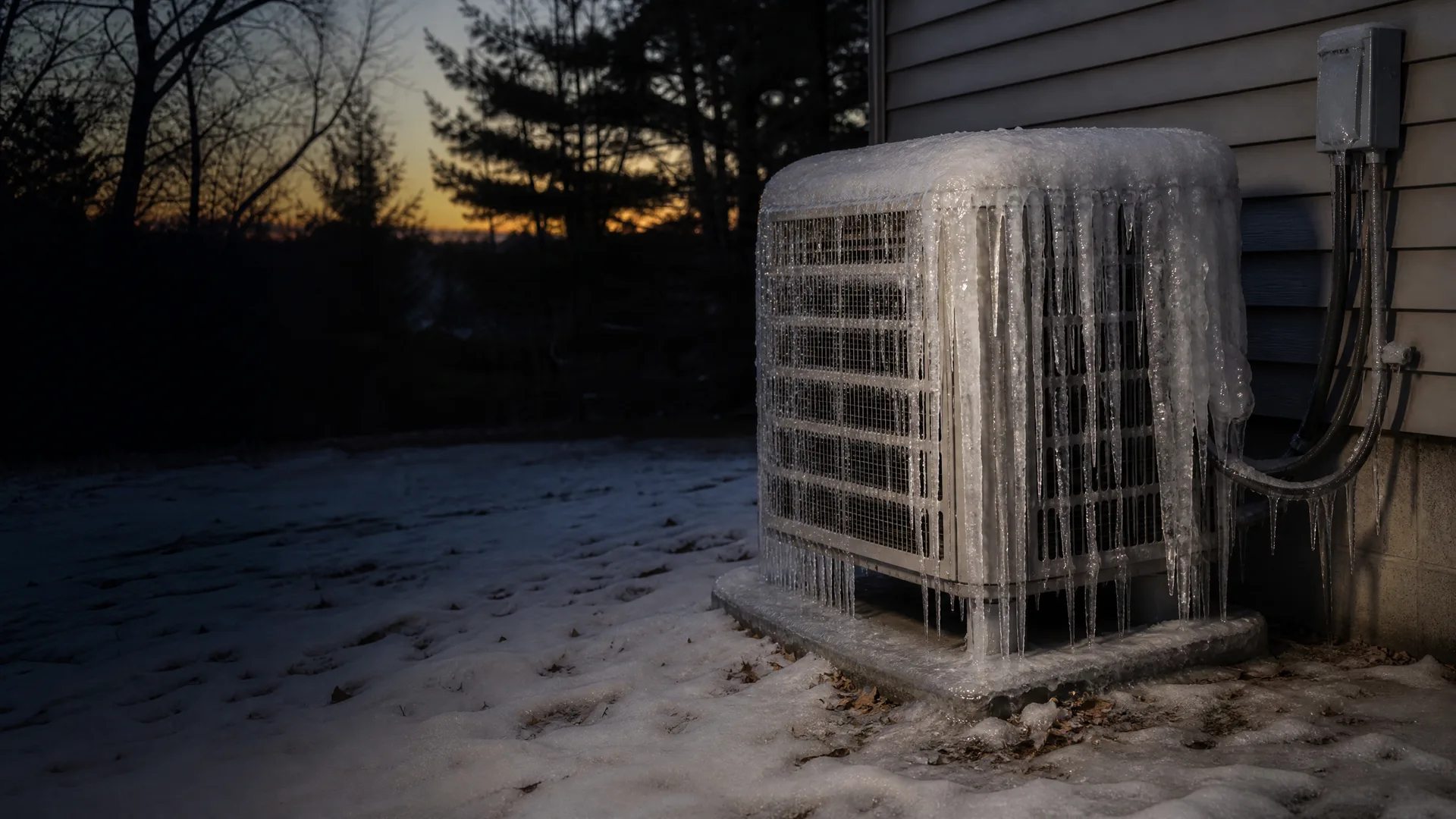
An outdoor air conditioning or heat pump unit encased in thick ice with hanging icicles, standing on a concrete pad beside a house with horizontal siding and an electrical box, with snow on the ground and a dusk sky behind bare trees.

Six-thirty in the morning and still dark when you go out for the trash cans. The side yard is quiet, your breath hanging in the air. The outdoor unit is sitting there wearing a shell of ice, thick over the coils, climbing the sides of the cabinet. No hum, no fan turning. Inside, the thermostat display is already showing that small "emergency heat" light you didn't switch on yourself. You stand there a second with the cold coming up through your socks, looking at the ice, thinking about the strip heat working alone in the attic air handler to keep the house where you left it overnight.
Why is the house warm but the outside unit doing nothing

Walk in and the air from the vents feels hot, almost like a furnace running, when normally your heat pump puts out air that's warm but milder. That's the backup heat strip working alone. Check the thermostat and it may say "emergency heat" or show a flame icon you haven't seen before. Outside, the unit sits still and silent, maybe coated in ice. If it stays stuck in this mode for days, expect a higher power bill, since the heat strip uses more electricity than the heat pump does on its own. Left alone too long without the heat pump cycling back in, you're running the house on backup power that wasn't meant to carry the whole load by itself.

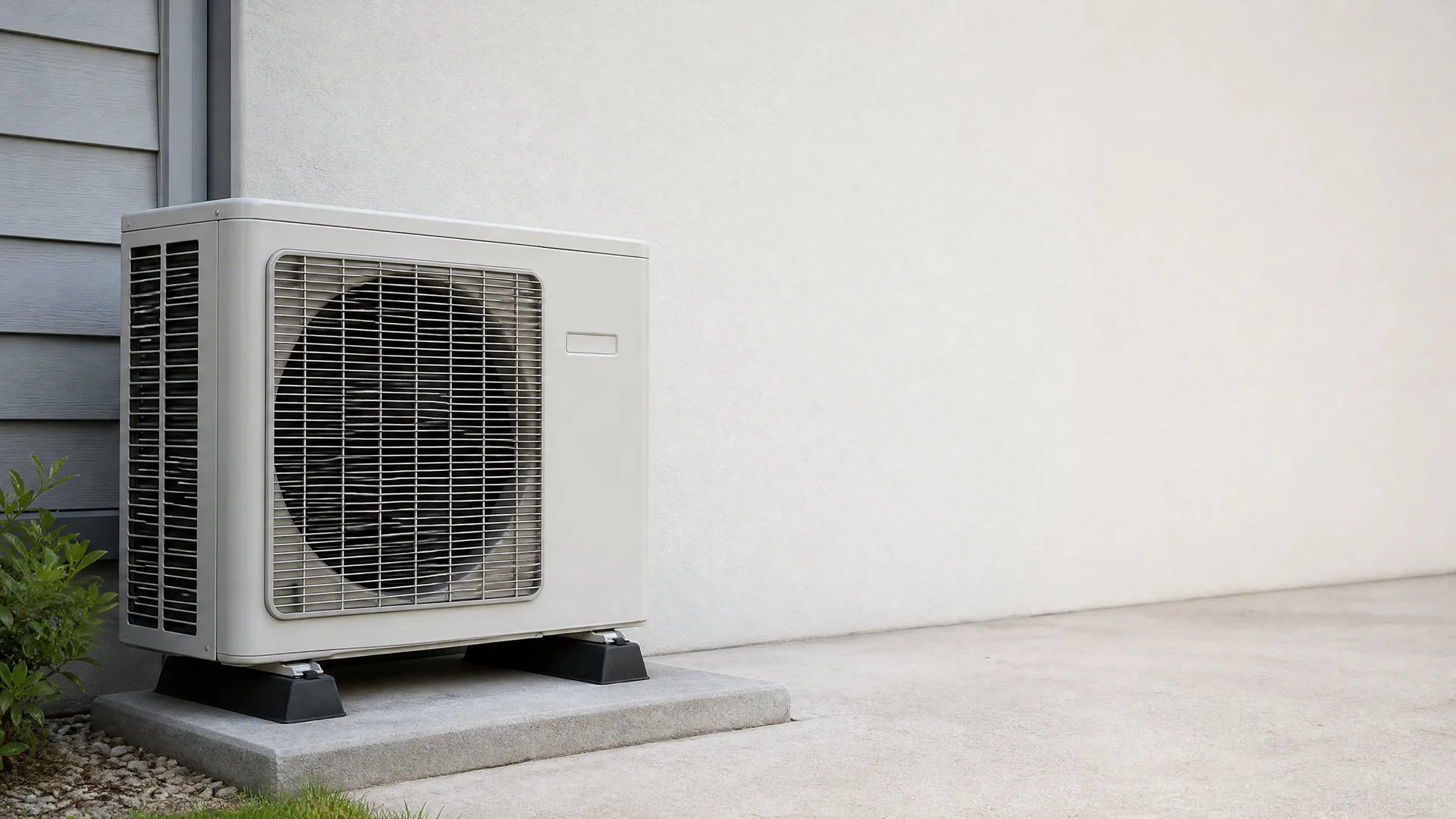
A white outdoor heat pump unit on rubber feet atop a concrete pad beside a light stucco wall, with gray siding and a small shrub at the left edge.

Why the strip runs hot

That backup heat strip works like the coils in a toaster. Electricity runs through them and they glow, and a blower pushes air across them straight into your ducts. There's no outdoor coil involved, no refrigerant cycle, nothing waiting on warmer air outside. It's the same idea as a space heater, just built into your system and sized to heat the whole house.

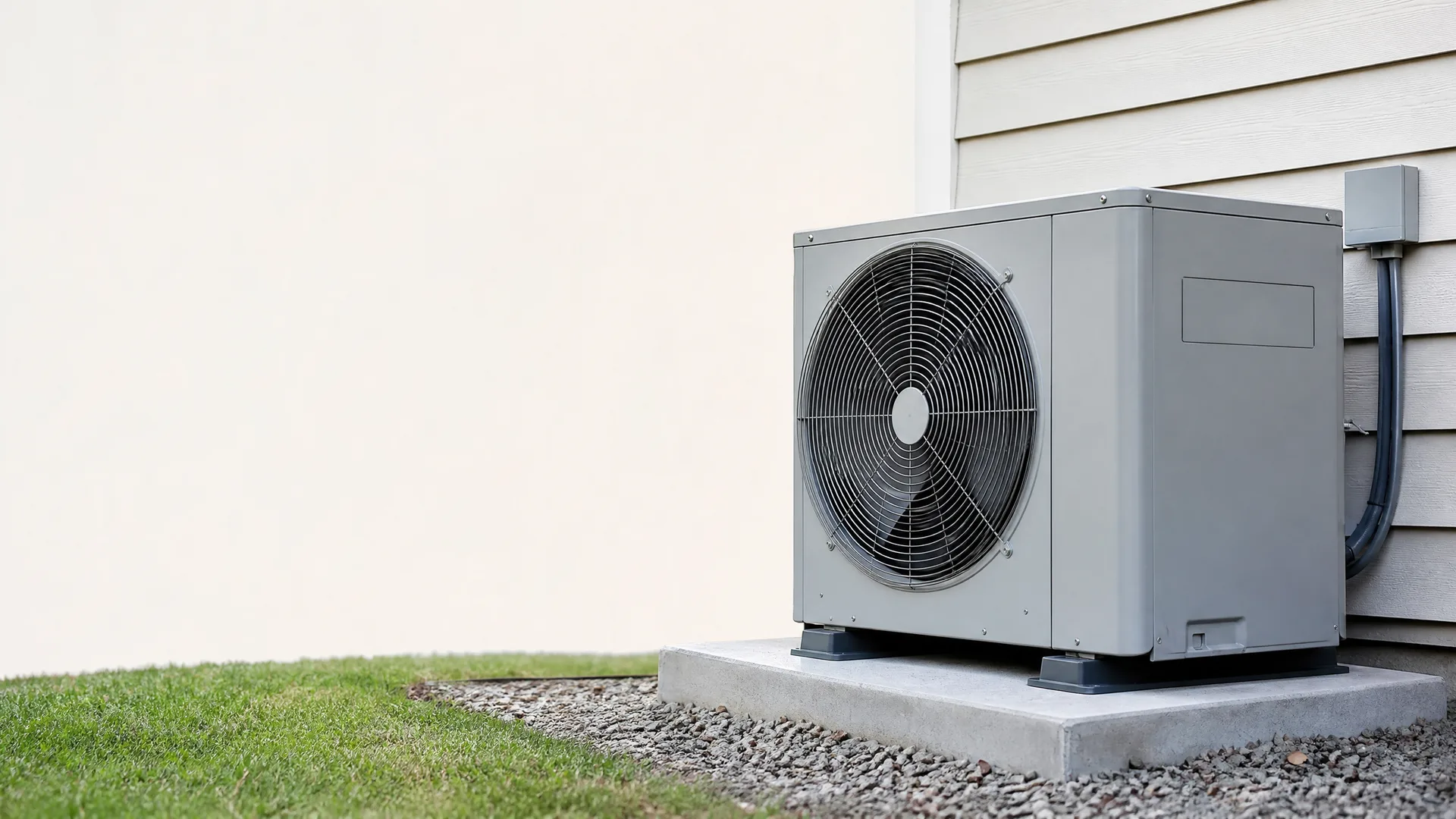
A gray outdoor heat pump unit with a large circular fan grille sits on a concrete pad beside a house with horizontal siding, surrounded by gravel and grass, with a conduit and junction box on the wall.

What should happen once it thaws

Once the ice is gone, the outdoor unit should start back up on its own and the thermostat should drop out of emergency heat without you touching it. If the house is still running on the heat strip alone an hour or two later, with the outdoor unit still sitting quiet, something stopped it from restarting. That's a defrost control or a sensor, not something that clears itself twice in a row.

Power costs 12.05 cents per kilowatt-hour statewide

At 12.05 cents a kilowatt-hour, running on the heat strip costs more per hour than your heat pump does when it's pulling warmth from the air outside. That's fine for an hour or two during a cold snap. Left running all day, it shows up on the bill.

EIA-861 2025 statewide residential average

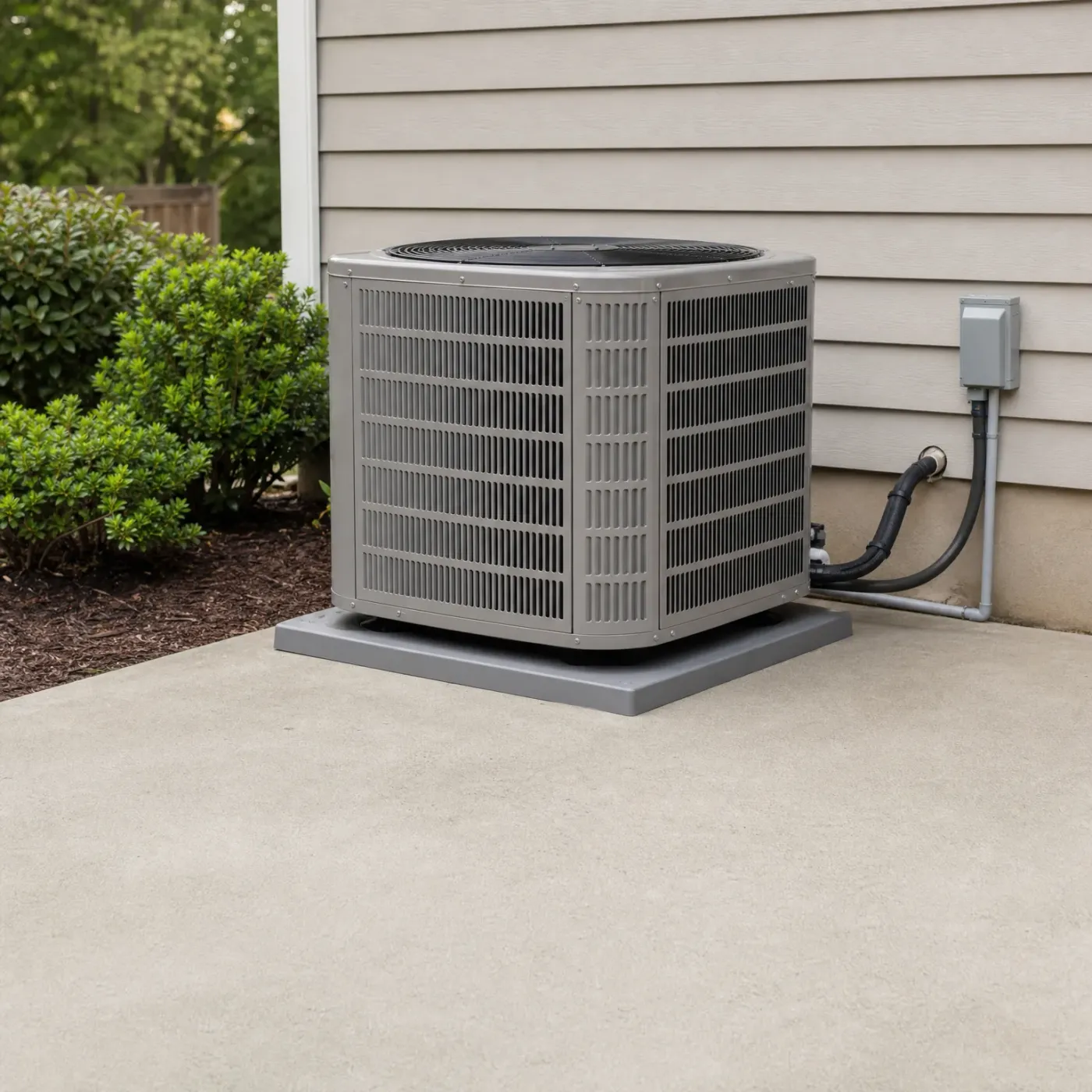
A gray outdoor condenser unit on a raised pad beside a house with horizontal lap siding, with refrigerant lines, conduit and an electrical disconnect box on the wall, and shrubs on a mulch bed to the left.

The unit running normal

This is what you want parked next to your house on an ordinary day. The coils are clean, the lines run straight to the disconnect box, and the unit cycles on and off without you noticing. Nothing about it should draw a second look.

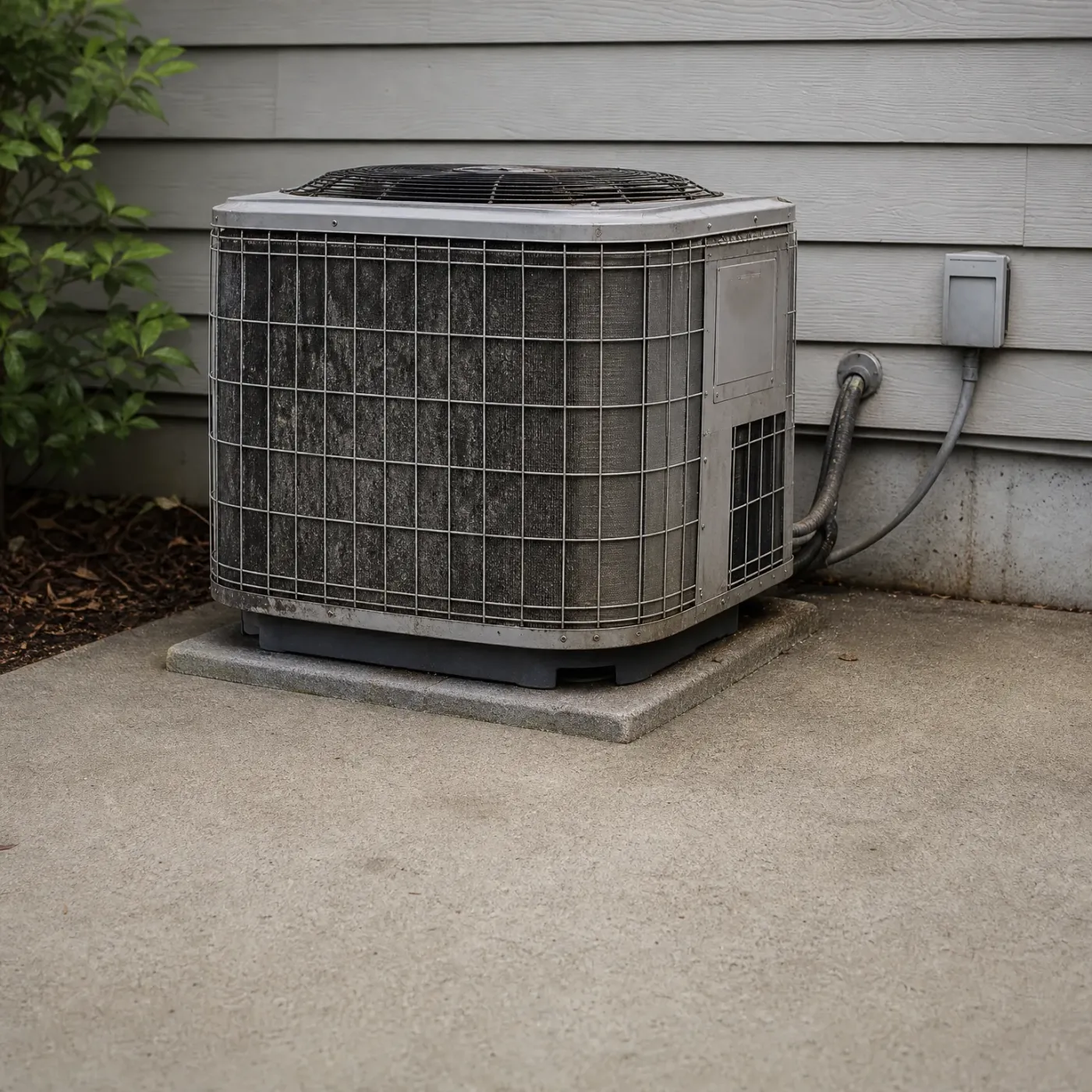
An outdoor air conditioner condenser unit on a gray composite pad beside a house with horizontal lap siding, with refrigerant lines and a conduit running to a wall-mounted disconnect box, and a shrub at left.

The unit in trouble

Caked grime on the cabinet won't stop a heat pump by itself, but it points at a unit nobody's looked at in a while. Paired with ice on the coils or a thermostat stuck on emergency heat, it's telling you this one's overdue for a look from someone who works on these year round.

A woman with her hair in a bun holds a sleeping young child against her chest, both wrapped in a textured beige knit blanket on a sofa in a dimly lit room with a lamp, framed picture, and bookshelf behind them.
An older woman with short gray hair in a cream cable-knit turtleneck sweater smiles while looking to the side in a wooden kitchen, with a round loaf of bread on a board in the foreground and a lit candle by a dark window.

Send one request and you're done looking

A heat pump that's stuck on emergency heat in January isn't getting better on its own. Ice on the coils doesn't melt because you want it to, and a stuck defrost board or a failed reversing valve won't fix itself while the strip carries the whole load. You can live with that for a night. You shouldn't live with it for a week, not with what the strip pulls on the meter. Most homes around here run gas furnaces, so a contractor who works heat pumps specifically in Nebraska isn't guessing at this. He's seen the same ice, the same stuck valve, the same thermostat override a dozen times this winter alone, usually on the same handful of parts. Send the request and it goes to one local contractor who takes heat pump calls like this as routine work, not a side job. From there, finding someone stops being something you have to manage. You've got a house that's warm enough for now. The point is getting it back to running the way it's supposed to, pulling heat from outside air instead of burning it straight through a strip.

Where this leaves you

  • Emergency heat means the heat strip is carrying the house alone while the heat pump sits idle, iced up or waiting on a repair.
  • A thermostat stuck on that setting for more than a day usually points to a defrost board, a reversing valve, or a low refrigerant charge, not a setting you chose wrong.
  • A local contractor who services heat pumps all winter has likely already seen whatever is keeping yours from switching back on its own.
  • Sending one request means one licensed contractor looking at your system, not a string of calls from companies competing for the job.
  • Left alone through a cold snap, the strip will keep the house warm, but the bill is the tell that something upstream still needs fixing.

Emergency heat is the backup strip doing the job alone, and the house stays warm either way. That part was never in question. What matters is whether your heat pump comes back once the ice melts or the cold snap passes. If the thermostat is still showing that setting a day later, something is keeping the outdoor unit from switching back in on its own, and that's a repair, not a setting to adjust.

A defrost board that won't cycle, a reversing valve that's stuck, a charge that's run low. Any of those will leave the strip carrying the house, and your power bill is what tells you it's still happening. None of it clears up by waiting.

Someone who services heat pumps around here all winter has run into this before. Nebraska winters push these systems into defrost cycles over and over, and a contractor local to you has likely already seen whatever is keeping yours from switching back. Sending a request through this page puts your system in front of one licensed contractor, not a handful of companies calling about the same job. That's the whole point of narrowing it to one: someone who already knows what tends to fail on these units looks at yours directly, instead of you fielding calls while the strip keeps running and the bill climbs.

A single-story stucco house at dusk with a lit paver walkway lined by low path lights, desert plants and boulders in front, and distant mountains under an orange and blue sky.

Heat Pump Repair

Finding a pro stops being your job

Step 1 of 3: Equipment
  • A grey upholstered armchair with a textured beige cushion and a chunky knit throw sits beside a window with linen curtains, next to a round wooden side table holding a speckled ceramic mug on a book, with a leafy plant behind.
    • Tell a local repair pro what your heat pump is doing.
    • Describe your heat pump job, and a local pro who handles it gets in touch.
  • A chunky beige knit throw draped over a gray upholstered armchair beside a window with linen curtains, a ceramic vase of green leafy branches on a wooden table, and a ceramic mug in the foreground.
    • After you send the request, you're done searching.
    • Send the request today and stop worrying about who to call.
  • A ceramic table lamp with a cream drum shade and a small spiky succulent in a textured gray pot sit on a dark wooden side table with a drawer and a woven basket on the lower shelf, beside a beige upholstered sofa and a framed landscape picture on a pale wall.
    • Skip searching for a heat pump pro and answer a few questions instead.
    • One form replaces the calls you'd make to find a heat pump pro.
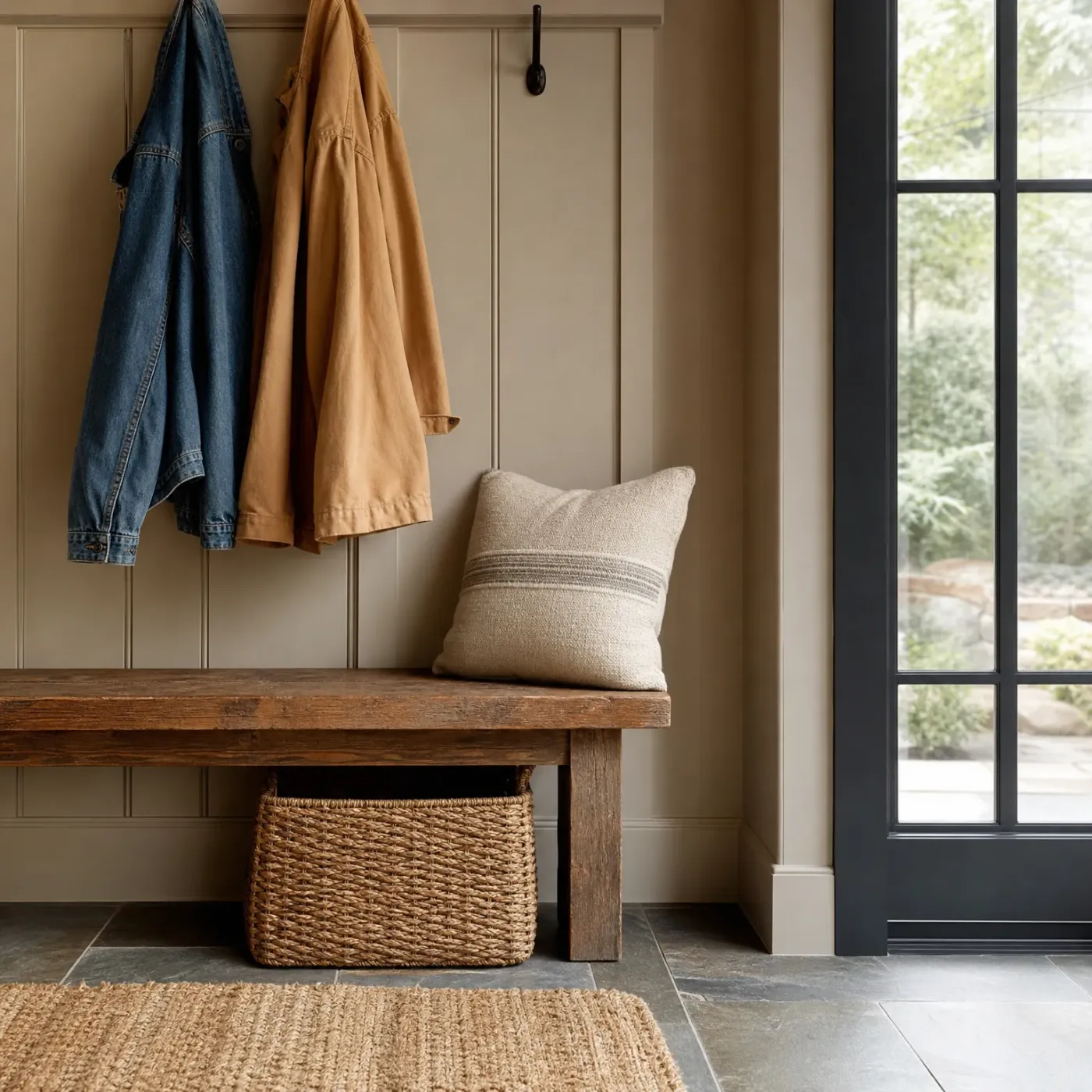
  • A mudroom with a denim jacket and tan jacket on wall hooks above a rustic wooden bench holding a striped cushion, a woven basket underneath, slate tile floor with a jute rug, and a black-framed window at right.
    • Your request goes to one pro, not a list of companies.
    • The pro who reaches out is licensed in Nebraska.