
Repair or replace a heat pump in Nebraska

Step 1 of 3: Equipment

Should I repair or replace my heat pump in Nebraska?

Your heat pump is struggling or has quit, and now you're stuck deciding whether to pay for another repair or put money into a new system. In Nebraska, that decision carries extra weight. Your heat pump has to handle sticky summers and cold winters both, and if it's gas you're heating with the furnace side most of the year and leaning on the heat pump for cooling and mild stretches. Getting this wrong means paying twice.

Repair if the unit is young and the fix is minor, replace if it's old or the repair is major

A heat pump that's past 10 to 12 years and needs a compressor, reversing valve, or anything tied to the refrigerant circuit is usually a replace. Those repairs run close to what a new unit costs, and an older unit will keep failing in other ways after. A younger unit with a bad capacitor, a fan motor, or a control board issue is worth fixing. Since most homes here heat with gas, the heat pump is doing less of the heavy lifting in winter than it would elsewhere, which means less wear than a heat pump carrying the whole heating load. That can tip a borderline case toward repair rather than replace.

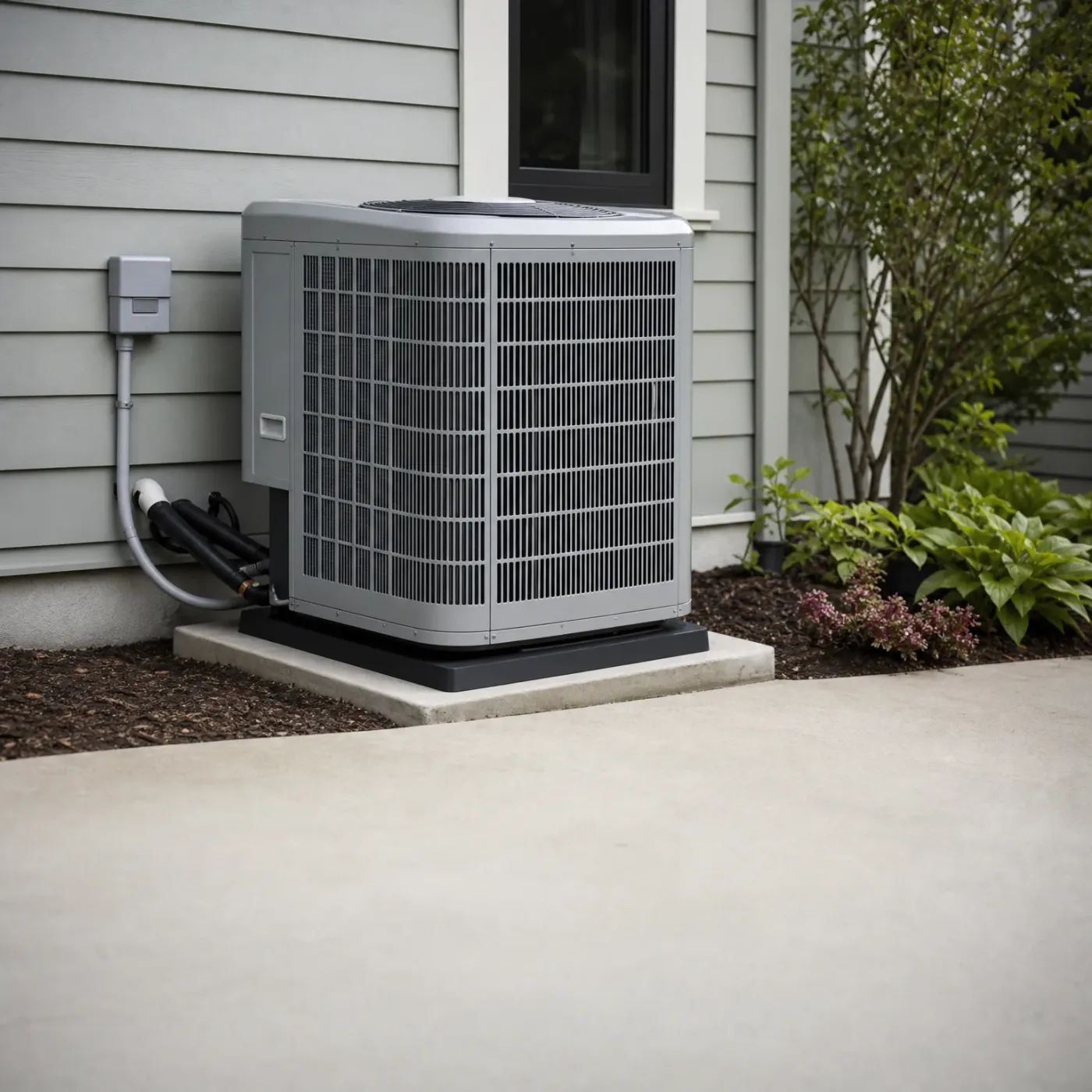
A gray outdoor condenser unit on a concrete pad beside a light-colored lap-sided house, with a wall-mounted disconnect box, refrigerant lines, mulch bed and shrubs, and a concrete walkway in the foreground.

Still running fine

If your heat pump is keeping up through the muggy stretch and the winter cold without strain, a repair makes sense. A cracked capacitor or a low refrigerant charge is a fix, not a reason to replace a unit that still has years in it.
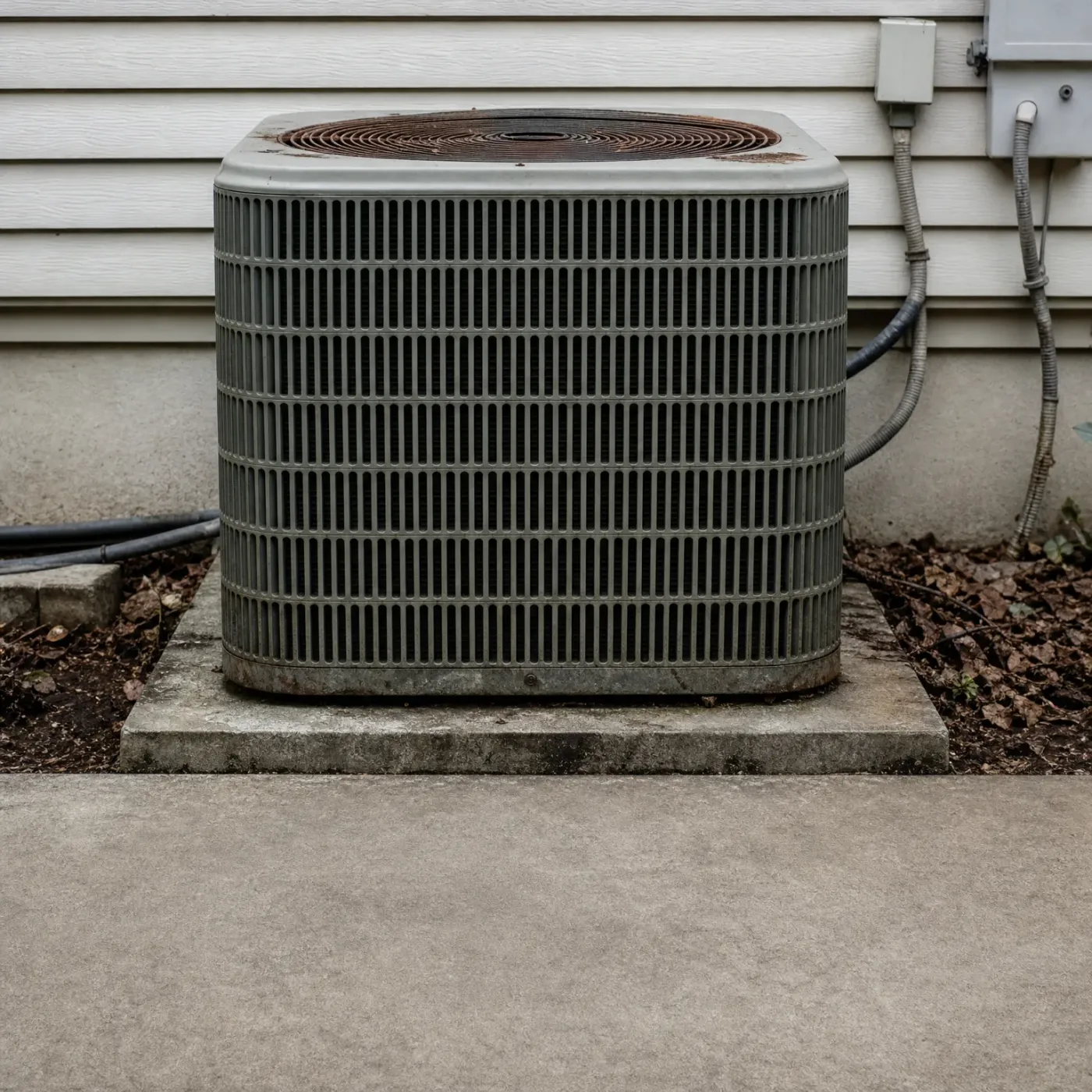

An outdoor air conditioner condenser unit with rust spots on its top grille sits on a concrete pad beside a house with light horizontal siding, with conduit lines and an electrical box on the wall and a mulch bed to the right.

Showing its age

Rust on the fan grille, dirt packed around the base, a unit straining to keep the house comfortable. At that point another repair just delays the same decision. Replacing it now means you're not caught without heat or cooling when you least expect it.

Is your heat pump telling you something is wrong?

Maybe it's running longer than it used to, or the air coming out doesn't feel as cold as it should during a muggy stretch. Maybe the outdoor unit is icing over in a way that doesn't clear on its own, or it's making a grinding or clicking noise it never made before. In winter, you might notice it blowing cool air more than warm, or the backup heat kicking on and your bill climbing with it. Short cycling, water pooling near the indoor unit, a breaker that trips more than once. None of these mean you need a new system, but ignoring them usually means a bigger repair bill later, or no heat on a night you need it most.

A man in a gray sweater reclines in a brown leather armchair with his eyes closed, beside a wooden side table holding a mug, a folded newspaper and a potted plant, with a bookshelf and sunlit window behind him.
A man with greying hair and a dark sweater leans back on an armchair with his eyes closed and a slight smile, in a living room with a bookshelf, plant, folded newspaper and mug on a wooden table.
A man in a gray fleece jacket sits reclined in a leather chair with his eyes closed, in a room with bookshelves, a table lamp, a window, and a desk holding a folded newspaper and a dark mug.
A bearded man in a gray fleece pullover sits with eyes closed in a brown leather armchair in a living room, with a floor lamp, bookshelf, potted plants, a side table holding newspapers and a dark mug, and a bright window behind him.

One request and it's handed off

A heat pump decision in Nebraska is really two decisions, because the unit has to handle a sticky summer and a cold winter, and most of the homes around it are heating with gas instead. That split matters when you're weighing a repair bill against the cost of a new system. If your heat pump is on its way out, the next step is usually calling around, explaining the same problem to a handful of contractors, and sitting on quotes trying to compare them fairly. That's hours you don't have while the house is too warm or too cold. Send the request instead and that search is off your plate. Someone who installs these units in Nebraska homes looks at your system and tells you straight whether it's worth fixing or time to replace it, so you're not guessing with your own money on the line.

Why the backup heat matters here

A heat pump in Nebraska has to keep pulling heat out of cold outside air well into winter, and once it drops low enough, the unit leans on backup heat to keep up. Most homes here already have a gas furnace, and a heat pump that's paired with one switches to it when the outdoor air gets too cold to draw much heat from. If that switchover isn't happening right, or the furnace side isn't holding its own, you'll feel it as rooms that won't come up to temperature on the coldest nights.

What the compressor is worth protecting

The compressor is the most expensive part of a heat pump, and it's the part doing the work in both directions, summer and winter. A unit that's short-cycling, or whose compressor is drawing more current than it used to, is wearing out faster than one running clean. Catching that early with a repair can buy real time. But once a compressor itself needs replacing, the cost of that single part starts to close in on what a new, fully warrantied system would run.

Power costs 12.05 cents per kilowatt-hour statewide

At 12.05 cents per kilowatt-hour, running your heat pump's backup heat strip is what drives a bill up fast, since resistance heat pulls far more power than the compressor does on its own. A furnace pilot light costs you nothing to keep lit, which is part of why so many Nebraska homes pair a heat pump with gas backup instead of electric strips.

EIA-861 2025 statewide residential average

If your heat pump is old enough that the repair bill is closing in on a chunk of what a new system costs, replacing it now means you choose the unit and the timing instead of losing both when it fails on the coldest night of the year.

A new heat pump also means a new warranty and a system sized right for your home, instead of patched-together parts that may not last through the next cold snap or the next muggy stretch.

A gray-haired man with a beard in a blue button-placket shirt reclines on a couch with his eyes closed, beside a sunlit window with a green plant.
A woman in a cream knit sweater sits in an armchair with her eyes closed near a window showing yellow autumn foliage, with a mug on a round wooden side table beside her.

A heat pump that still handles a muggy Nebraska summer and keeps up until the gas furnace takes over in the cold is worth repairing. One that's struggling on both ends, or racking up repair bills that creep toward the cost of a new unit, is telling you it's time to replace it. That's the whole decision. What's harder is everything around it: finding a contractor who knows how a heat pump and a backup furnace are supposed to work together here, getting someone out to look at a system that's already struggling, and getting a straight answer instead of three different quotes that don't agree with each other. You don't have to call around and explain the same problem to five different people. Send the form once, and the work of finding someone qualified stops being your problem. You'll still have a decision to make about your system. You won't have to make it alone, and you won't have to spend your evenings chasing it down yourself.

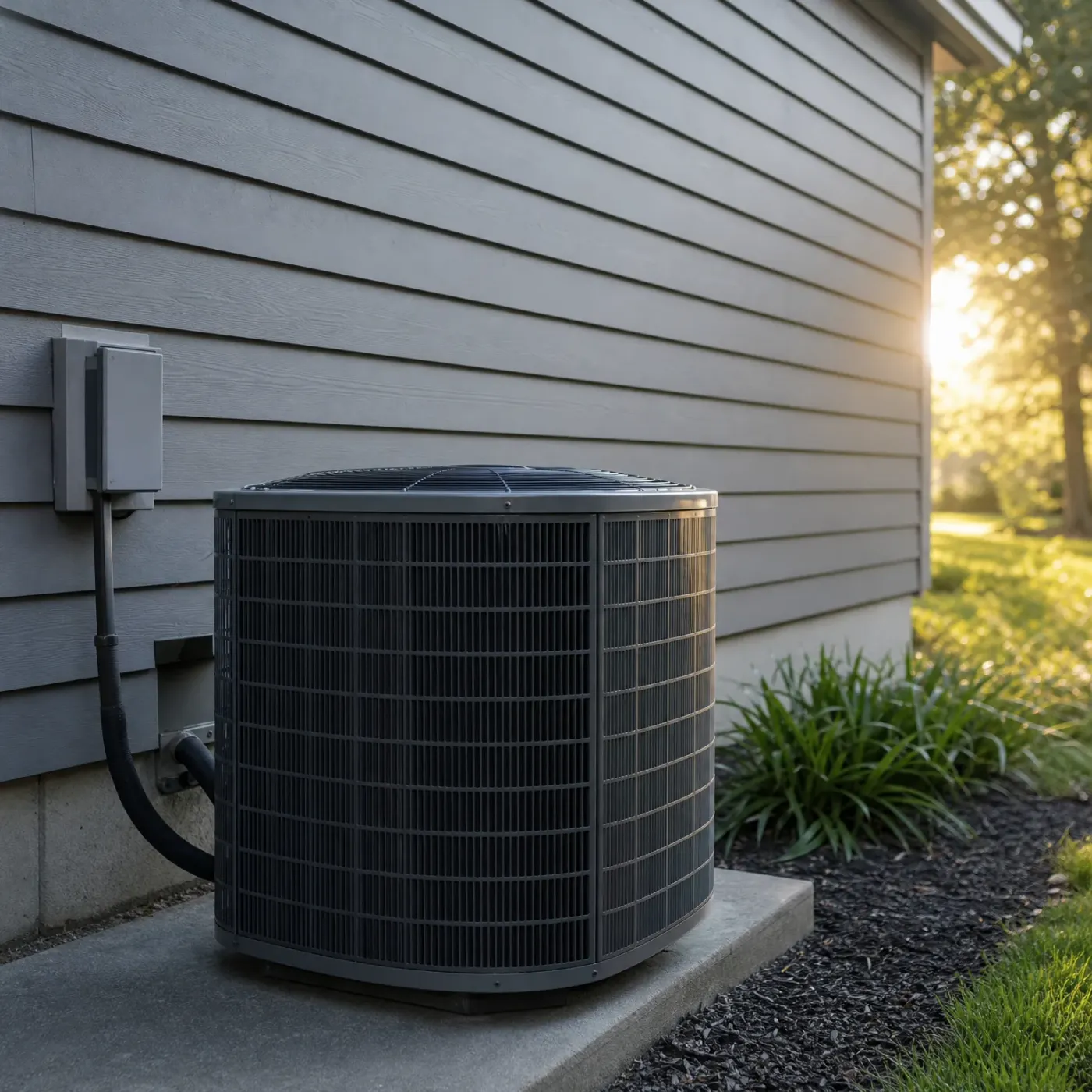
An outdoor air conditioner condenser unit on a concrete pad beside a gray horizontal-lap-sided house, with an electrical disconnect box and refrigerant line on the wall, grass, shrubs and a tree with low sun behind.

Done looking for a heat pump pro

Skip the search

Describe the project once instead of to every installer.

No charge to send it. You decide if you hire them.