A local installer who puts in heat pumps gets your project.
A cold-climate heat pump in Nebraska has to do two jobs. It needs to cool a house through a muggy summer, and it needs to keep heating when a January night drops well below freezing. Most homes here are set up with gas for heat, so the question is really whether a heat pump earns its place next to that furnace, or in place of it.
Power here is cheap compared to a lot of the country. That changes the math on running a heat pump for cooling and for the shoulder months, and it changes how you think about backup heat on the coldest nights. What works depends on your house, your current furnace, and what the ductwork and electrical can support. That's not something a search result can tell you. It takes someone standing in your basement looking at your system.
Sorting that out usually means calling a handful of contractors, explaining your setup to each one, waiting on callbacks, and then trying to compare quotes that are not quite answering the same question. One contractor's bid includes a new electrical circuit and another's doesn't, and you find out only when you ask.
This page connects you with a contractor who installs cold-climate heat pumps and knows how they perform against a Nebraska winter and a Nebraska summer. You tell them what you have now, gas furnace, central air or neither, and what you're trying to solve, a high summer bill, an aging system, a want for something that does both jobs. They look at your situation specifically, not a general case, and reach out to you directly.
No promises here about what they'll find or recommend. Some houses are a clean fit for a cold-climate heat pump. Some do better with a heat pump paired with the existing furnace for backup on the coldest days. That's the kind of answer that has to come from someone looking at your actual setup, not from a page.
The next section gets into how these units hold up in Nebraska's winters and what that means for your gas furnace and your bill. When you're ready to find out what it means for your house, the contractor match is below.
A cold-climate heat pump can still carry a Nebraska winter, but how far it carries you depends on what backs it up. These units are built to keep pulling heat from outside air well below freezing, farther down than a standard heat pump can manage. On the coldest nights, when the temperature drops into single digits or lower, even a cold-climate model loses efficiency and may need help from a furnace or electric backup to keep the house warm. Since most homes here already have gas heat installed, that backup is usually already in place, working alongside the heat pump rather than replacing it. In summer, the same unit switches to cooling and handles the muggy months without issue. Whether it is worth it comes down to how the system is sized and installed, and whether the backup heat is set up to kick in at the right point.
What a cold-climate unit still needs
A cold-climate heat pump keeps drawing heat from outside air down to around 5 degrees below zero, sometimes lower depending on the model. Below that point, most homeowners here keep a gas furnace in place as backup, so the heat pump handles the mild and moderate days and the furnace takes over only on the coldest nights. That's a smaller job than running the whole winter, and it's the setup most installers recommend if your home already has a gas line in. The heat pump isn't replacing the furnace. It's cutting down how often that furnace has to run.
Where the summer side pays off
The same unit that handles January also has to handle August, and that's where it earns a second look in a muggy Nebraska summer. A heat pump cools exactly like central air conditioning, pulling heat out of the house rather than making cold air, and it pulls humidity out of the air at the same time. With power priced the way it is here, running that compressor through a sticky summer costs less than it would somewhere with higher electric rates. The cooling side isn't a bonus feature. It's doing half the unit's job, every bit as much as the heating side.
Skip collecting and comparing quotes for the new heat pump.
No fee to send it, and nothing to sign.
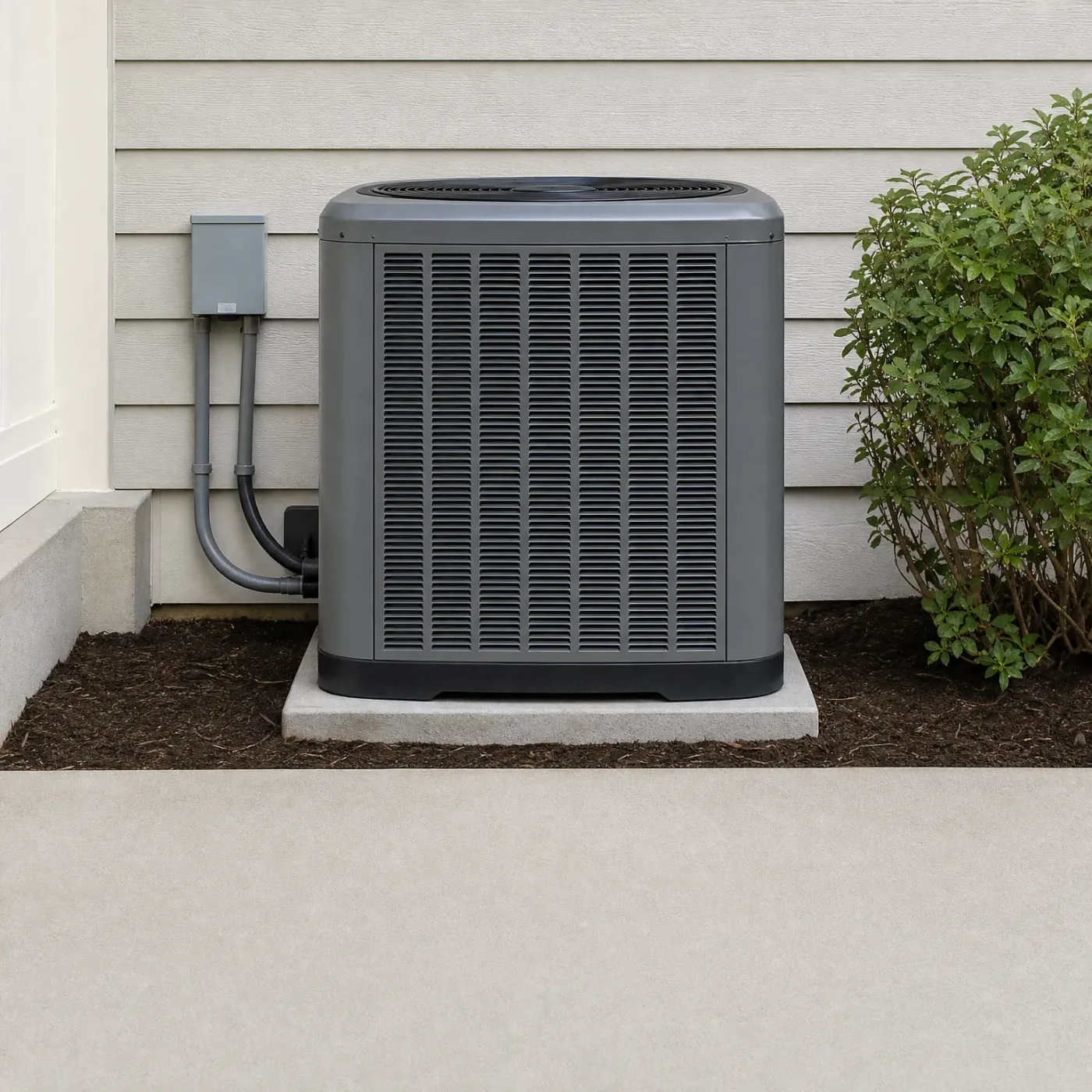
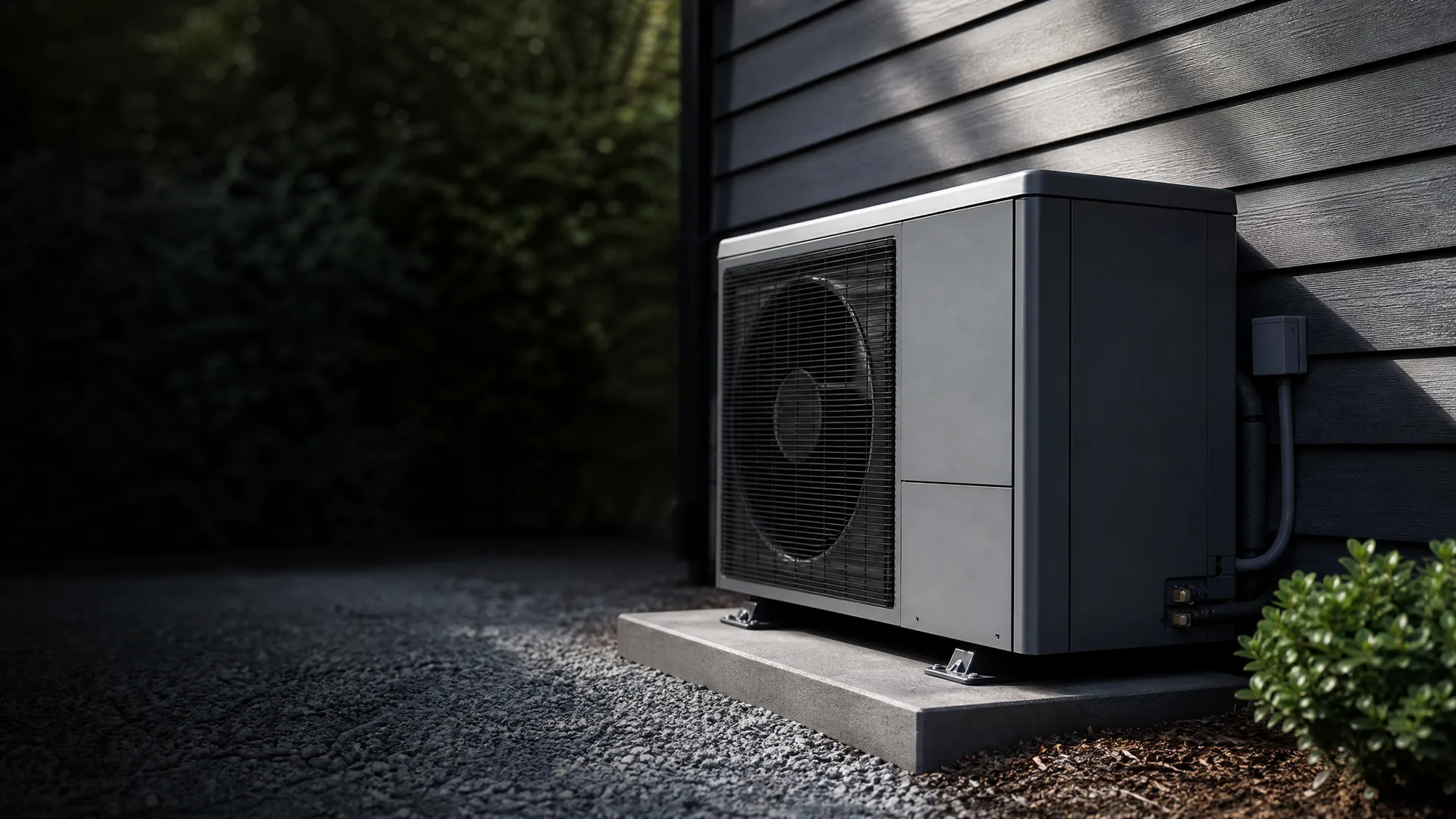
Running the way it should
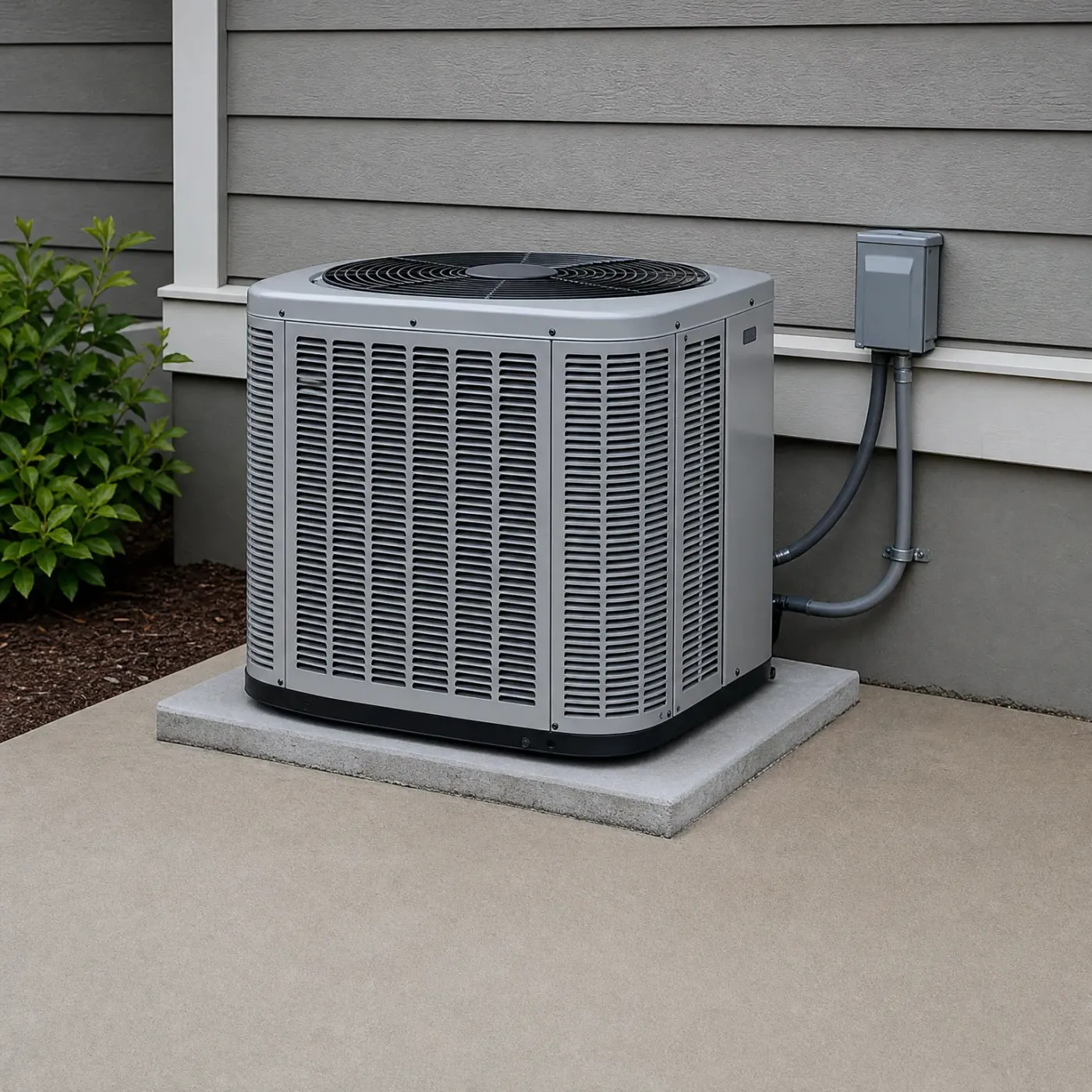
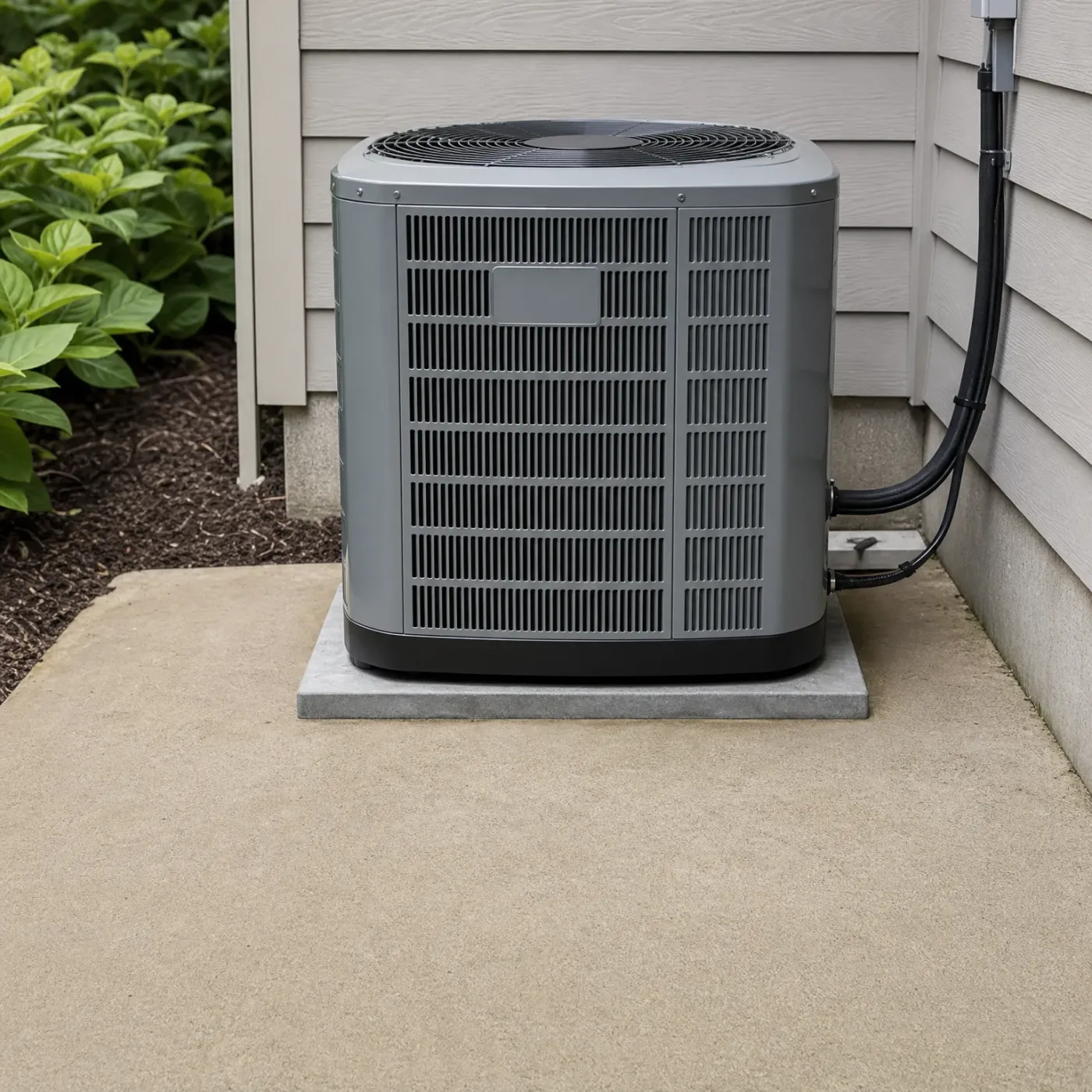
A heat pump like this one draws power through the disconnect on the wall and moves heat in or out depending on the season. If yours sits clean on its pad with nothing blocking the airflow around it, it can cycle through a Nebraska summer and into a cold snap without strain.
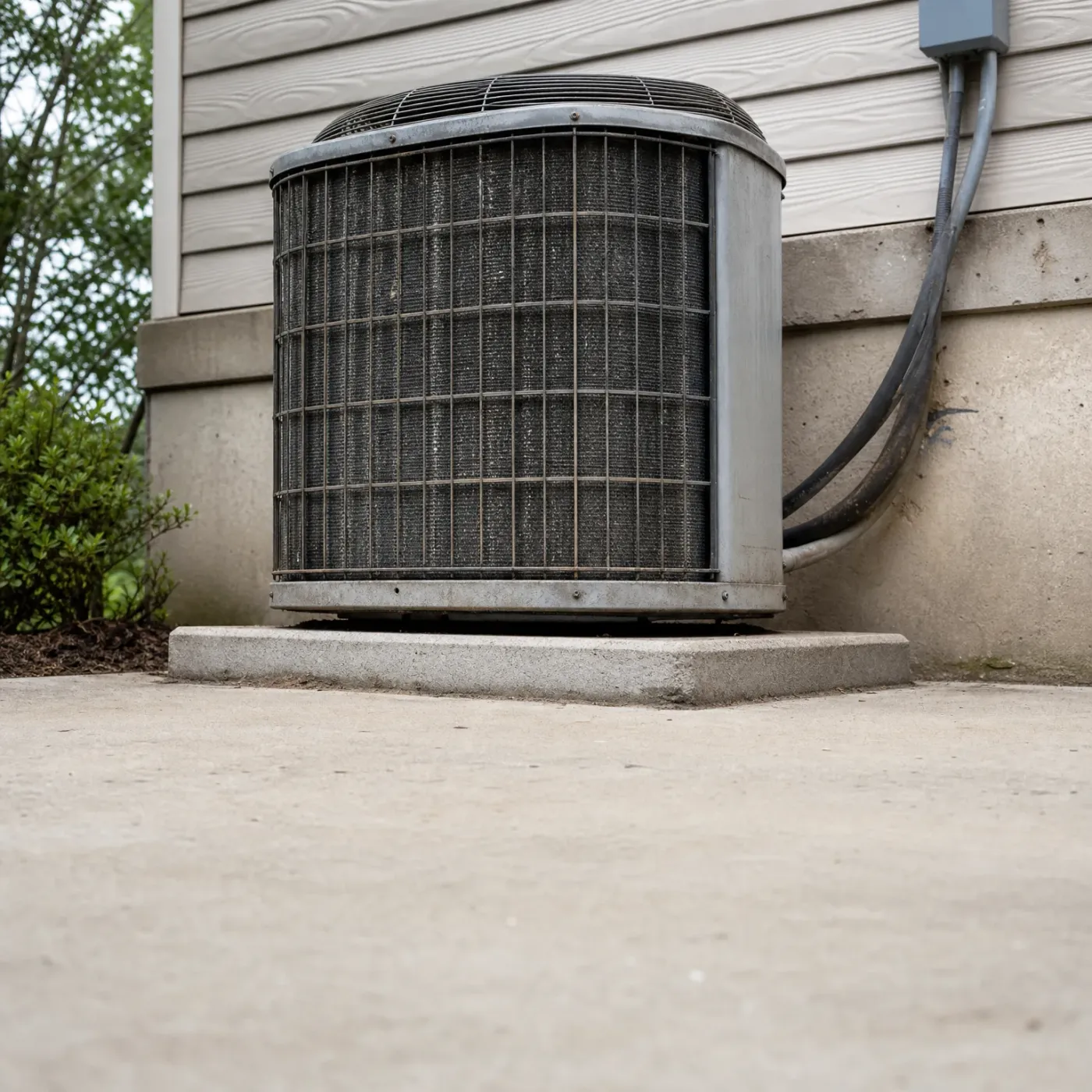
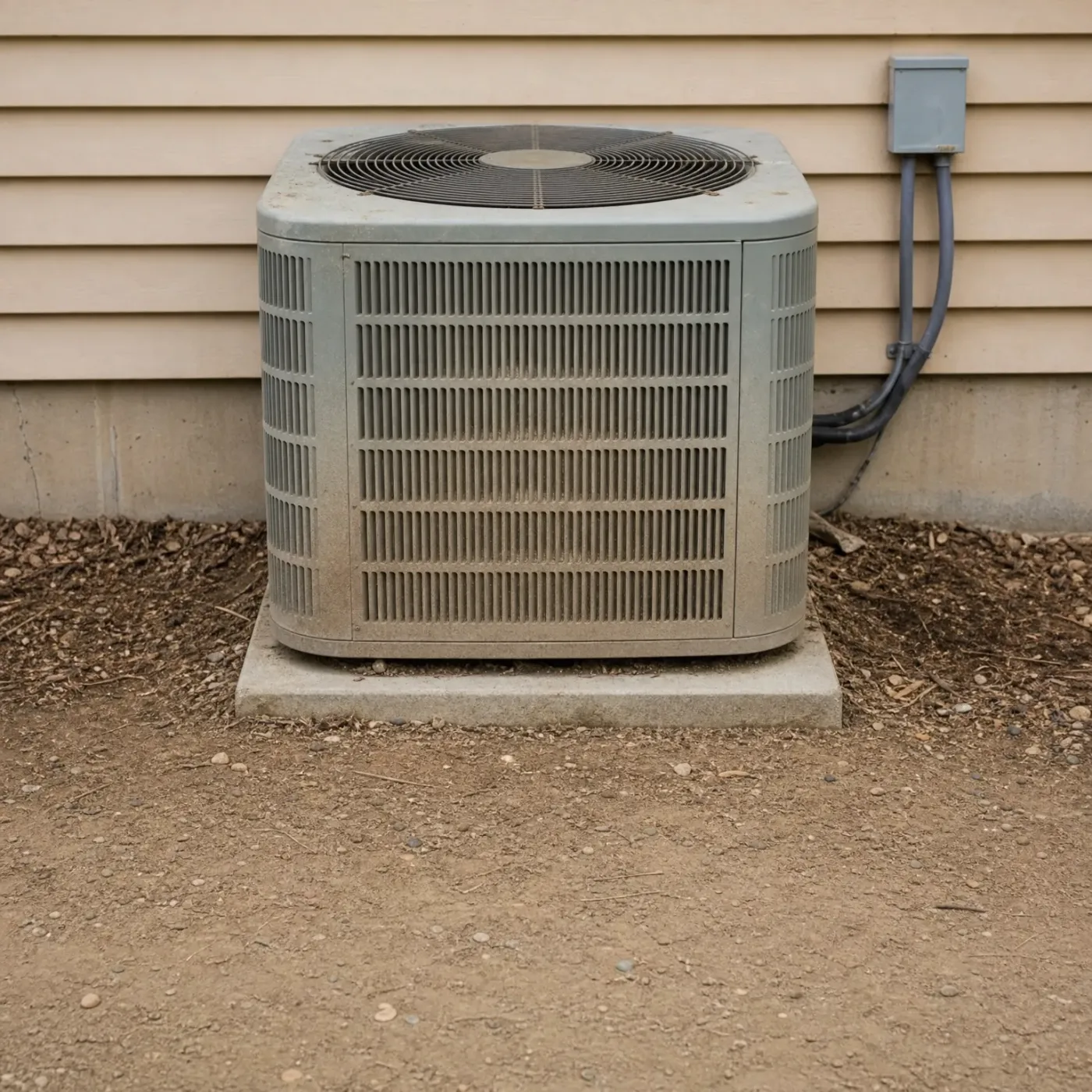
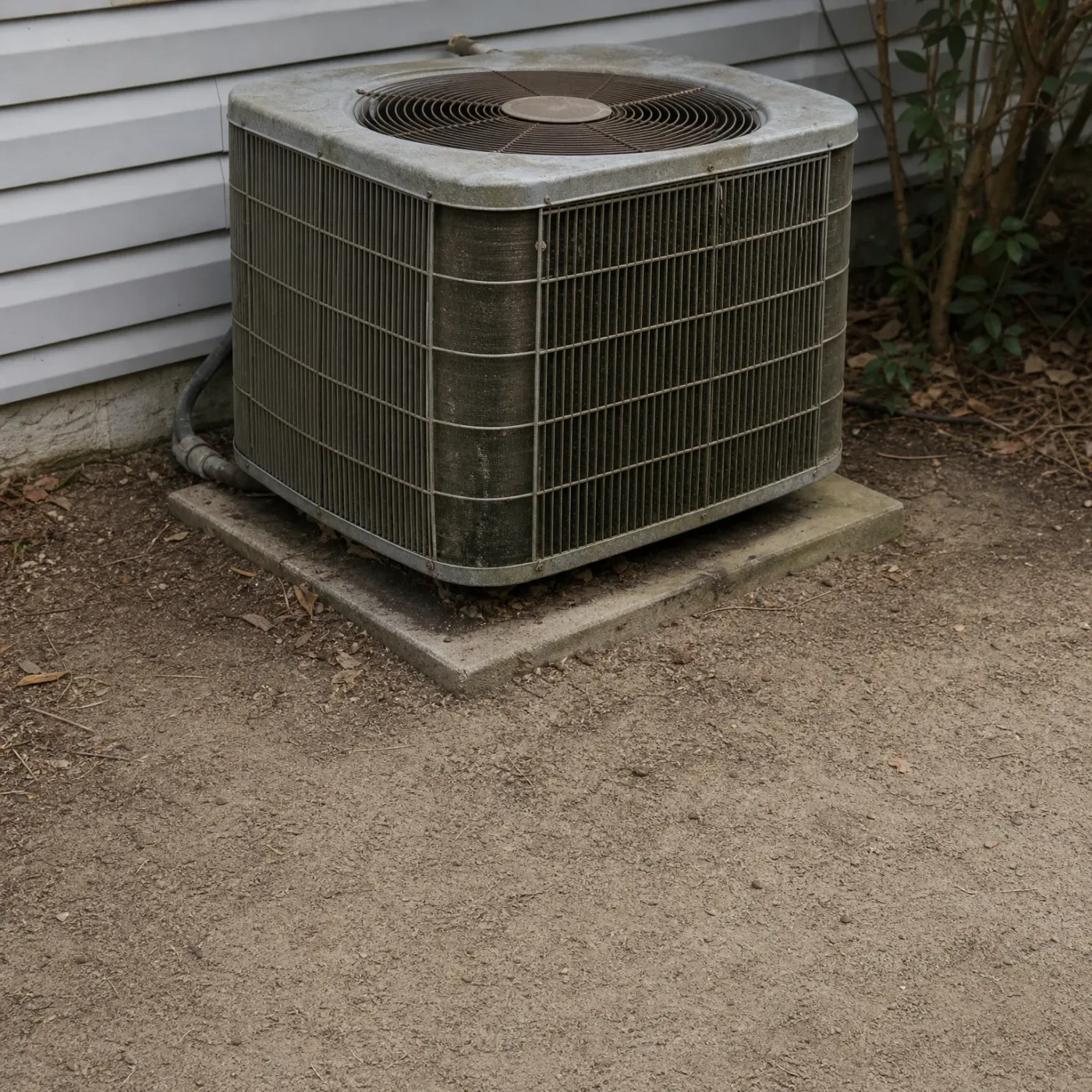
Showing its age
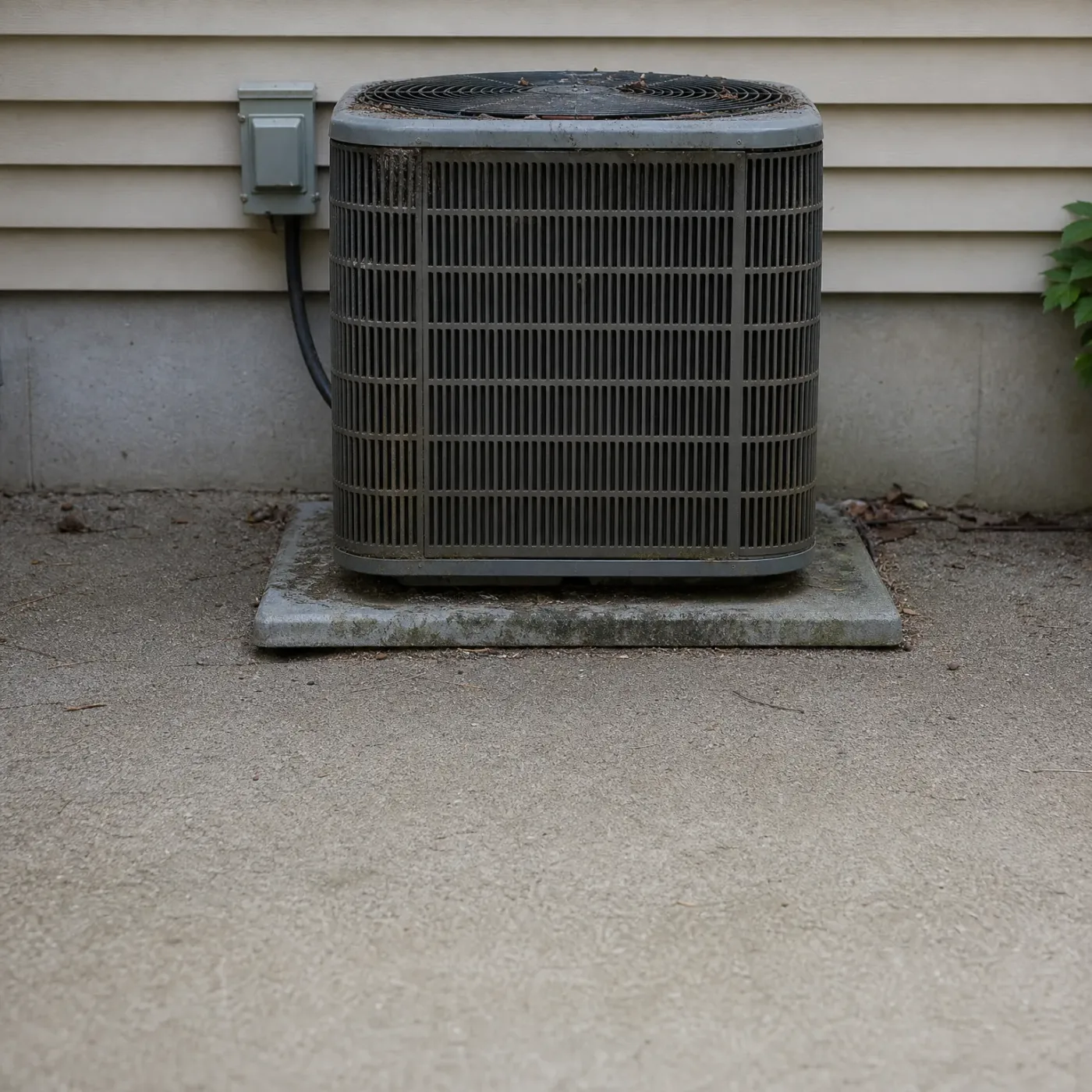
Dirt built up on the coil like this makes the unit work harder to move the same amount of heat, and that shows up most on the days you need it least able to struggle, a July afternoon or a January night below freezing. A unit in this shape is worth having looked at before the weather decides for you.
Power costs 12.05 cents per kilowatt-hour statewide
At 12.05 cents a kilowatt-hour, running a heat pump through a Nebraska winter costs less here than in most states. That matters on the days it's doing all the work itself, and it matters even more on the coldest nights when it's running alongside the gas furnace backing it up.
EIA-861 2025 statewide residential average
A clean unit on a clear pad can pull heat from outside air even when Nebraska drops well below freezing.
A grille packed with dust and debris makes the unit work harder for less heat, on the nights it can least afford to.
A Nebraska summer feels heavier than its temperature suggests, and the reason is moisture. Averaged across the homes here, the National Weather Service puts the summer dew point at 61°F, which lands on the sticky side. That's the air your heat pump has to wring out every time it cools your house in June, July and August. A heat pump that's sized and charged right will pull that moisture out along with the heat, so your house feels dry even when the thermostat reads the same number it did yesterday. One that's undersized or low on refrigerant will cool the air but leave it damp, and you'll notice it on your skin before you ever see it on a gauge.
NASA POWER T2MDEW county cells weighted by homes
Is your heat pump keeping up on the coldest nights
On a hard freeze, listen for the furnace kicking in while the outdoor unit is still running. That's the system working as designed, splitting the load between the heat pump and the gas backup. What shouldn't happen is the house losing ground: rooms that stay cold no matter how long the furnace runs, or air coming out the vents that feels barely warm. That points to the heat pump not pulling its share before the switch to gas happens, or a changeover that isn't triggering when it should. Left alone, the furnace ends up carrying nights it wasn't sized to carry by itself, and the gas bill shows it before anything else does. In summer, watch for the opposite problem: a unit that runs constantly but never quite gets the house to feel dry.
Before you get your heat pump installationAfter you get your heat pump installation
Gas Backup or Heat Pump First
Keep gas as primary
The furnace handles everything below the heat pump's cutoff, so cold nights don't depend on backup heat strips to make up the difference.
Gas here is cheap enough that some homeowners run the furnace more and the heat pump less, just to keep the thermostat simple.
A furnace sized for the whole house doesn't care if the heat pump underperforms on a given night.
You still get the heat pump's summer cooling and its efficiency on milder winter days without changing how you heat.
Two systems means two things that can need service, and a contractor has to understand how they're set up to work together.
Lean on the heat pump
Letting the heat pump carry more of the winter load means the furnace runs less and the gas use drops.
A cold-climate unit set up to handle more of the cold can cut into the furnace's share on all but the hardest freezes.
It puts more hours on the compressor, so how it's installed and maintained matters more over the years.
Summer cooling stays the same either way, since the heat pump is doing that job regardless of how winter is split.
Shifting the balance toward the heat pump usually means a contractor adjusting the setpoint where the furnace takes over.
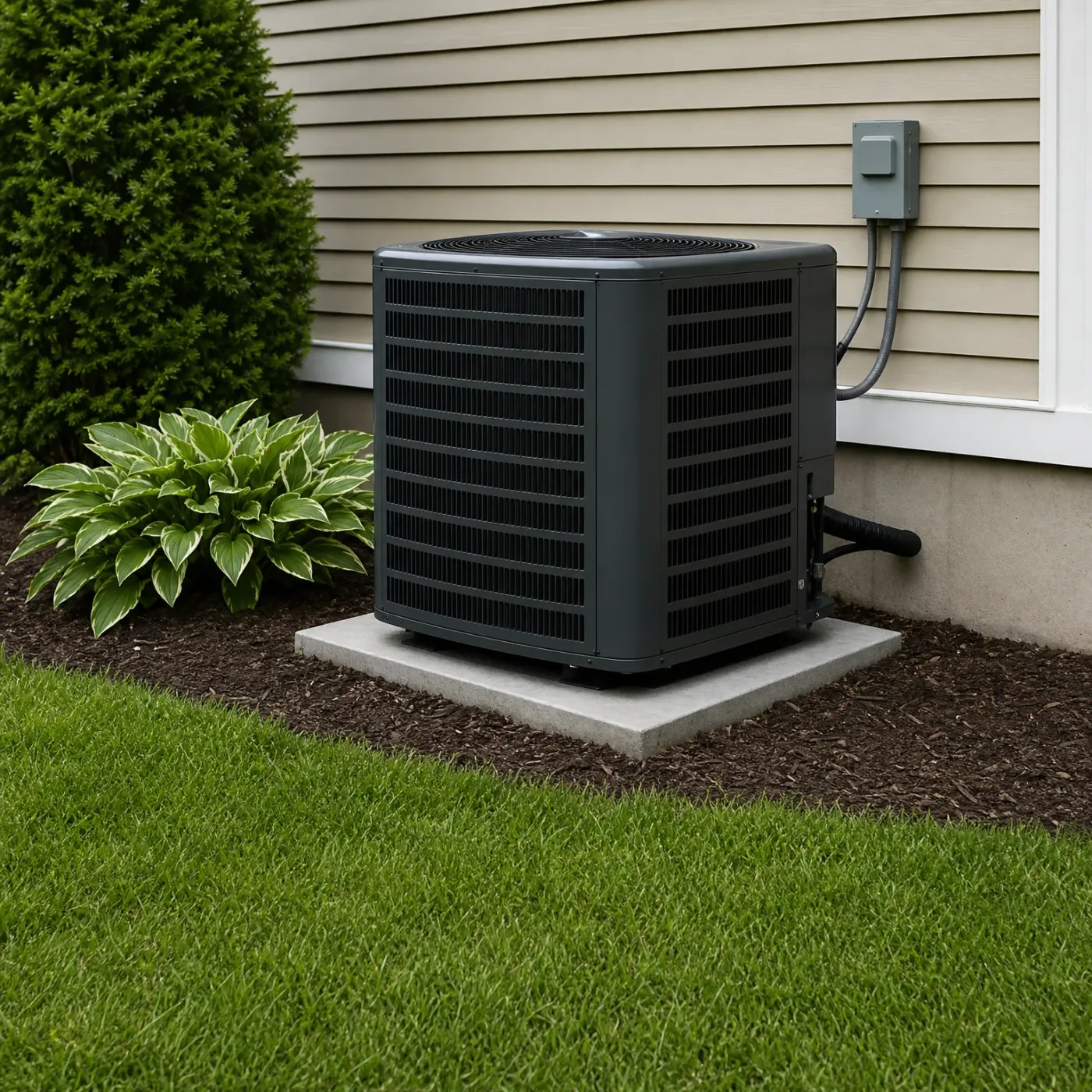
Clean and clear
Mulch and lawn around the pad, nothing stacked against the sides, the disconnect box free and reachable. Air moves through the coils the way the unit needs it to, so it can still pull heat out of cold air on the nights that matter most.
Caked in grime
Dirt packed into the grilles and across the top panel blocks the airflow the unit depends on. It has to run longer to move the same amount of heat, and on the coldest nights that's exactly when you don't want it struggling.
Worth it comes down to how it's set up
A cold-climate heat pump is worth having in Nebraska. It cools through a sticky summer, it carries the heating load through most of the winter, and cheap power here means it does that without running up the bill the way it might elsewhere. Paired with the gas furnace already in the house, it covers the mild months and hands off on the nights that drop hard, which is what the pairing is built for.
What decides whether yours is doing that job is the installation. Sizing it to the house, setting the point where it hands off to gas, keeping the outdoor unit clear, all of that comes from the work done when it went in or whoever services it after. If you're not sure yours is set up right, a contractor who knows Nebraska installs can look at what you have and tell you where it stands, and you won't have to track one down or explain your system twice to get that answer.