How long a heat pump lasts in Norfolk, NE

Find my pro

A heat pump in Norfolk works year round, not half the year like it might somewhere milder. It covers your heat through a Nebraska winter and your air conditioning through a muggy summer, and that steady use shapes how long it holds up. Most homes around Madison County run on gas, so a heat pump here often isn't your main furnace, and that changes what kind of wear it sees too. If you're trying to figure out where your system stands, the honest answer depends on how it's been installed, sized and kept up, not just its age on paper. A local contractor who services heat pumps in this area through both seasons can look at yours and tell you what's actually going on with it, rather than guessing from a chart. Answer a few questions about your system and you'll be matched with one licensed contractor working in Norfolk, not a handful of companies competing for your call. They'll reach out and walk through what they find.

A heat pump in Norfolk typically lasts 12 to 15 years. It runs harder here than it would somewhere with a mild winter, because it's the only thing keeping the house warm when temperatures drop well below freezing, and the only thing cooling it when the humidity sits heavy in July and August. That year round work adds up faster than it would on a system that only runs half the year. Cold snaps push the unit into defrost cycles more often, and the compressor spends more hours running overall. Most homes around Norfolk heat with gas, so a heat pump here is usually doing cooling duty most of the year and backup or supplemental heat the rest, but even that lighter winter role still counts toward its working hours. How well it was sized and installed for your house matters too. One that's too small for the square footage runs constantly and wears out sooner. If yours is getting old or struggling to keep up, that's worth a look before it fails outright.

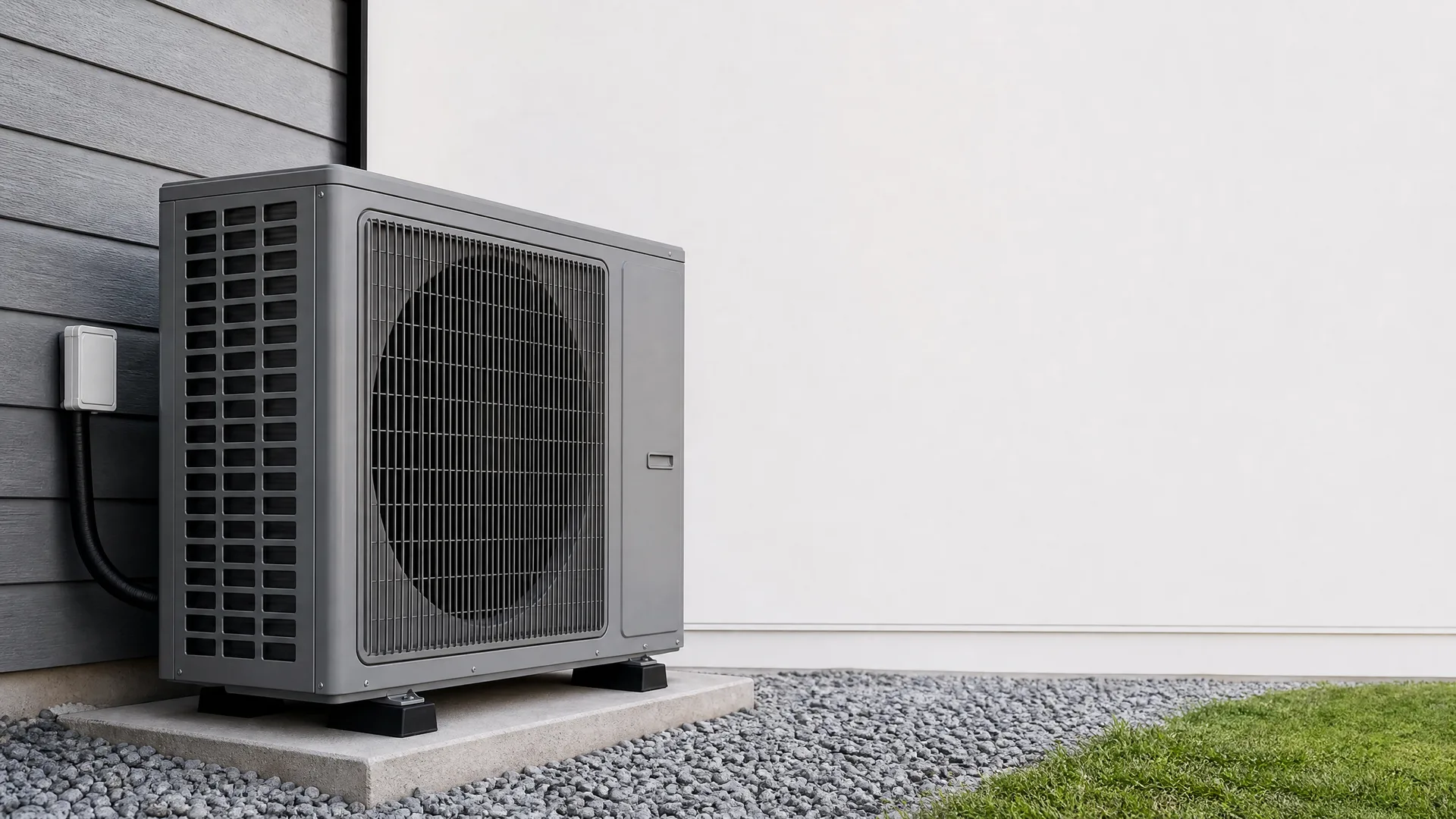
A gray outdoor heat pump unit on a concrete pad beside a house with dark horizontal siding and a plain white wall, surrounded by gray gravel next to a strip of grass.

Why the cold shortens its life

Below freezing, a heat pump pulls heat from outside air that has little to give. The outdoor unit works harder and runs longer to keep up, and the compressor sees more hours of work in January than it does in June. Most homes here still heat with gas, so the heat pump that's carrying a Norfolk winter on its own is doing more than a furnace backed up by one. That extra strain adds up across the 12 to 15 years it's expected to run.

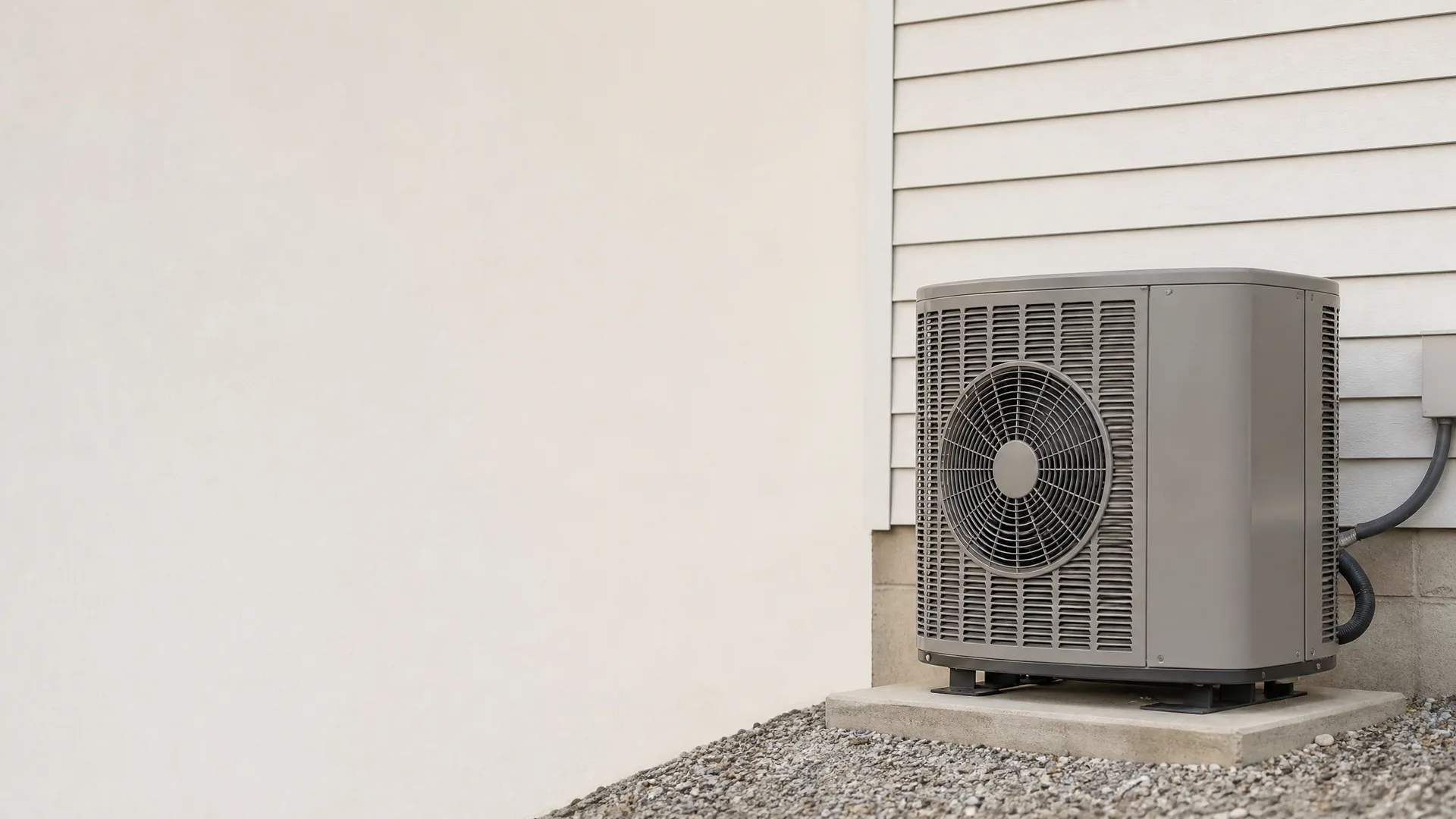
A gray outdoor heat pump unit on a concrete pad over gravel, beside a house with horizontal siding and an adjoining light stucco wall.

What backup heat changes

Some heat pumps in Madison County pair with a gas furnace or electric strip heat for the coldest stretches, switching over when the outdoor temperature drops too low for the heat pump to keep up on its own. When that happens, the compressor gets a break instead of straining through single-digit nights. A heat pump that shares the hardest days with a furnace tends to hold up longer than one left to handle a Nebraska winter by itself.

Why does a heat pump in Norfolk work so much harder than one somewhere milder?

  • Winter nights average 15°F

    Overnight lows average 15°F here in December, January and February, well below freezing where the compressor loses efficiency fastest.

  • Heat runs October through May

    Heat runs October through May here, about eight months of the year the compressor is working to keep the house warm.

  • Cooling runs June through August

    Cooling runs June through August, so the same unit shifts straight from eight months of heating into three months of AC.

NOAA nClimDiv 1991-2020

Backup heat strips take the edge off

When outdoor temperatures drop hard, a heat pump leans on electric resistance strips to keep up with the house. Those strips do their job, but they're pulling full power the whole time they run, and in a stretch of single digit nights that adds up fast on the bill. The compressor itself isn't working harder in this case, it's getting help, but that help isn't free. Homes that lean on strip heat often through the coldest weeks see that reflected when the next bill comes.
A furnace handles the deep cold alone

Most homes around Madison County pair a heat pump with a gas furnace instead, and the furnace takes over once temperatures fall past a set point. Gas is cheap here, so that switch keeps the heating bill down during the harshest stretch of winter. The heat pump still does the milder months on its own, spring and fall mostly, which spares it some of the hardest running hours. Either setup works. The difference is what carries the load when it's fifteen below outside.

Power here costs 9.97 cents per kilowatt-hour

At 9.97 cents a kilowatt-hour, running the backup strips on a hard January night costs less here than in most places. That's some relief against a system that's already working overtime, though it doesn't change the wear those cold snaps put on the compressor.

EIA-861 2025

A heat pump that's worked that hard for twelve winters doesn't owe you much more. If yours is nearing that age and the heat strips are kicking on more than they used to, that's not a fluke.

It's the compressor telling you it's tired. Replacing it before it fails in a January cold snap means you choose the timing, not the weather.

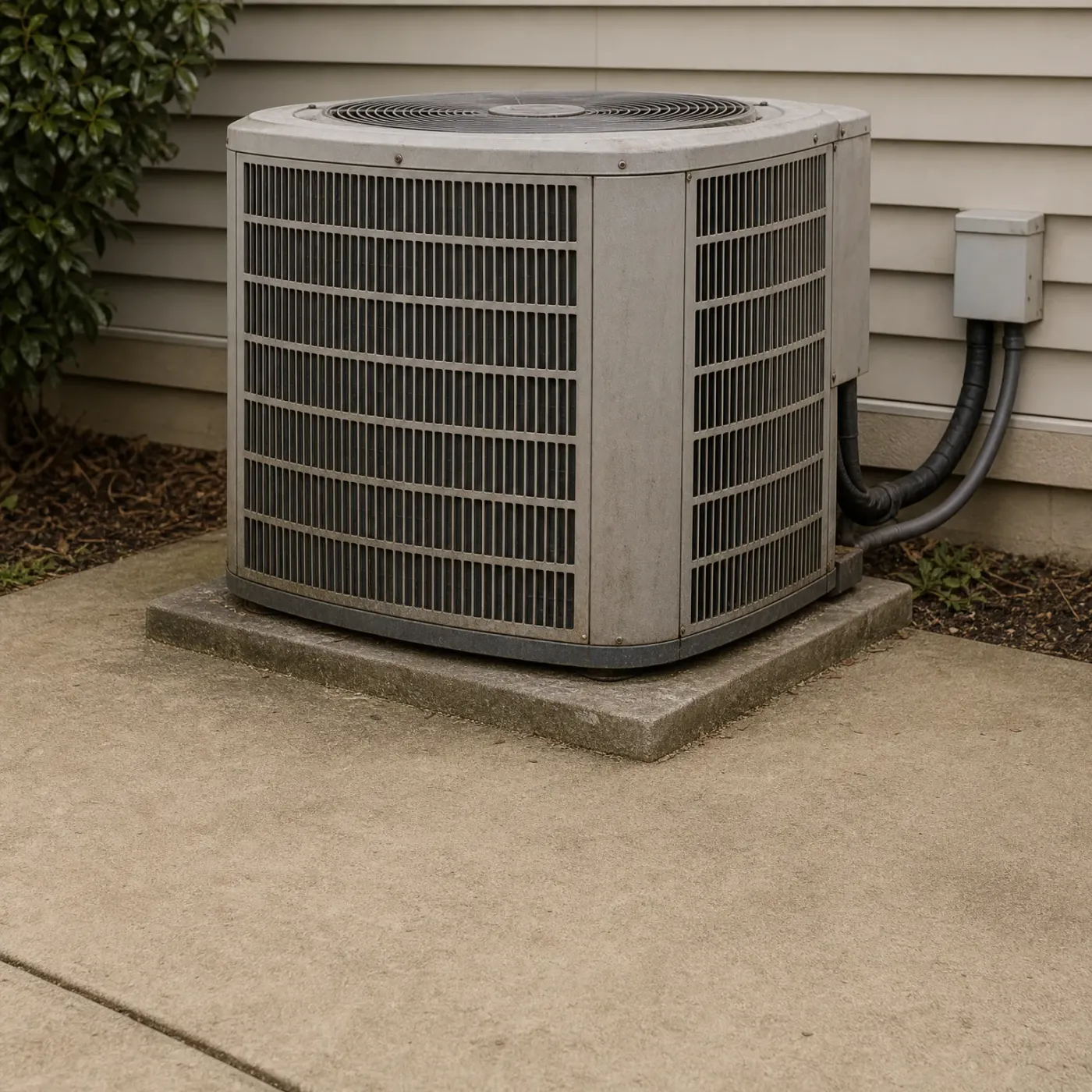
An outdoor condenser unit sits on a concrete pad beside a house with horizontal vinyl siding, with a gray electrical disconnect box and conduit on the wall and a shrub at left.
Before you get your heat pump installation
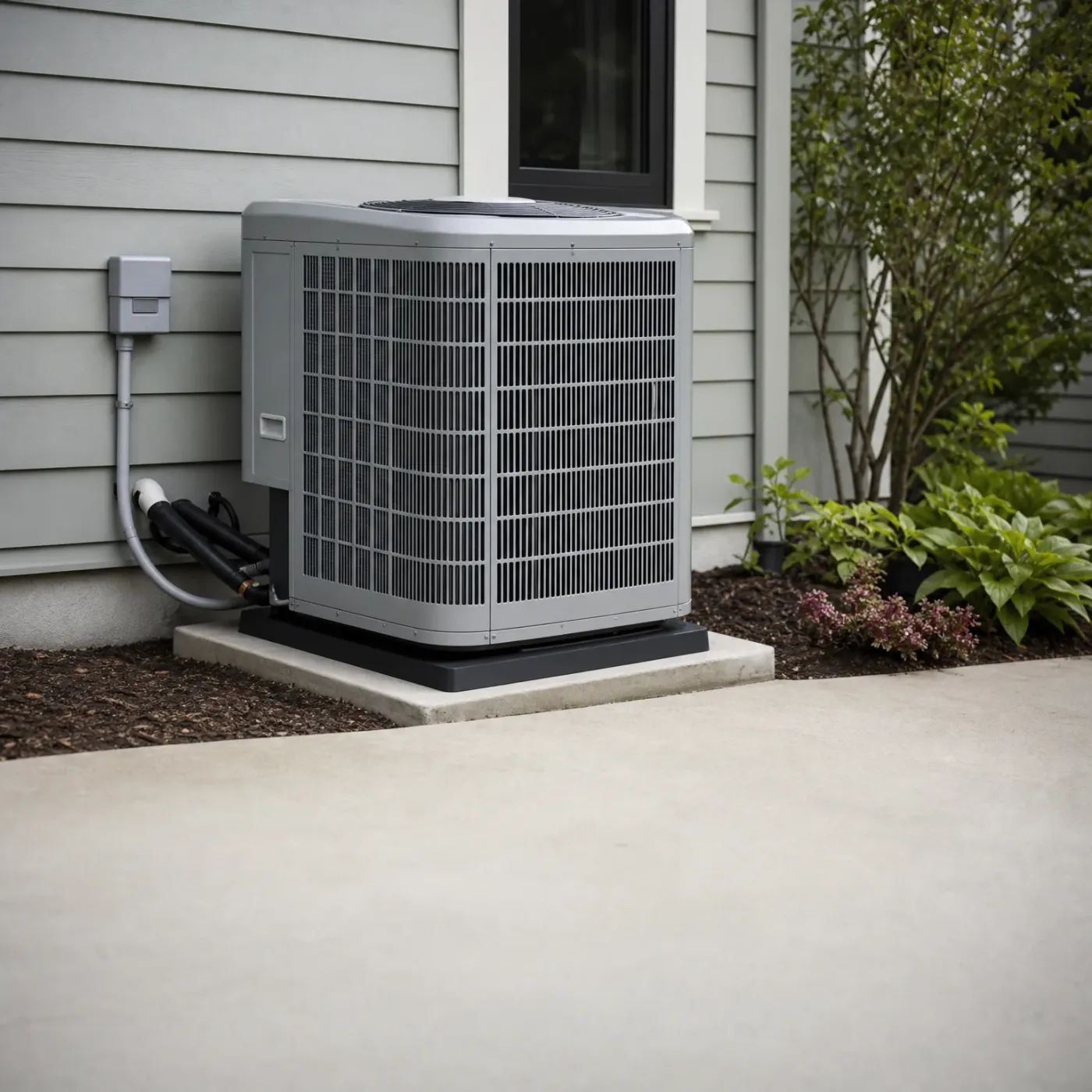
A gray outdoor condenser unit on a concrete pad beside a light-colored lap-sided house, with a wall-mounted disconnect box, refrigerant lines, mulch bed and shrubs, and a concrete walkway in the foreground.
After you get your heat pump installation

Get matched with a heat pump pro in Madison County

A licensed installer who works in Madison County gets your project.

Sending the form costs nothing.

How the system actually wears down

  • A heat pump moves heat instead of burning fuel, so the compressor runs almost continuously once outdoor temperatures fall into the teens.
  • A reversing valve switches the system between heating and cooling, and that valve sees far more cycles here than in a furnace-only setup.
  • The defrost cycle melts frost off the outdoor coil by briefly running in cooling mode, which is normal but adds wear over a long winter.
  • A thermostat sensor tells the system when to bring on the backup heat strips, and a failing sensor can call for strips too early or too often.
  • The outdoor fan motor runs year round, in summer heat and winter cold alike, so it logs more total hours than almost any other part.
  • Refrigerant charge has to stay exact for the compressor to work efficiently, and a slow leak can go unnoticed until a hard cold snap exposes it.

A heat pump doesn't burn anything to make heat. It pulls heat out of the outdoor air and moves it inside, and in reverse during summer, it pulls heat out of the house and sends it outside. That back and forth runs through a reversing valve, and that valve works a lot harder here than it would in a house that only runs a furnace. Every time the system switches between heating and cooling, that valve has to move.

Cold weather adds another job. When frost builds on the outdoor coil, the system runs a defrost cycle, briefly flipping into cooling mode to melt it off before going back to heating. That's normal, and it's supposed to happen, but every cycle is a few more minutes of wear on parts that already run long hours in January.

The thermostat sensor that calls for backup heat strips matters more than most people realize. When it's working right, it only brings the strips on when the heat pump alone can't keep up. When it starts failing, it can call for strips too soon or too often, and that's extra load the system didn't need.

The outdoor fan motor runs in July and January both, so it logs more total hours over a year than almost anything else in the system. And refrigerant charge has to stay exact. A slow leak might not show up until a hard cold snap asks the compressor to work at its limit, and that's when a small problem turns into a breakdown.

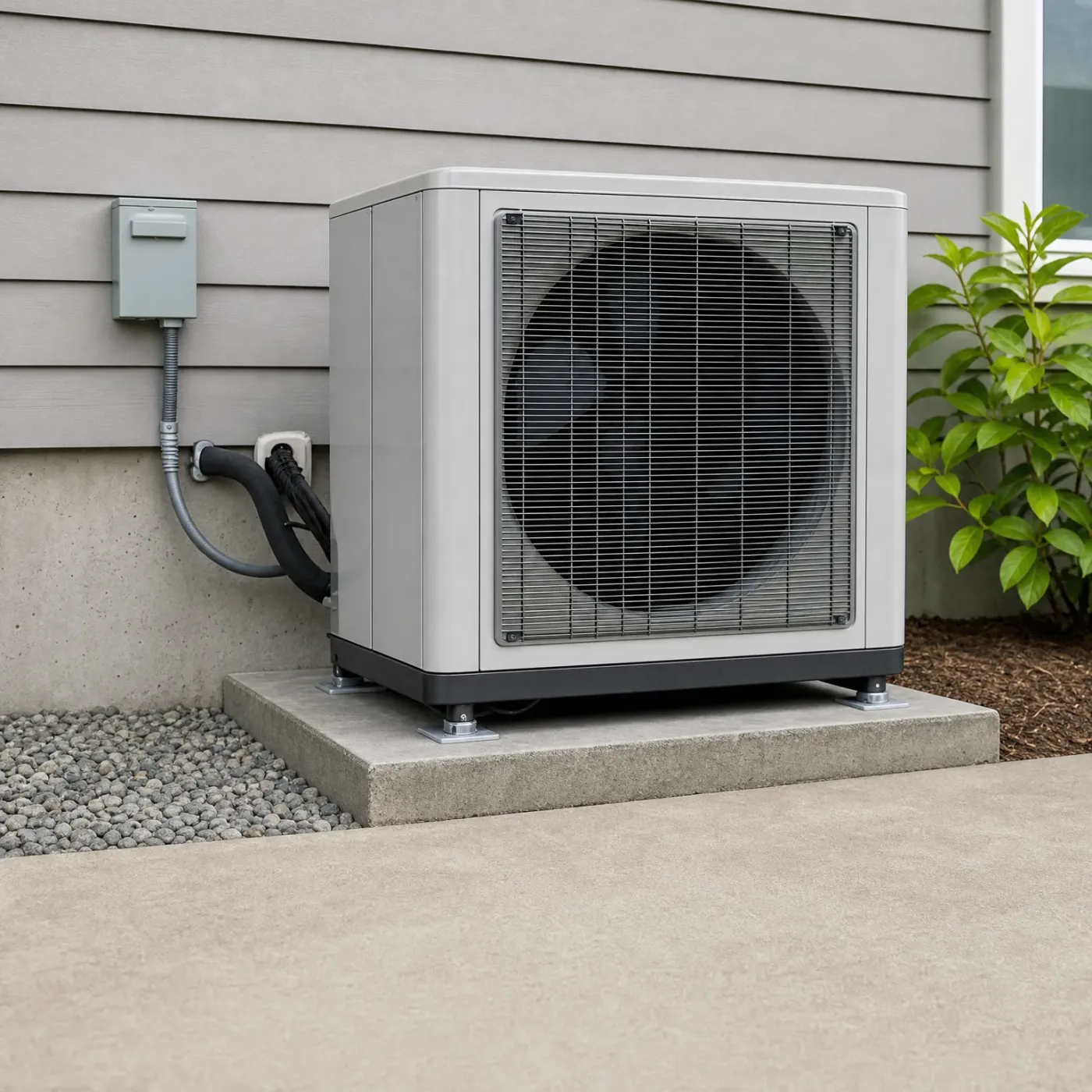
A light gray outdoor heat pump unit mounted on a concrete pad beside a house with horizontal lap siding, with refrigerant lines and conduit running to a wall-mounted electrical box, gravel and a leafy shrub nearby.
This is a heat pump doing its job, lines and wiring intact, coils clear, running the way it should through another Norfolk winter.
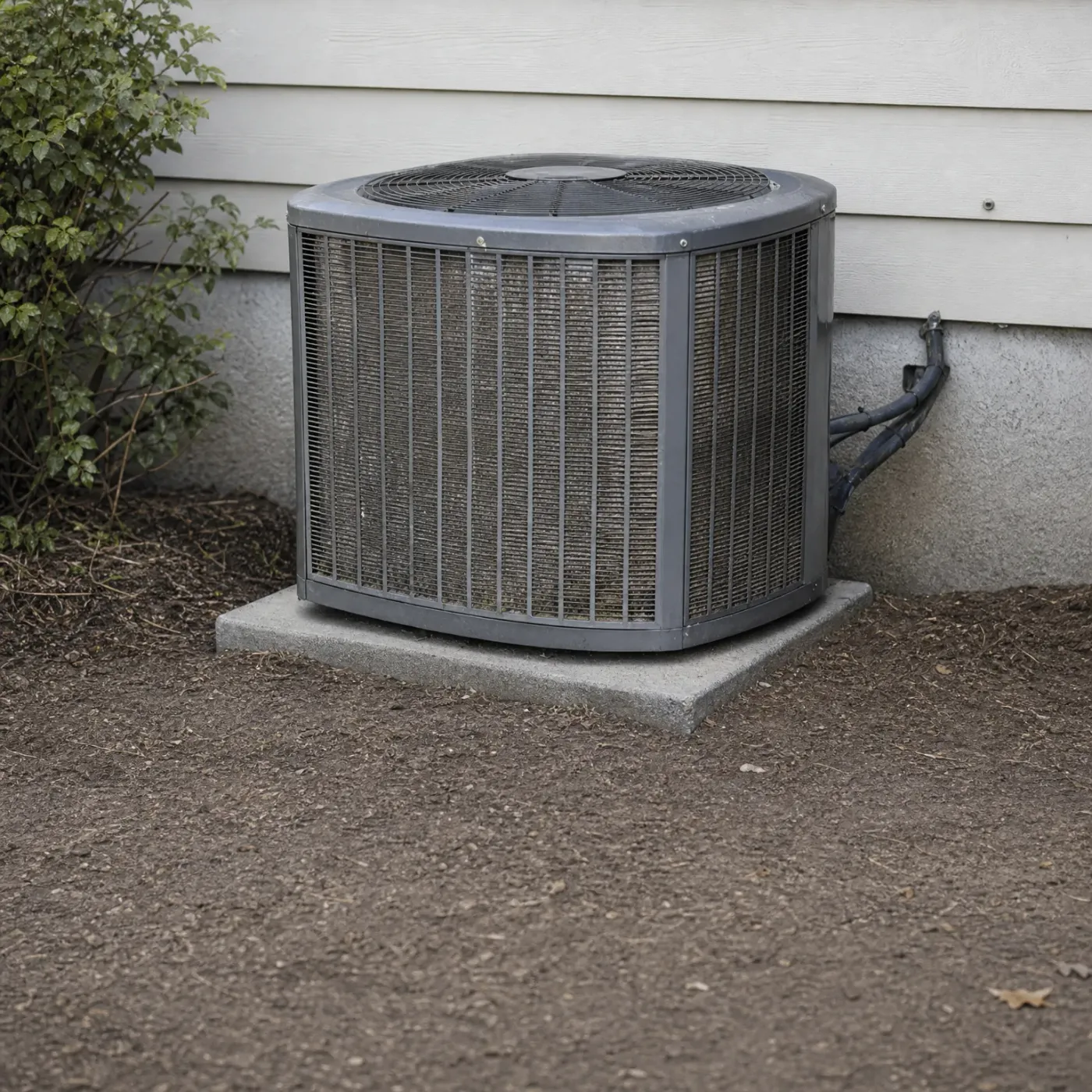
An outdoor air conditioner condenser unit on a concrete pad beside a house with horizontal lap siding, with refrigerant lines entering the wall and a shrub on bare soil to the left.
This one is losing the fight: coils caked with debris, the unit straining to pull heat it can't reach.
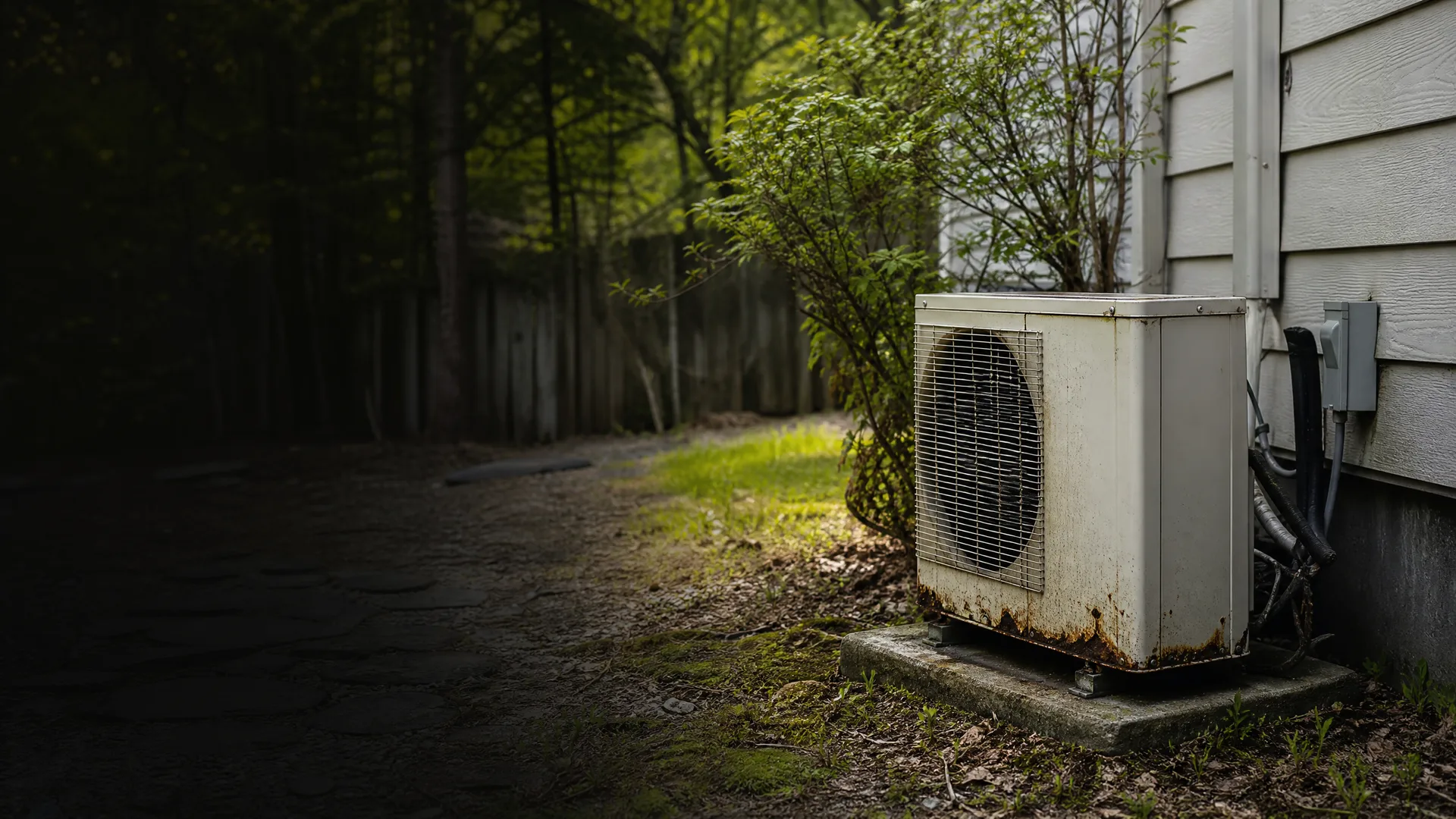
A weathered, rust-streaked outdoor heat pump unit on a concrete pad beside a house with horizontal siding, with shrubs, moss and a dim wooded yard and fence to the left.

The snow's gone from the side yard, just a few patches left in the shade along the fence. You're out checking the flower beds when you notice the outdoor unit sitting there, rust creeping up along its base where the metal meets the concrete pad. It's made it through another Madison County winter, strips kicking on more than you remembered this year. You crouch down and run a thumb along the rust, flaking a little under your finger. The coils look fine. It's just the base, soft in a couple spots now. You straighten up, glance at the thing a second longer than you meant to, then head back to the flower beds.

A woman in a long cream cardigan and jeans stands at an open wooden front door of a gray shingled house with stone-based porch columns, with a second person visible inside, and potted flowers and shrubs beside the entry.

12 to 15 years, if you're keeping track

A heat pump in Norfolk earns its keep for 12 to 15 years. Cold winters and sticky summers push it harder than milder places do, and the compressor and backup strips carry that load every year it runs. Nothing about that changes how you use it, only how long you can expect it to hold up before the heat strips run more than they should and the compressor starts losing the fight.

If yours is getting up there in age, or the repairs are starting to add up, the next step is getting someone local to look at it who knows what a Madison County winter does to this equipment. A contractor who works on heat pumps here all season sees the same wear every year and knows what to check first. You'd be matched with one contractor, not several, and that's who reaches out to talk through what your house actually needs.

A speckled beige ceramic vase holding thin dried branches sits on a round wooden table near a window with sheer curtains, with a dark upholstered chair and draped blanket blurred in the background.
A woman with dark hair in a bun wearing a cream knit sweater sits on a gray sofa in a bright living room, looking off to the side.
A woman wrapped in a knit blanket sits on a gray sofa in a living room, looking toward a bright window with houseplants and an armchair in the background.
A woman in a gray cowl-neck sweater sits on a light sofa with cushions, smiling and looking to the side, with a kitchen and window visible behind her.
A woman with dark hair in a bun, wearing a light linen shirt, sits on a sofa and looks to the side, with a window, houseplants and a kitchen with pendant lights blurred behind her.

Heat Pump Installation

Find a heat pump installation pro in Madison County

The pro who gets in touch is licensed in Nebraska and works in Madison County.

A black smartphone standing upright against a plain light gray background, its screen filled with solid green.
Step 1 of 3: Equipment