Tell us about the job
Takes about a minute. No obligation.

A heat pump here runs its compressor hard through a long, cold heating season, and the reversing valve cycles every time the system shifts between heating and cooling. Homes in Thurston County, NE run heat about eight months a year, from October through May. Contractors diagnosing a failed or underperforming heat pump in this county check compressor amp draw and reversing valve behavior early, because those are the components that have absorbed the bulk of the load. Refrigerant charge and coil condition follow, since restricted airflow and low charge both force the compressor to work harder through every cold month.
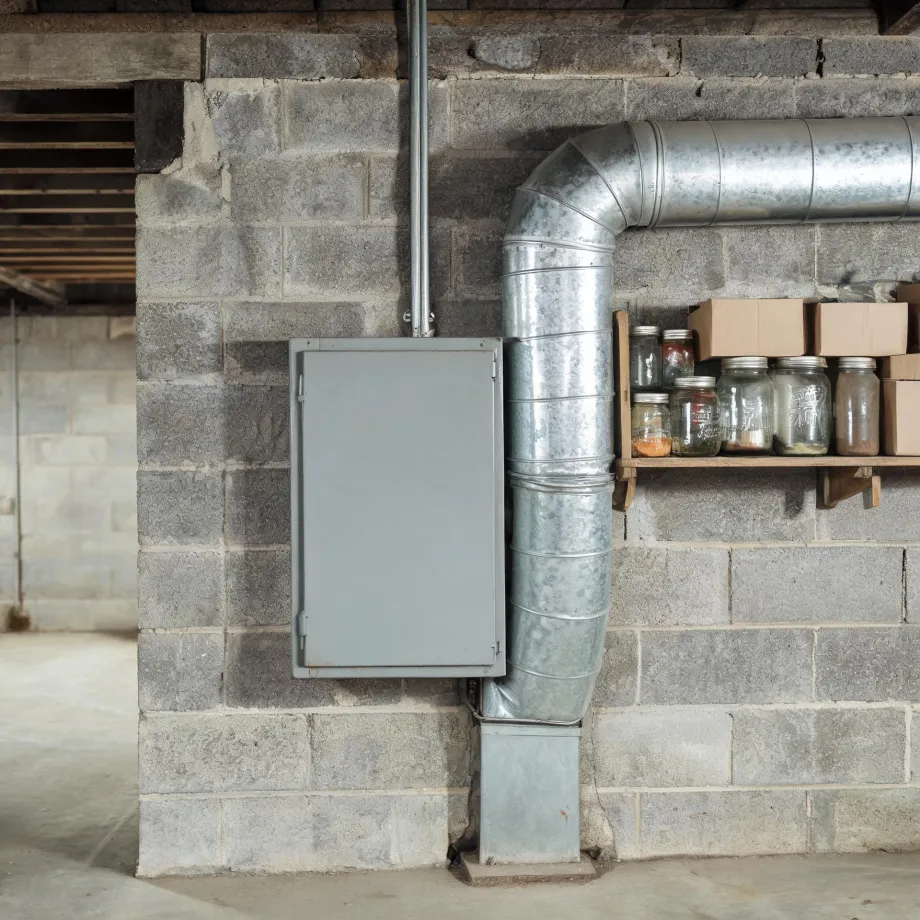
Ductwork that has been adapted, resealed, or partially replaced over the decades carries its history in how a system performs, and that history shows up once a contractor opens the unit and starts tracing faults back to their source. Half the homes in Thurston County, Nebraska were built in 1970 or earlier (2020-2024 ACS 5-year). Housing that old was fitted with whatever equipment each era offered, which means a contractor repairing a heat pump here is checking whether the refrigerant circuit is still intact, whether prior repairs left the system correctly charged, and whether a failing component is still in production. Parts availability on a system running in aging ductwork becomes the variable that decides the repair scope.
The Parts of a Heat Pump a Contractor Checks First
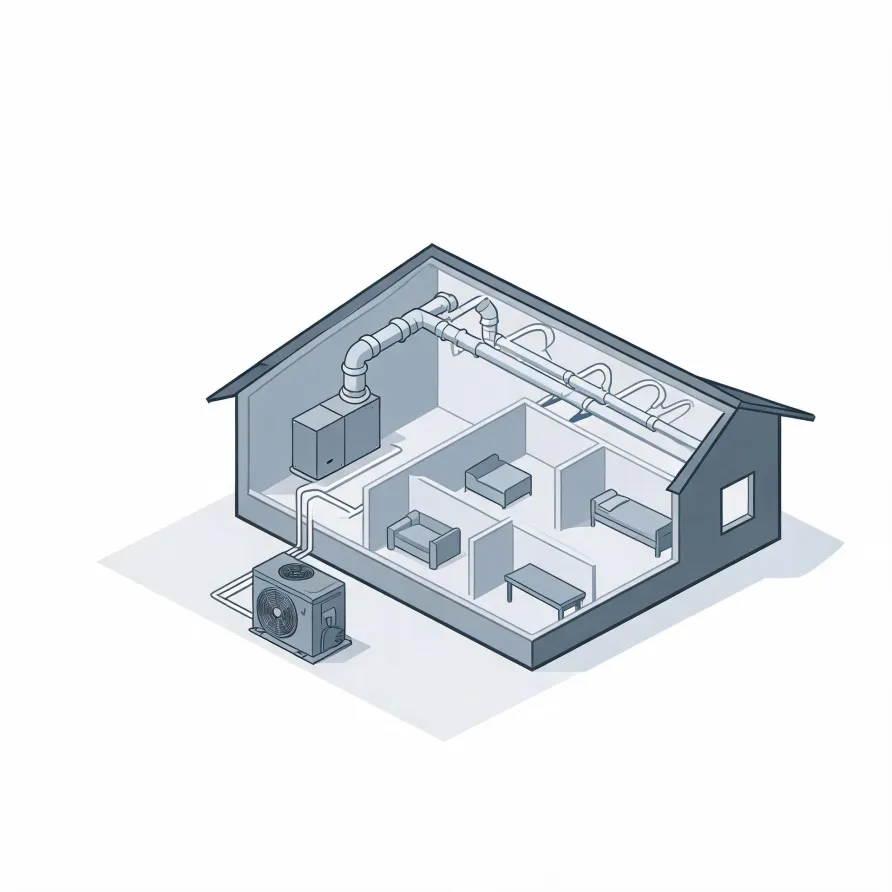
The outdoor unit is the piece most homeowners recognize first, a metal cabinet that sits on a pad outside the house. Inside it are the compressor and the condenser coil, and when a heat pump stops heating or cooling properly, a contractor starts here. A failed compressor, a refrigerant leak at the coil, or a seized fan motor in that cabinet accounts for a large share of heat pump calls.
Inside the house, the air handler holds the evaporator coil and the blower that pushes conditioned air into the living space. The expansion valve, which controls refrigerant flow between the two units, can also be the source of a problem when the system runs but does not move heat. Refrigerant lines connect the two cabinets, and the reversing valve inside the outdoor unit is the part that lets a heat pump run in both directions. When a heat pump blows the wrong temperature, that valve is one of the first things a contractor checks.
The drawing shows a typical heat pump layout, and a licensed contractor determines which components apply and what needs attention in your specific home.
Find a contractor in Thurston CountyThurston County, Nebraska, by the numbers
56 severe weather events were recorded in Thurston County, Nebraska between 2015 and 2024.
NOAA National Centers for Environmental Information, Storm Events Database, bulk CSV export, events 2015-01-01 through 2024-12-31.Half the homes in Thurston County, Nebraska were built in 1970 or earlier (2020-2024 ACS 5-year).
U.S. Census Bureau, 2020-2024 American Community Survey 5-Year EstimatesThurston County, Nebraska holds 2,290 housing units (2020-2024 ACS 5-year).
U.S. Census Bureau, 2020-2024 American Community Survey 5-Year EstimatesOwners occupy 61.0% of the occupied homes in Thurston County, Nebraska (2020-2024 ACS 5-year).
U.S. Census Bureau, 2020-2024 American Community Survey 5-Year EstimatesRules & Standards Behind Heat Pump Repair in Thurston County, Nebraska1 sourced rules and standards
Licensing and Legal Requirements in Thurston County, Nebraska
Nebraska requires registration rather than a licence: a contractor must be registered with the Department of Labor before performing any construction work, though anyone earning less than five thousand dollars a year from construction services is not a contractor under the Act at all.
Severe Weather Events in Thurston County
Weather puts work on heat pumps. How hard the equipment runs, how often it cycles, and how much stress it carries over time are all shaped by what the climate delivers, which is why local weather history belongs on a page about repair.
56 severe weather events, 2015–2024. Source: NOAA National Centers for Environmental Information, Storm Events Database.