Heat pump not heating in Plattsmouth, NE

Get matched with a pro who fixes heat pumps in Cass County.

Get a heat pump pro

Why is my heat pump running but not heating my house?

Cold is setting in around Plattsmouth and your heat pump is running, the fan is on, maybe you can even hear it working, but the air coming out of the vents feels cool or barely warm. That's unsettling when the temperature outside is dropping and you need the house to warm up now, not after someone figures out what's wrong.

It's likely stuck in defrost or low on refrigerant

A heat pump moves heat from the outside air into your house, and when it's cold out that air has less heat to give. Below freezing, frost builds up on the outdoor unit, and the system has to pause and run a defrost cycle to clear it. During that cycle the air coming from your vents can feel cool even though the system is working the way it should. If this goes on longer than a defrost cycle normally runs, the cause is usually a low refrigerant charge, a failing reversing valve, or a compressor that isn't pulling its weight. In Cass County winters, where temperatures regularly drop well below freezing, a heat pump already working hard has less room for a fault like this to hide.

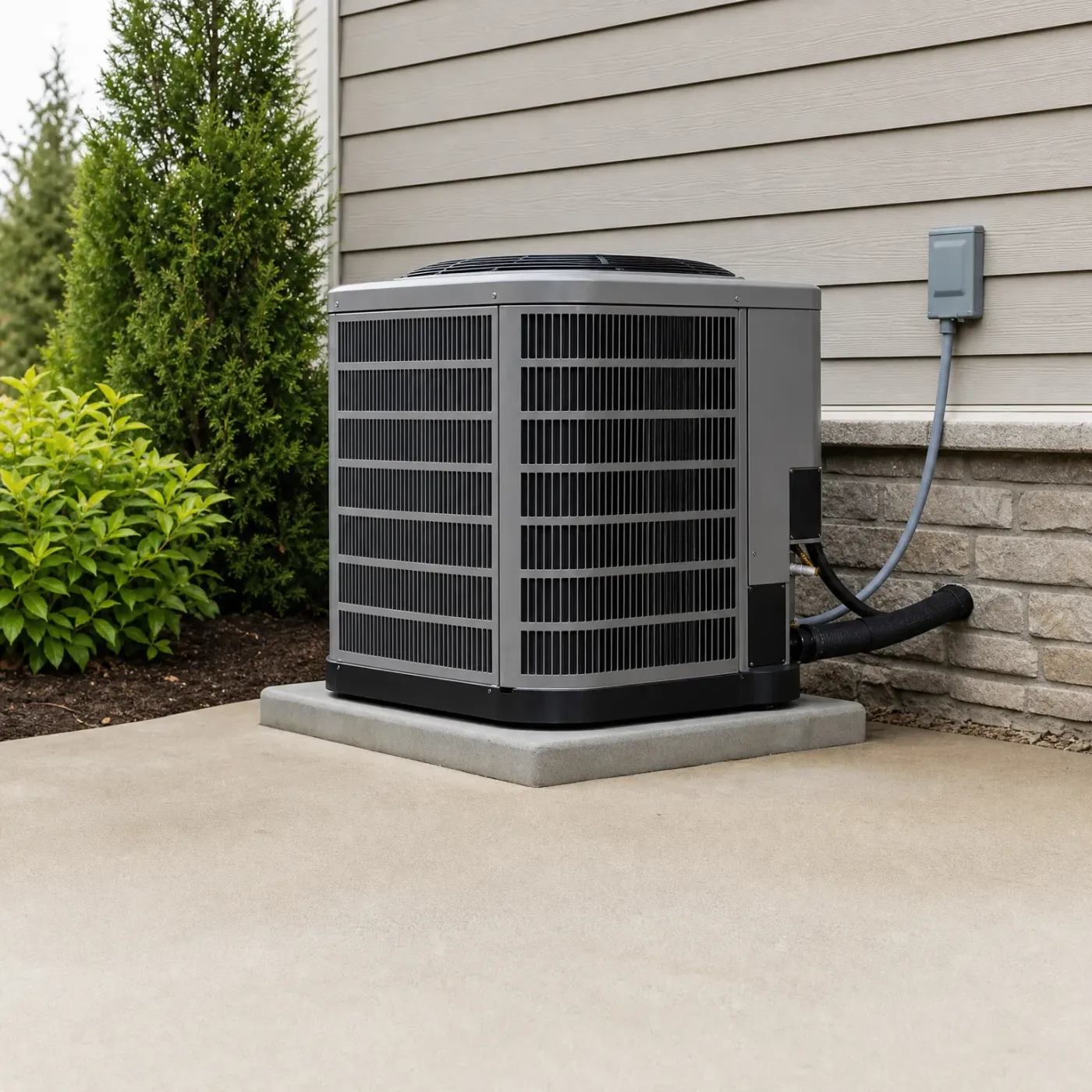
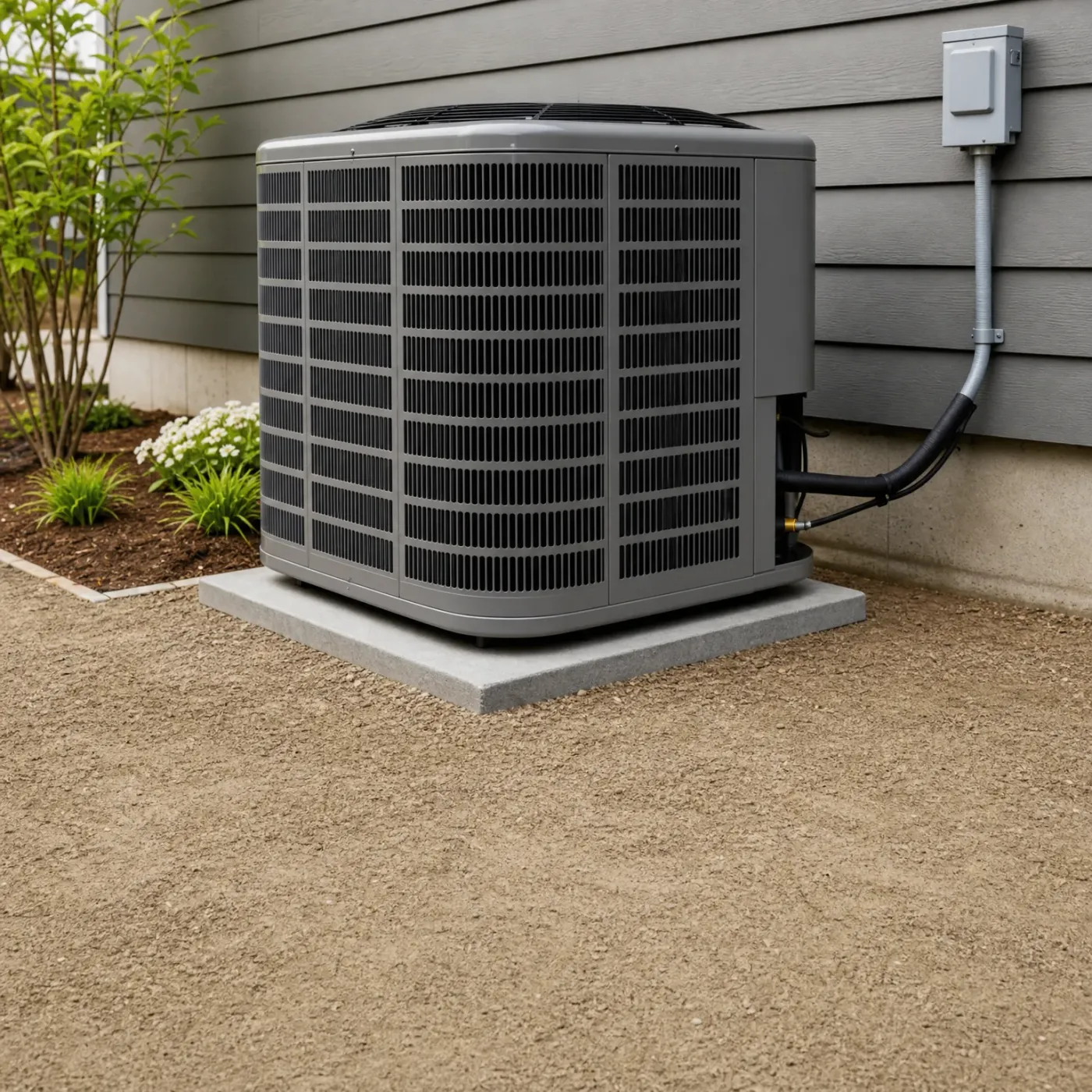
A gray outdoor condenser unit on a concrete pad beside a house with horizontal lap siding, with an electrical disconnect box and insulated refrigerant lines on the wall, gravel in the foreground and a planting bed at left.

Running right

This is what your outdoor unit should look like: clean coil, clear fan grille, lines and wiring running neat up to the disconnect. Air moves through it the way it's supposed to, so it can actually pull heat from the outside air and move it into your house, even when it's cold out.
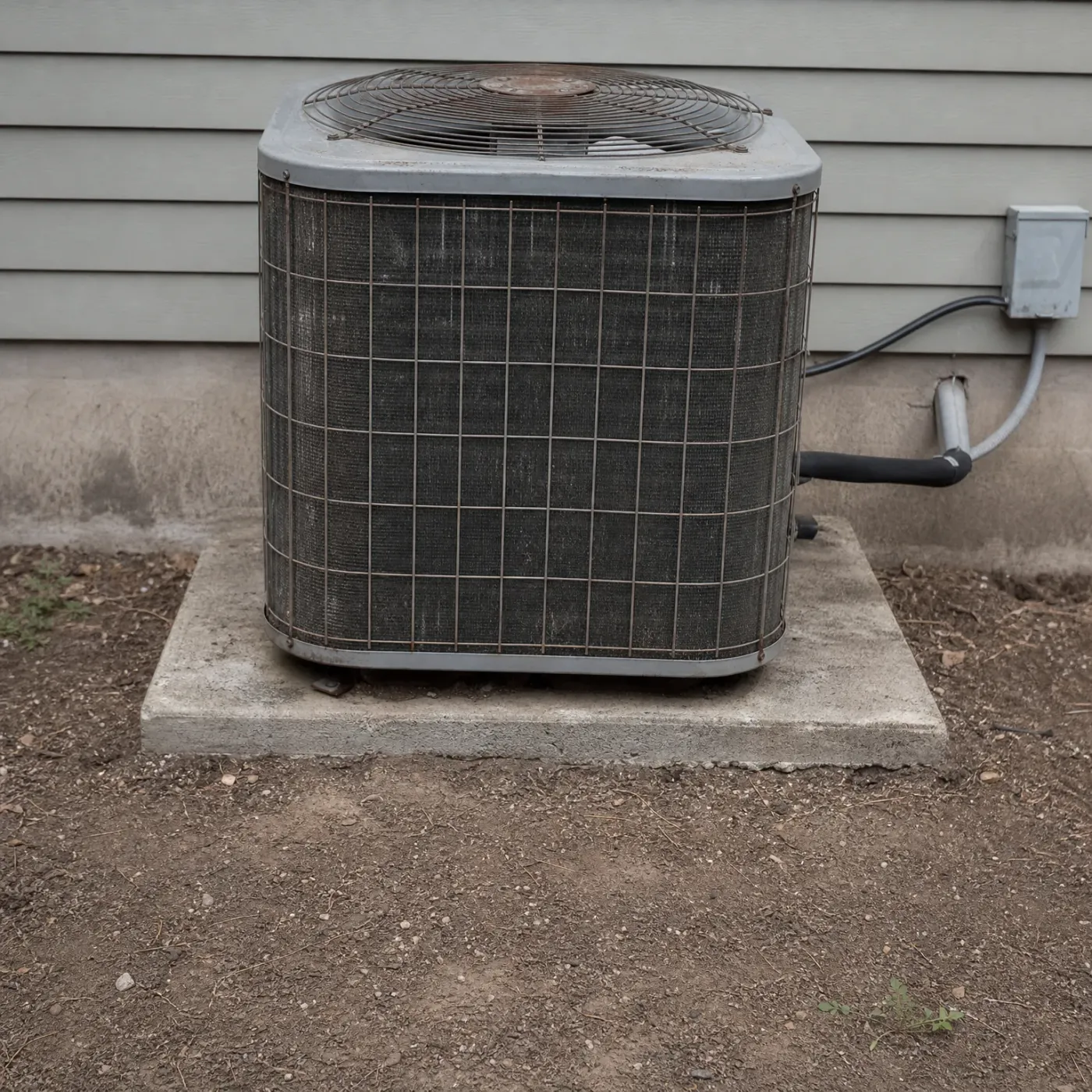

An outdoor air conditioner condenser unit on a concrete pad beside a house with horizontal lap siding, with refrigerant lines and a gray electrical disconnect box on the wall, surrounded by bare dirt.

Running in trouble

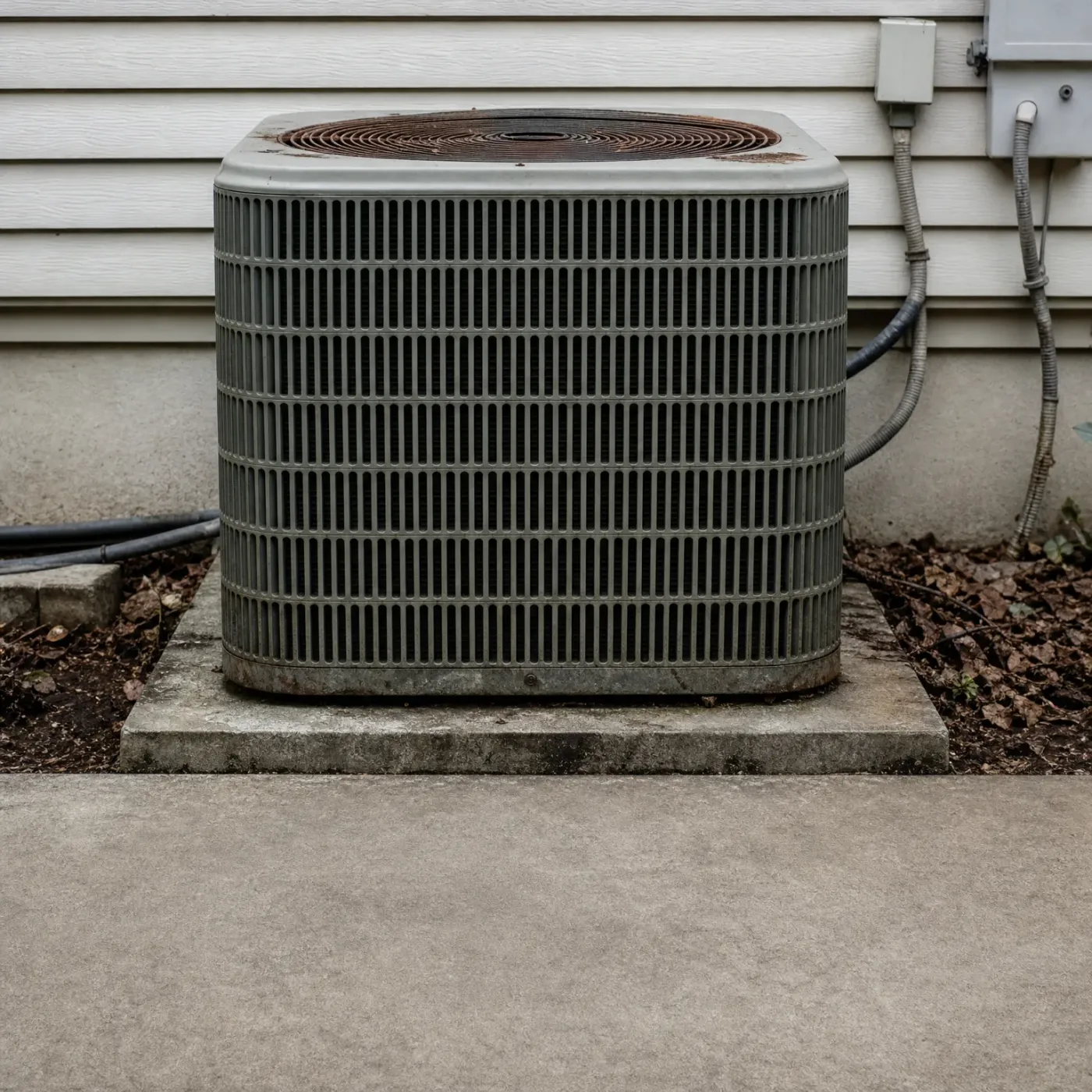
A coil and grille packed with dirt like this can't move air the way they need to. The unit still runs, the fan still spins, but less heat gets through to your vents. If your outdoor unit looks like this, that could be a piece of why your house isn't warming up.

Why does cold weather make heat pump problems worse in Plattsmouth?

  • Winter nights average 18°F

    Overnight lows averaging 18°F push a struggling heat pump past what it can handle, so a minor issue shows up as cold air at the vents.

  • Heat runs October through May

    With heat running October through May, a heat pump here has more months to fail in than it has to rest, so problems surface fast.

  • Cooling runs June through September

    Only four months of cooling means your heat pump spends twice as long heating, so most of what goes wrong with it shows up as a heating complaint.

NOAA nClimDiv 1991-2020

Why heat pumps lose ground in the cold

A heat pump moves heat from outside air into your house. Below freezing, there's less heat out there to move, so the system has to run longer to keep up. Below about 25 to 30 degrees, most heat pumps in Cass County need backup heat strips to kick in and carry the load. If those strips aren't coming on, the system is left trying to heat your house with outside air that's too cold to do the job well, and the vents will feel cool even though the unit is running.

What frost on the outdoor unit means

Some frost on the outdoor coil during a cold snap is normal, and the unit defrosts itself on a timer, reversing briefly so the outdoor coil sheds ice while the indoor fan may pause or blow cool air. That's expected and short. A coil that's fully iced over, caked thick, or still frozen solid after the unit has run a while means the defrost cycle isn't working or airflow across that coil is blocked. Left alone, a frozen coil can't pull heat from the air at all, and the compressor can end up working against ice instead of moving heat into your house.

A woman in a cream cowl-neck sweater stands in a lamp-lit room looking out a window at a snow-covered yard with shrubs and bare trees at dusk.
A woman in a gray turtleneck sweater stands near a large window in a lamp-lit living room, looking out at falling snow and snow-covered conifers.
A woman in a chunky knit sweater stands by a large window looking out at snow-covered ground, with a dimly lit living room containing a gray sofa, framed artwork, shelves and table lamps behind her.
A woman in a gray turtleneck sweater stands in a dimly lit living room with a lamp and bookshelves, looking out a multi-pane window at falling snow.

Get matched with a heat pump pro in Cass County

A heat pump that keeps running without warming the house isn't something to wait out through a cold snap in Plattsmouth. Below freezing, that system needs to be working right, or the backup heat is carrying a load it wasn't meant to carry alone, and your bill shows it. Finding out which part has failed, whether it's a stuck reversing valve, a low charge, or a backup heat strip that never kicked in, takes a technician with gauges on the unit, not another hour searching for answers. You could spend the evening calling around Cass County, explaining the same symptoms to three or four companies, and waiting to see who calls back first. Or you could hand that off now and let a contractor who works on heat pumps in this area reach out to you directly. With lows in the teens overnight, the house keeps losing ground while the system runs without fixing anything. Getting someone out to look at it is the only way to know what's actually wrong.

What's Actually Happening Inside the Unit

  • A reversing valve switches the system between heating and cooling by redirecting refrigerant flow, and when it sticks, the unit keeps running in the wrong mode.
  • Outdoors, the unit goes through defrost cycles every so often, reversing briefly to melt frost off the coil before switching back to heating.
  • If the reversing valve sticks mid-defrost, the system can keep blowing cold air long after the frost is gone.
  • A low refrigerant charge means less heat gets carried in from the outside air, even though the compressor and fan both keep running normally.
  • The thermostat has to call for backup heat strips or a furnace once the heat pump alone can't keep up, and a bad control board can fail to make that call.
  • Airflow across the indoor coil depends on a clean filter and a working blower motor, and either one can quietly rob the house of warm air.

A heat pump doesn't make heat the way a furnace does. It moves heat from outside air into your house using refrigerant, and a part called the reversing valve decides which direction that refrigerant flows. Flip it one way and you get heat. Flip it the other and you get air conditioning. That same valve also handles something most homeowners never think about: defrost. When frost builds up on the outdoor coil, the system briefly reverses itself, runs like it's cooling, and uses that heat to melt the frost away. It's supposed to switch back once the coil is clear. If the valve sticks during that switch, the house keeps getting cold air instead of warm, and nothing about the sound or the fan tells you that's what happened. A low refrigerant charge causes a quieter version of the same problem. The compressor runs, the fan runs, everything sounds normal, but there's less heat being carried in from outside than there should be. Airflow matters just as much. A clogged filter or a failing blower motor cuts down how much warm air actually reaches your rooms, even when the coil itself is working fine. And when outdoor temperatures drop far enough that the heat pump can't keep up on its own, the thermostat is supposed to call in backup heat strips or a furnace. A bad control board can fail to make that call, leaving the heat pump to struggle alone in weather it was never meant to handle by itself.

An outdoor air conditioner condenser unit with rust spots on its top grille sits on a concrete pad beside a house with light horizontal siding, with conduit lines and an electrical box on the wall and a mulch bed to the right.
Before you get your heat pump repair
A gray outdoor air conditioner condenser unit on a concrete pad beside a house with horizontal lap siding and a stone veneer base, with a conduit running to a wall-mounted disconnect box and shrubs and evergreen trees to the left.
After you get your heat pump repair

18°F outside

At that temperature a struggling heat pump can't keep up on its own. If the backup heat isn't picking up the slack, the air at your vents stays cold.

Describe it once

Your electric bill

Backup heat strips use far more power than the heat pump alone. Left running night after night in place of a working unit, that shows up on your next bill.

Describe it once

What are you noticing right now in your house

You check the thermostat and it says it's calling for heat. You put your hand up to the vent and the air is barely warm, maybe cooler than your skin. Some rooms feel colder than others, especially ones farthest from the unit. The outdoor unit might be running constantly, or you might notice it's iced over and not cycling into defrost like it should. If the backup heat has kicked in to cover the gap, your electric bill is climbing while the house still doesn't feel right. Left alone through a stretch of nights in the teens, pipes in outer rooms or a crawlspace can get close to freezing, and that's worth paying attention to.

  1. Thermostat calls for heat and signals the outdoor unit

  2. Reversing valve should stay set to heating mode

  3. Compressor runs to move heat from outside air inside

  4. Indoor coil releases that heat into air across your vents

Power here costs 12.43 cents per kilowatt-hour

At 12.43 cents per kilowatt-hour, running on backup heat strips for a stretch while a heat pump gets fixed won't wreck your budget the way it might somewhere with pricier power. Still, a heat pump that's actually moving heat instead of just running costs you less than one leaning on backup to get through a cold night.

EIA-861 2025

A heat pump that runs without warming the house has a reason behind it, a stuck reversing valve, a frozen outdoor coil, a compressor that isn't pulling its weight, and that reason doesn't go away by waiting out a cold snap in Plattsmouth. You've seen what the system should look like and what it's doing instead, and you know enough now to tell a contractor exactly what's wrong instead of just that something is. That's the part that usually eats the time, calling around to find someone who works on heat pumps, explaining the cold vents and the running fan over and over to whoever picks up, then waiting to hear back before you can even get someone out to look at it. Getting matched with a contractor who already knows the equipment and the cold here skips that. Below freezing, with backup heat strips carrying more of the load than they're built for, this is worth settling soon. The air at your vents should feel warm. Right now it doesn't, and that has a fixable cause.

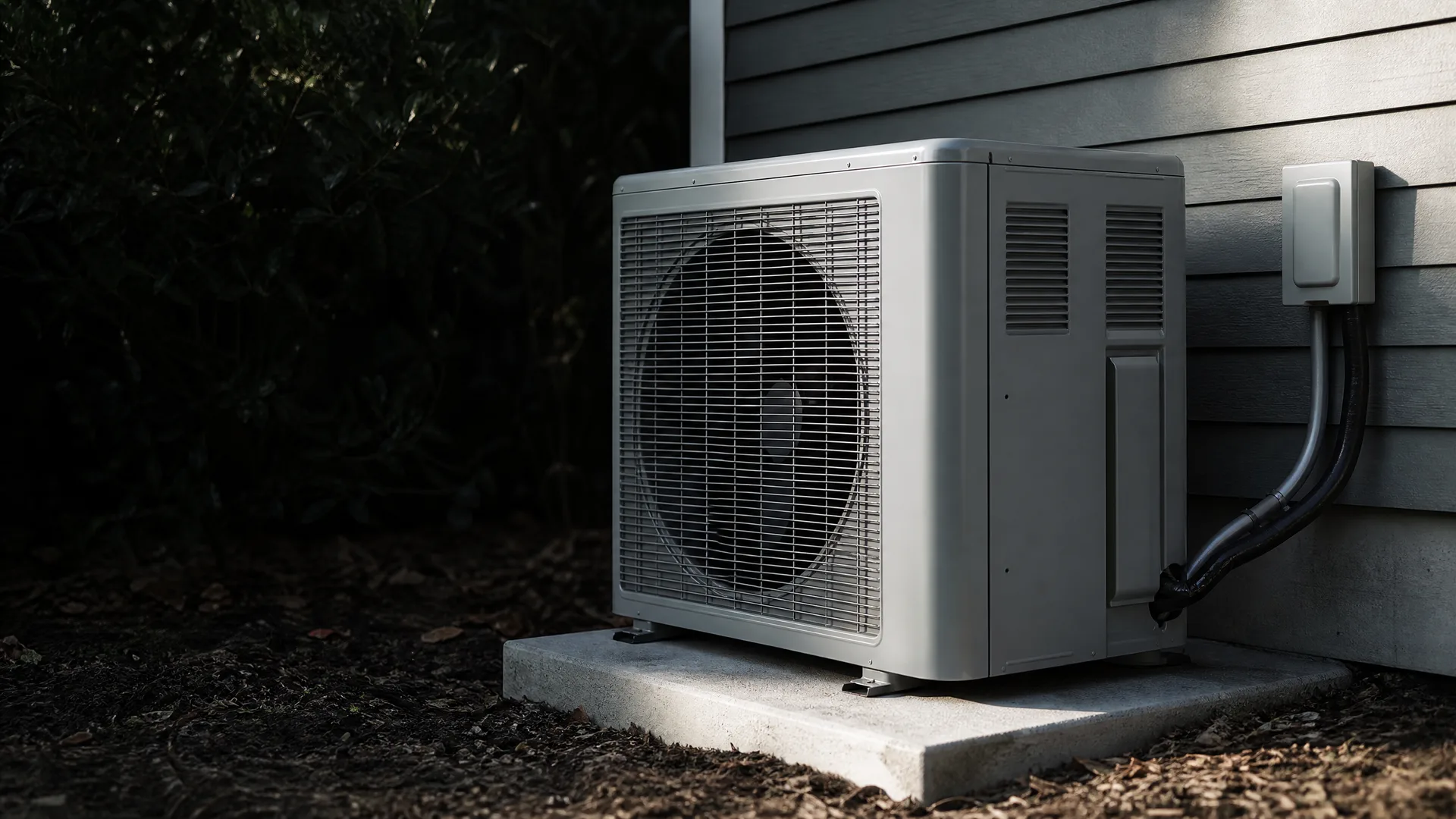
An outdoor air conditioning or heat pump condenser unit on a concrete pad beside a gray horizontal-sided house, with a disconnect box and conduit on the wall and dark shrubbery to the left.

A pro who works on heat pumps

Step 1 of 3: Equipment