Heat pump making a loud noise in Bellevue, NE

Step 1 of 3: Equipment

A loud noise from your heat pump usually points to one of a few things. A rattle often means a loose panel or something caught in the outdoor unit. A buzzing sound can mean an electrical problem, like a failing contactor or capacitor. Grinding or screeching points to the fan motor or its bearings wearing out. A banging noise from the compressor can mean a part inside has come loose or broken. In winter here, when your heat pump runs hard through the cold stretch, a hissing or clicking sound can come from the defrost cycle kicking on, and that one's normal. The others aren't. Running a heat pump with a bad bearing or a loose part can turn a small repair into a bigger one, and in the middle of a Nebraska winter, you don't want it quitting on you. Worth getting it looked at before that happens.

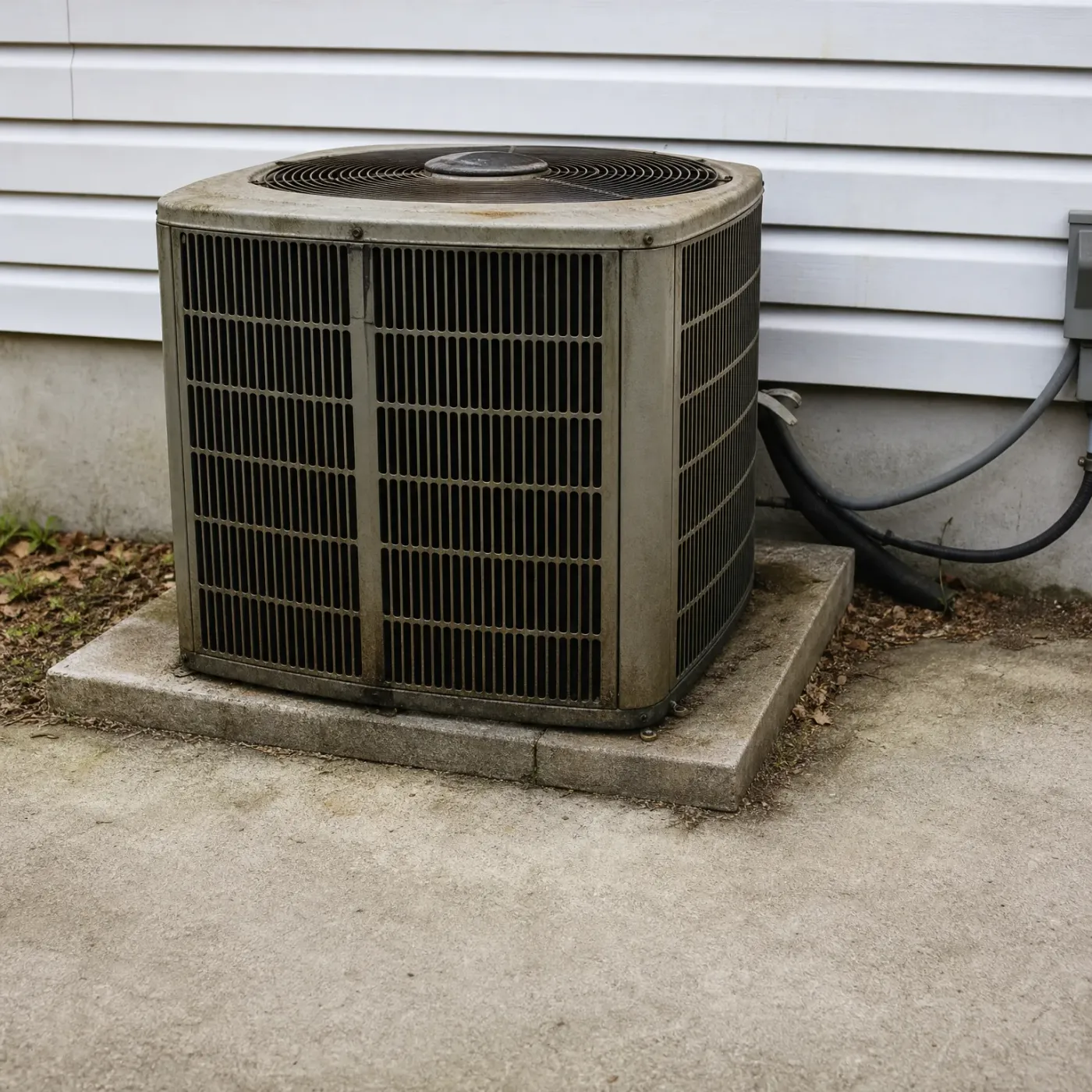
A gray outdoor condenser unit on a concrete pad beside a white horizontal-siding house, with refrigerant lines and conduit running to a wall-mounted disconnect box, bare soil in front and a green shrub at left.

Normal running sound

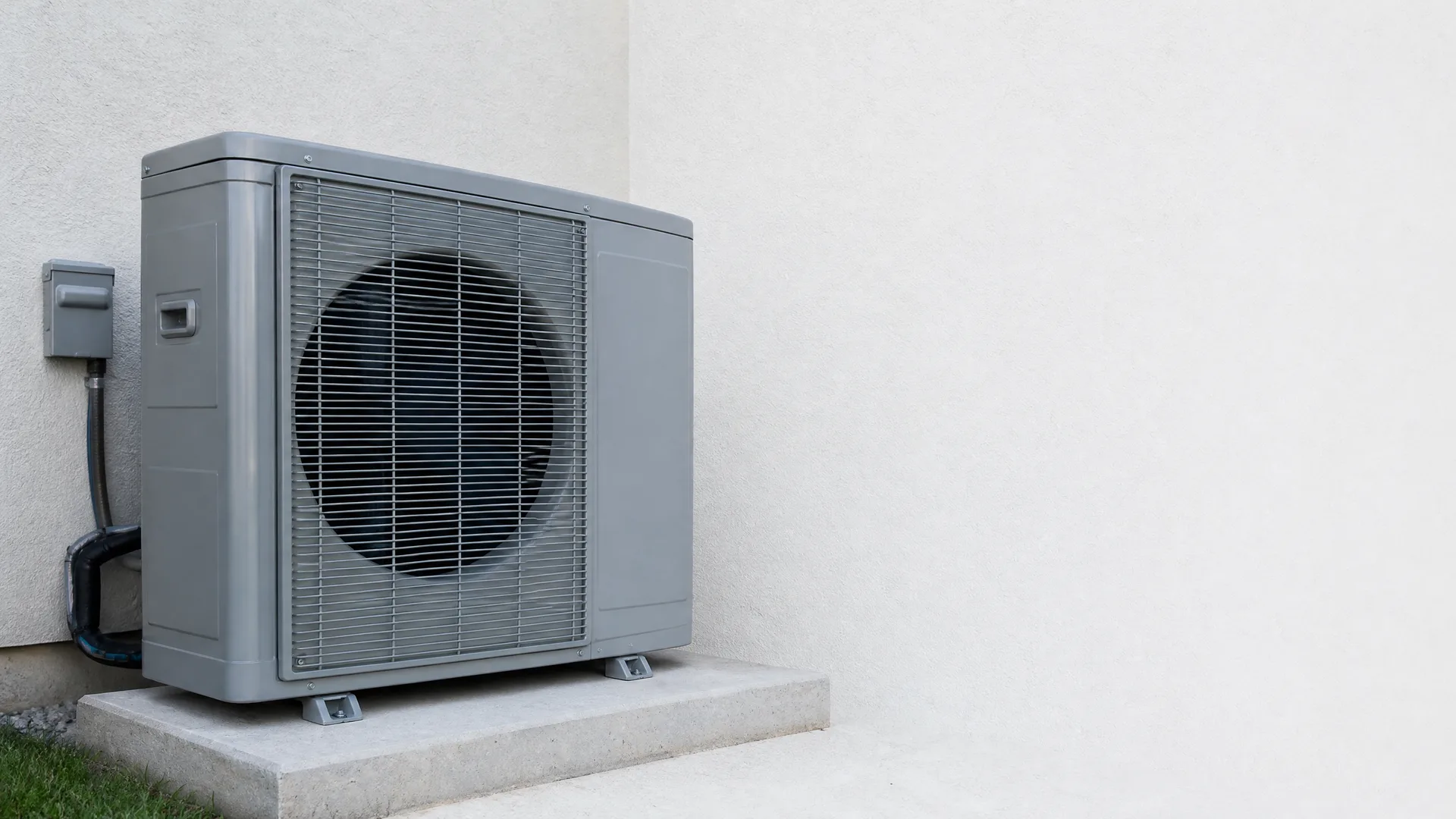
A heat pump outside your house should run with a steady hum you stop noticing after a minute. Air moves through the fins, the fan turns, and the panels sit flat and quiet against the cabinet. Nothing rattles when you walk past it.
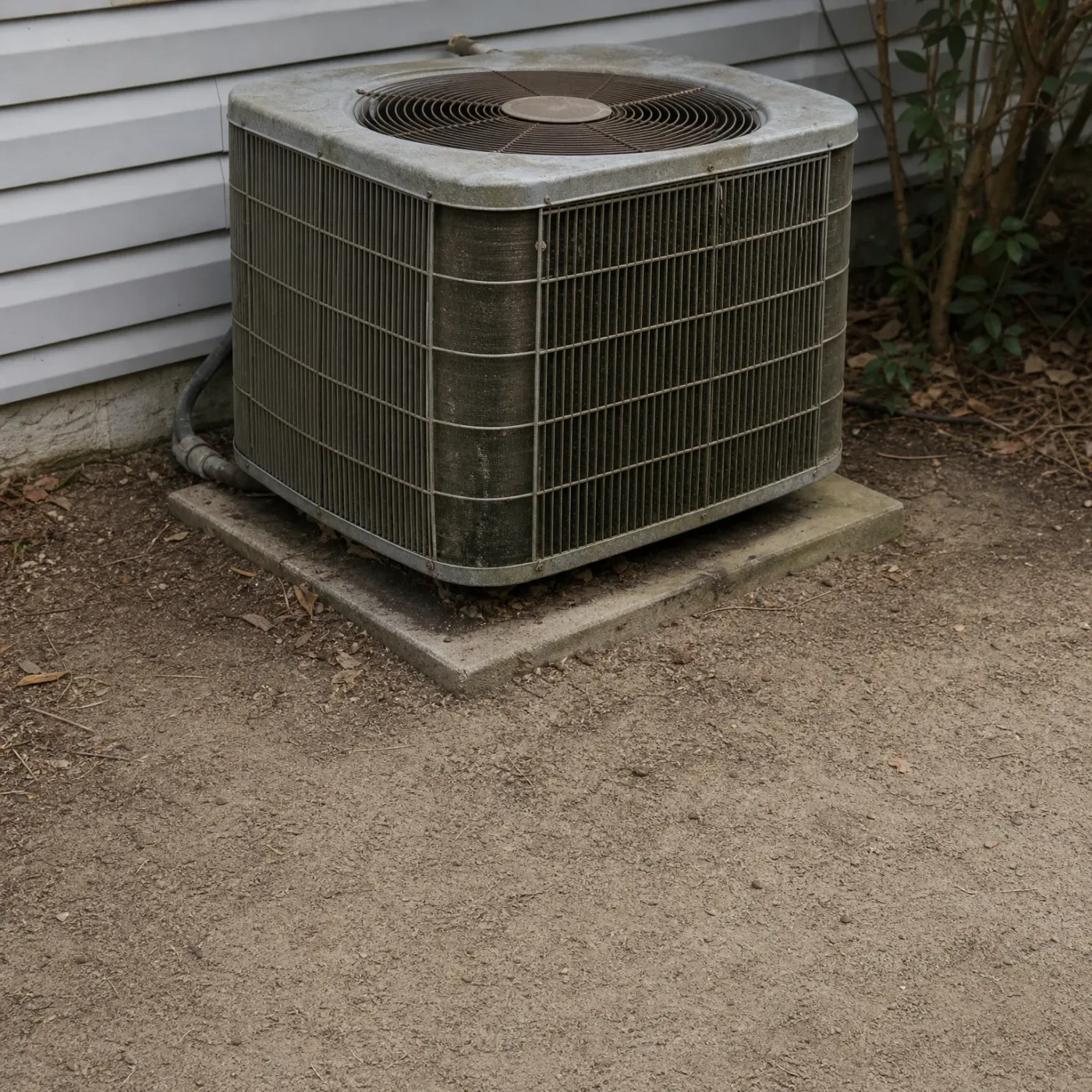
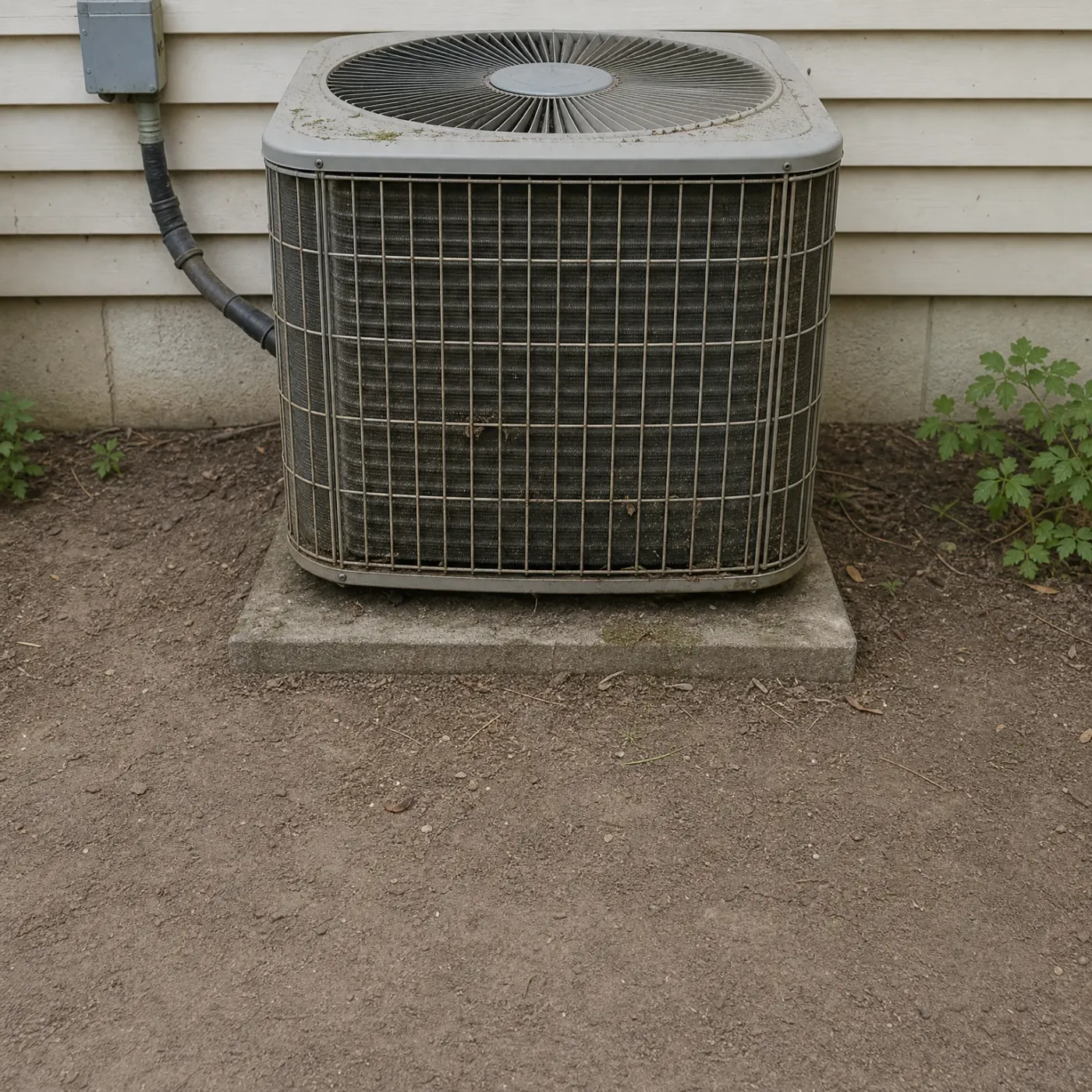
A weathered outdoor condenser unit on a concrete pad beside a house with light horizontal siding, surrounded by bare dirt and a shrub.

A unit asking for attention

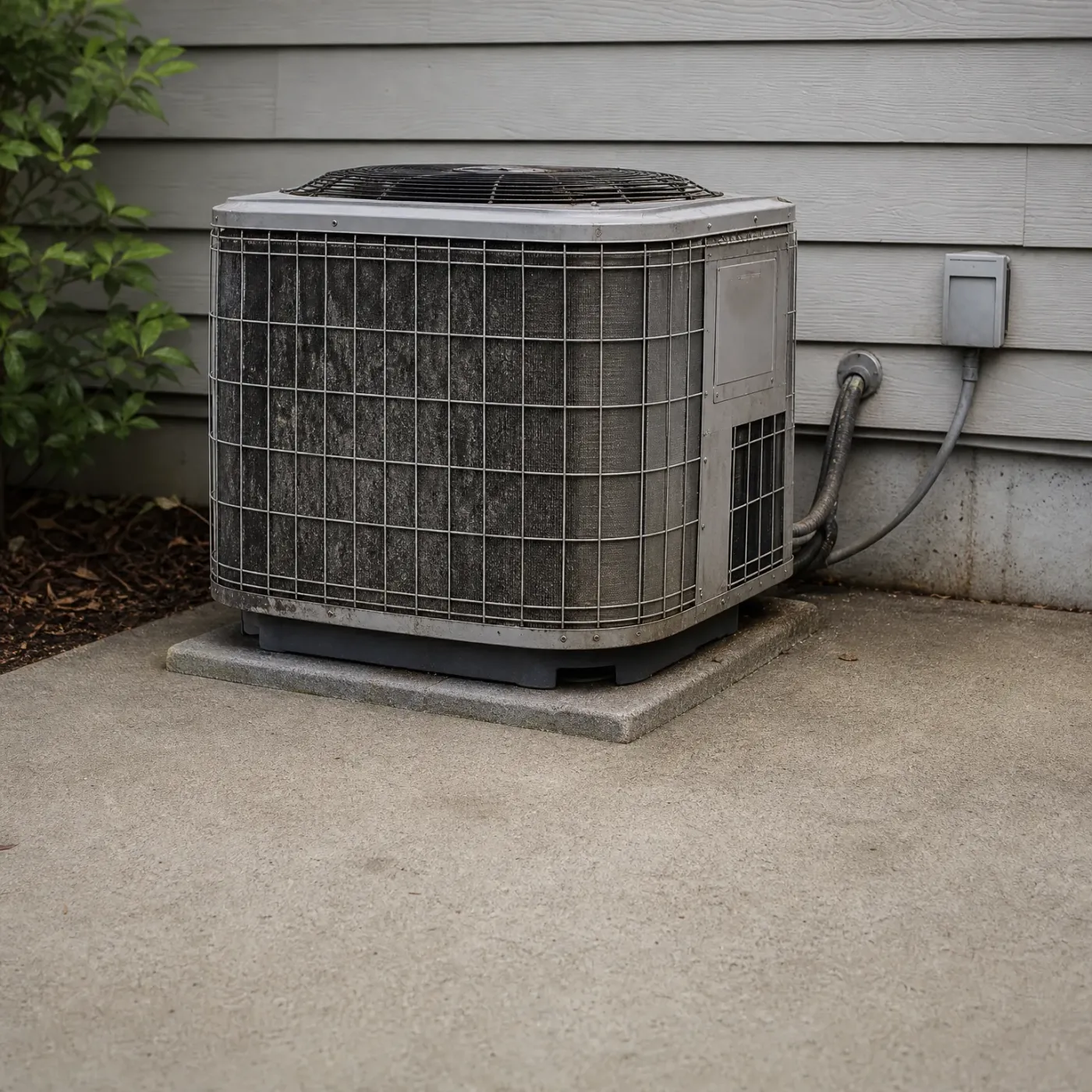
Dirt and grime built up heavy on the grilles and top panel usually come with a sound that is anything but steady. Caked-on debris can throw the fan off balance or block airflow enough to strain the motor, and that strain is what you hear.

Call Now or Can It Wait

Call now

  • A screeching or grinding sound usually means a motor bearing is failing, and running it longer can wreck the motor completely.
  • A loud bang when the unit kicks on can mean a compressor part has come loose or broken inside, which gets worse every cycle it runs.
  • If the noise comes with the unit tripping its breaker or shutting off on its own, keep it off and get it looked at before trying to restart it.
  • A burning smell with the noise means an electrical component is overheating, and that's not something to wait out overnight.
  • Cold weather in Sarpy County makes a failing heat pump a problem fast, since the backup heat in most systems costs more to run.

Can wait a day

  • A rattle that only happens at startup or shutdown, and goes quiet once the unit is running, is often just a loose panel screw.
  • If the unit still blows warm air and holds the temperature you set, the noise is likely not stopping it from working yet.
  • A soft clicking when the unit switches on or off is normal for the relay and not something to worry about on its own.
  • If you can see a stick, leaf, or ice chunk caught in the outdoor fan, clearing it yourself may quiet the unit without any repair.
  • A noise that shows up only on the coldest nights and disappears by morning is worth watching for a few days before calling anyone.
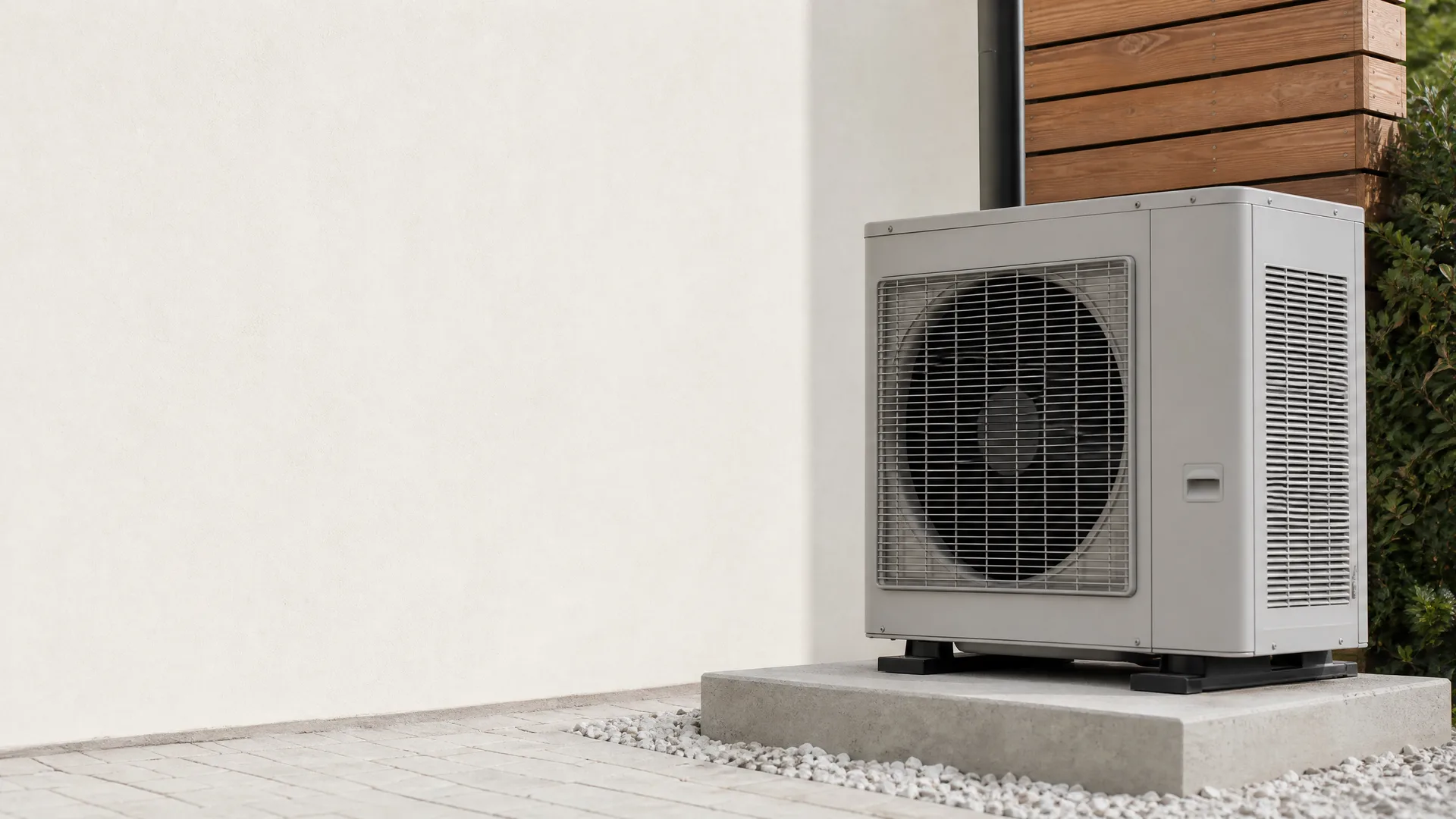
A gray outdoor heat pump unit on a concrete pad against a light stucco wall, with an electrical disconnect box and conduit on the wall to its left.

Why the outdoor fan rattles

The fan blade sits a few inches above the top grille. Once a bearing wears or a blade bends, it can swing just enough to clip the housing on every rotation. That tap turns into a steady rattle as the unit runs, and it keeps getting louder since the blade wears more each time it strikes. Ice buildup after a cold snap can do the same thing until it melts off.

A gray outdoor heat pump unit with a large fan grille sits on a concrete pad beside a pale stucco wall, with horizontal wood cladding and a green shrub behind it and paving stones and gravel in front.

What the compressor adds to the sound

The compressor sits in the base of the outdoor cabinet and runs anytime the system calls for heat or cooling, so a problem there shows up as a hum underneath whatever else you hear. A failing compressor often adds a deep vibration you can feel through the ground near the unit. That vibration can loosen the same panels and fasteners that then rattle on their own.

A man with a duffel bag walks up a concrete path toward a white board-and-batten house where a woman stands in the open wooden front door, flanked by potted plants and black lanterns.

What that noise means for your house

A heat pump that's screeching or banging outside doesn't stay quiet for long. In Bellevue, that unit is what keeps your house warm through the winter and cool once summer gets sticky, and a bearing or compressor part that's already failing won't wait for a convenient week to quit. If it shuts down on a January night, you're without heat until someone gets out to look at it.

You don't have to spend the evening calling around Sarpy County for someone who can come out, or explain the noise over the phone three different times to three different companies. Answer a few questions about what you're hearing and where you live, and a contractor who covers Bellevue will get in touch to take it from there.

A shallow dark wooden bowl and a stack of books rest on a wooden table in front of a beige sofa with linen and green cushions, with a tall ceramic vase of thin branches beside a window in the background.

How much work does your heat pump actually do here?

  • Winter nights average 17°F

    Winter nights here average 17°F, so your heat pump leans hard on its compressor and defrost cycle most nights of the week.

  • Heat runs October through May

    Eight months of heat means that unit runs longer here than it would almost anywhere else, so a new noise gets more chances to turn into a bigger problem.

  • Cooling runs June through September

    Four months of cooling still means the same compressor and fan carry the load in summer, so a noise that starts now doesn't get a break before next season.

NOAA nClimDiv 1991-2020

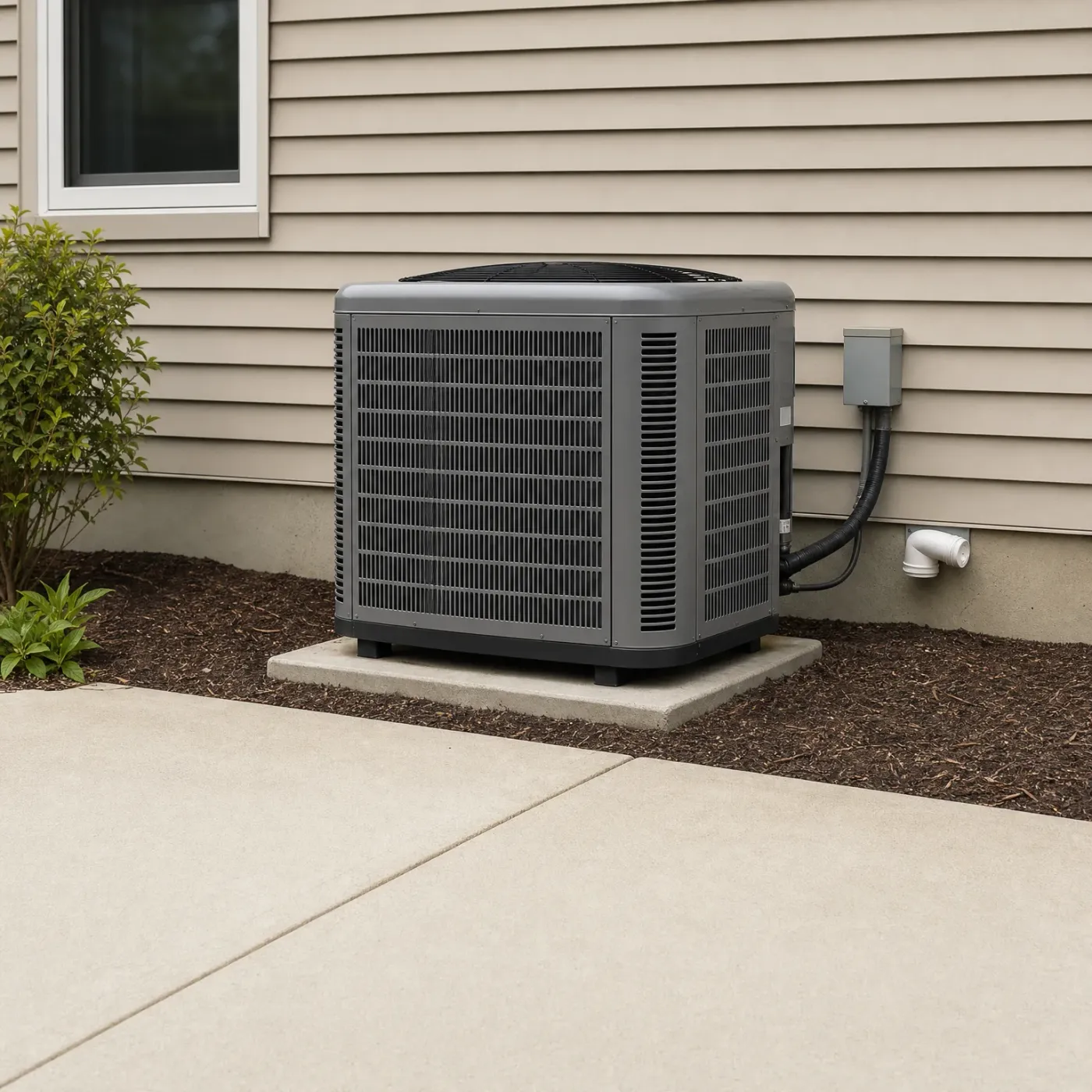
A gray outdoor condenser unit on a concrete pad beside a beige vinyl-sided house, with a wall-mounted disconnect box, flexible conduit, mulch bed, shrubs and a concrete walkway in front.

Running quiet

This is what the cabinet looks like when nothing's wrong. The panels sit flush against the sides, the lines run straight to the disconnect, and the pad underneath is clean. A unit like this just hums while it works, and you stop hearing it after a minute.

An outdoor air conditioner condenser unit on a gray composite pad beside a house with horizontal lap siding, with refrigerant lines and a conduit running to a wall-mounted disconnect box, and a shrub at left.

Caked in grime

Years of mulch, pollen and yard debris build up on the cabinet and the coil behind it. A unit this dirty has to work harder to pull air through, and that extra strain is where a lot of new rattles and hard-starting compressors come from.

A woman with long blonde hair in a light blue shirt leans back on a beige sofa with her eyes closed, in a softly lit living room with cushions and a blurred plant and shelf in the background.
A woman with long dark hair in a gray knit sweater sits on a gray sofa with a cushion, looking toward a window in a living room with framed pictures and a lamp in the background.
A woman with long dark hair in a light grey knit sweater sits on a sofa indoors, looking to her right, with a framed landscape picture, a potted plant and a curtained window behind her.
A woman with long dark hair leans back against a gray sofa with her eyes closed, in a living room with a curtained window, a potted plant, and a dark screen in the background.

Fix it now

A contractor finds the loose panel, worn bearing, or failing part before it takes out the motor or compressor. Your heat pump keeps running through the Nebraska winter.

Get a local pro

Wait it out

The noise keeps getting louder while the part behind it keeps failing. What's a repair today can turn into a full system replacement in a few weeks.

Get a local pro
An older woman with grey-blonde hair in an updo and a beige turtleneck sweater smiles while looking to the side in a warmly lit kitchen, with a round loaf of bread on the counter in front of her and a dark window showing snow outside.
A woman with dark hair in a bun sits on a sofa with a child resting his head on her shoulder, both wrapped in a cream knit blanket, with a lit lamp and bookshelf in the dim background.

Matched to your heat pump job

Answer a few questions instead of calling shop after shop.

You're not committing to anything by asking.

You call once the noise gets worse, after the unit stops heating the house right, or after it quits.

You call now, while the part making the noise still has a name and a contractor can still reach it before it takes the compressor with it.

Power here costs 12.85 cents per kilowatt-hour

At 12.85 cents per kilowatt-hour, running that heat pump here doesn't cost much, so a repair bill is usually the smaller number. The bigger cost is letting a bad bearing or a loose part run until it takes the compressor with it.

EIA-861 2025

  1. A bearing wears down or a panel screw works loose.

  2. The loose part shakes every time the fan spins.

  3. The noise gets louder as the part wears further.

  4. The compressor or motor fails if the part isn't replaced.

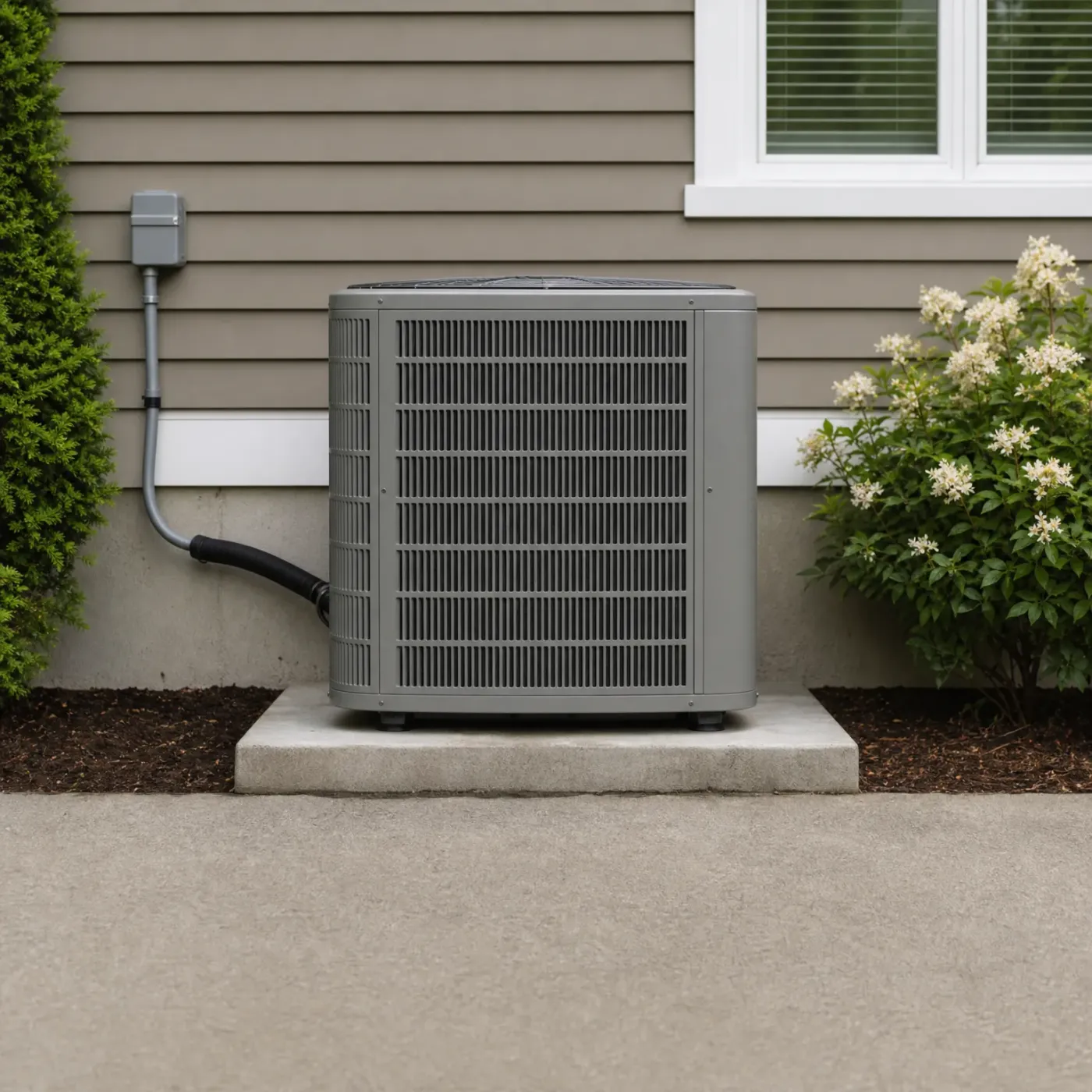
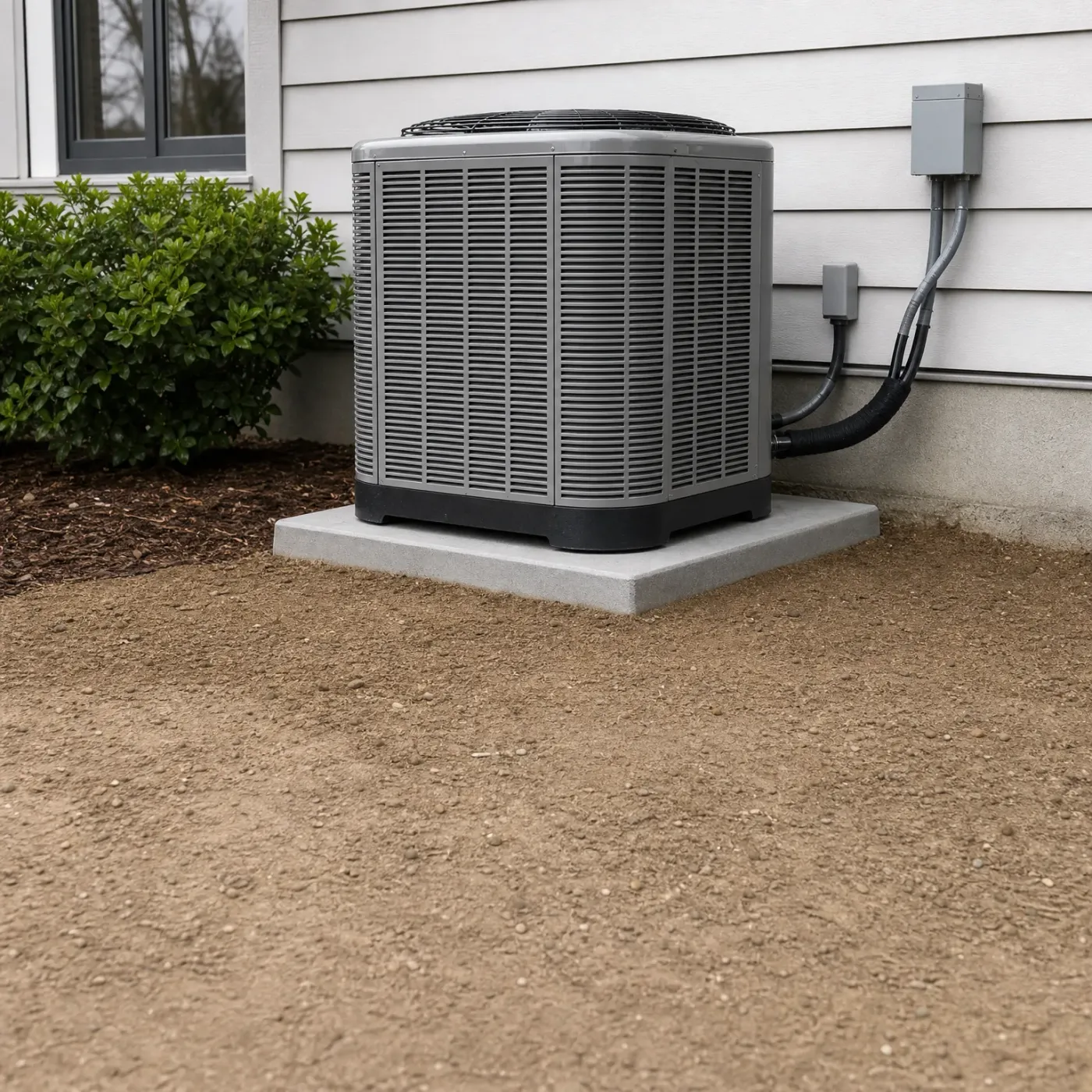
A gray outdoor condenser unit on a concrete pad beside a house with horizontal lap siding, a conduit and disconnect box on the wall, a shrub with white flowers at right and evergreen foliage at left.
This is a heat pump with nothing wrong. The cabinet is clean, the panels sit flush, and the lines run straight into the wall.
A weathered outdoor condenser unit on a concrete pad beside a house with white horizontal vinyl siding, with refrigerant lines and conduit running to a wall-mounted electrical box.
This one has sat outside through a lot of Sarpy County weather. Grime like that on the grilles often comes with loose panels and worn parts underneath.
A two-story light-colored house with a gabled roof stands alone on a snow-covered field under an overcast sky, with a weathered wooden post-and-rail fence half-buried in snow drifts in the foreground.

Winter nights in Sarpy County average 17°F, according to NOAA climate data. Your heat pump has to pull heat out of air that cold, so the compressor runs longer and the defrost cycle kicks in more often to clear frost off the outdoor coil. That's extra strain on the same bearings and fan parts already making noise. A unit that rattles or grinds in mild weather tends to get louder once nights drop into the teens, because the parts under load are the parts wearing down. If the noise started recently, cold nights like these are usually why it's gotten worse instead of staying the same.

NOAA nClimDiv 1991-2020

What are you hearing when you're near the unit?

You're probably hearing it from inside the house, or walking past it to get the mail. A rattle that wasn't there last month. A buzz that starts up when the unit kicks on. Maybe a screech that makes you want to look out the window. You might have noticed the sound changes, gets louder some days, or shows up more when the unit's been running a while. If it's started waking anyone up at night, or you've caught yourself turning up the volume on the TV to cover it, that's worth paying attention to. Left alone, most of these noises point to a part that's wearing out, not one that's going to quiet down on its own.

An outdoor air conditioning condenser unit on a concrete pad beside a house with light horizontal siding and a concrete block foundation, with bare soil and small green plants around it.
Before you get your heat pump repair
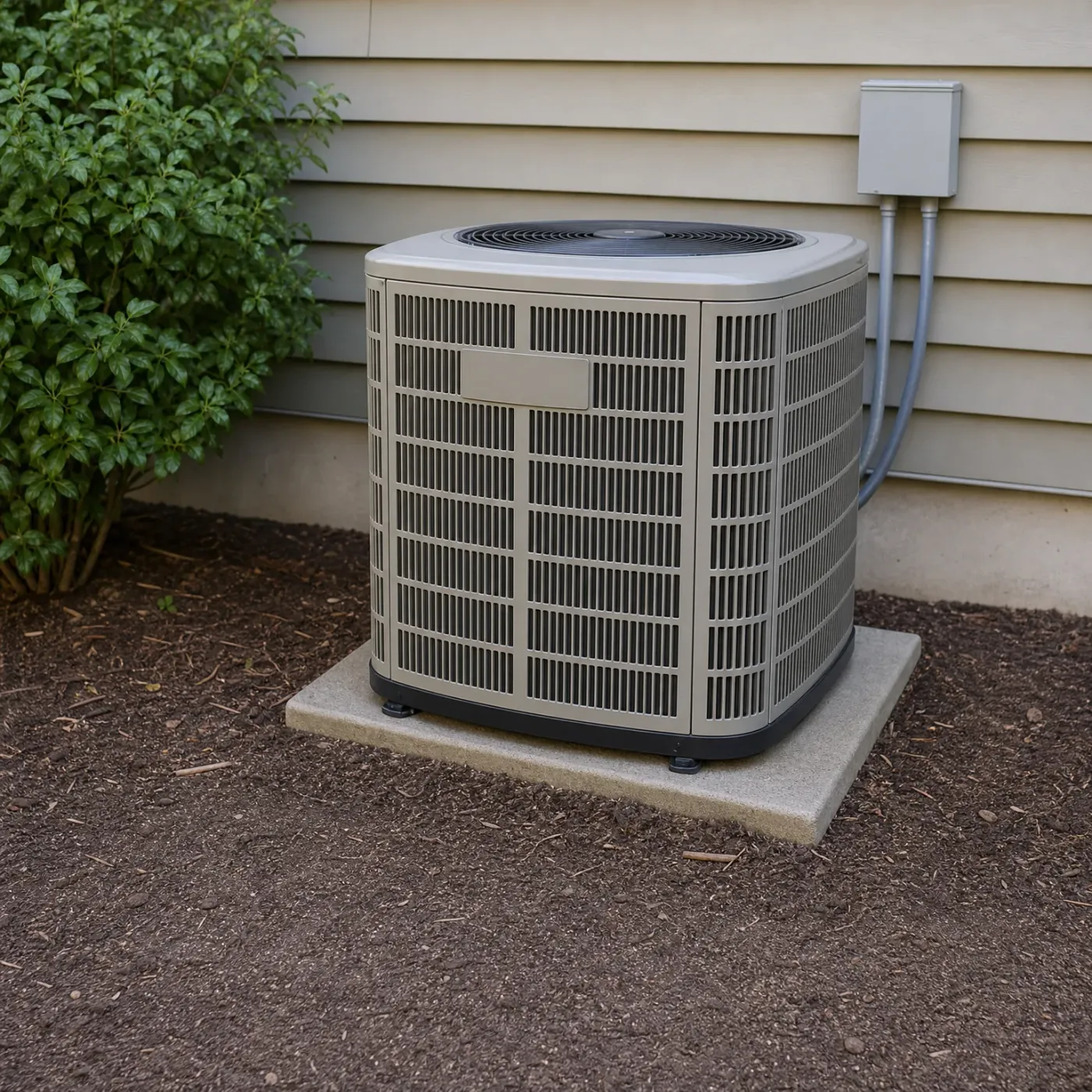
A beige outdoor air conditioning condenser unit on a concrete pad beside a house with horizontal vinyl siding, with refrigerant lines and a disconnect box on the wall, surrounded by dark mulch and a green shrub at left.
After you get your heat pump repair

What the noise tells you

  • A rattle, buzz, or screech from your heat pump points to a loose panel, a failing electrical part, or a worn motor bearing.
  • The sound almost never fixes itself, and the part behind it keeps wearing while the noise gets louder.
  • Your heat pump has to keep running through winter nights near 17°F and sticky Sarpy County summers, so a delay costs you comfort on both ends.
  • A repair now is usually the smaller bill next to a failed compressor or motor later.
  • Instead of calling around to different companies and repeating the same description of the noise, you get matched with a contractor who already knows what to listen for.
  • Once you know what the noise means, the next step is getting someone out to look at the actual unit.

A loud noise from your heat pump is never nothing. A rattle means something is loose. A buzz means an electrical part is starting to fail. A screech or a grind means a bearing is wearing out, and none of those get quieter on their own. The part behind the sound keeps working loose, keeps arcing, keeps grinding, and the noise you hear today is quieter than the one you will hear next week. Meanwhile the unit does not get a break. It has to run through winter nights near 17°F and through the sticky stretch of a Sarpy County summer, and a part that is already struggling has no slack left for that kind of work. A repair now deals with a panel, a contactor, a capacitor, or a bearing. Wait, and the same visit might be dealing with a seized motor or a damaged compressor instead, which costs more and takes the unit out of service when you need it most. What you do not have to do is sort out who to call. You do not have to search through a list of companies, phone several of them, explain the rattle or the screech to each one, then sit with a stack of quotes trying to compare them against each other. That part of it goes away. What is left is simple: get a contractor out to listen to the actual unit and tell you what it needs.

Sunlight falls across a beige upholstered sofa with a textured woven cushion and a chunky knit throw, beside a dark wood cabinet holding a ceramic vase with green leafy branches, near a white-framed window.
A sunlit corner of a room with a wooden side table holding a ceramic vase of green foliage and a wooden bowl, beside a light upholstered sofa with a knit throw and rust-colored pillow, with window shadows cast on a beige wall.
A sunlit room corner with beige walls, a white-framed window with sheer cream curtain, wood floor with a light rug, and a woven basket holding a knit blanket.
A beige ceramic vase holding a leafy green branch sits on a wooden cabinet in a corner, with sunlight through a sheer curtain casting leaf shadows on the wall.
A grey upholstered sofa with a rust-orange velvet cushion and a textured throw sits beside a window with linen curtains, next to a wooden side table holding a pale ceramic vase of olive branches.

A heat pump pro near you

Describe your heat pump job once, to one pro.

Skip the calls

It costs nothing to send, and you don't have to hire anyone.