

Running the way it should
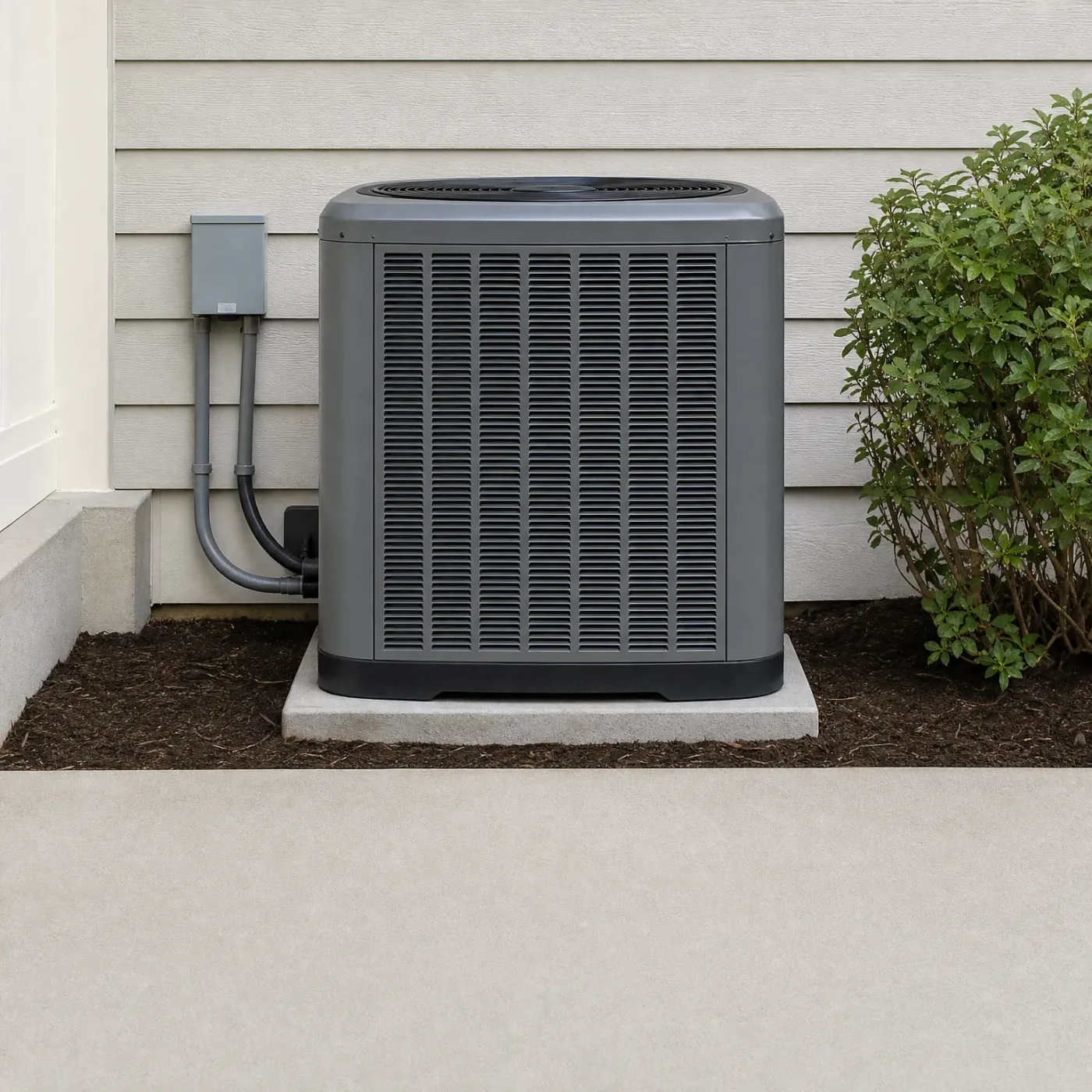
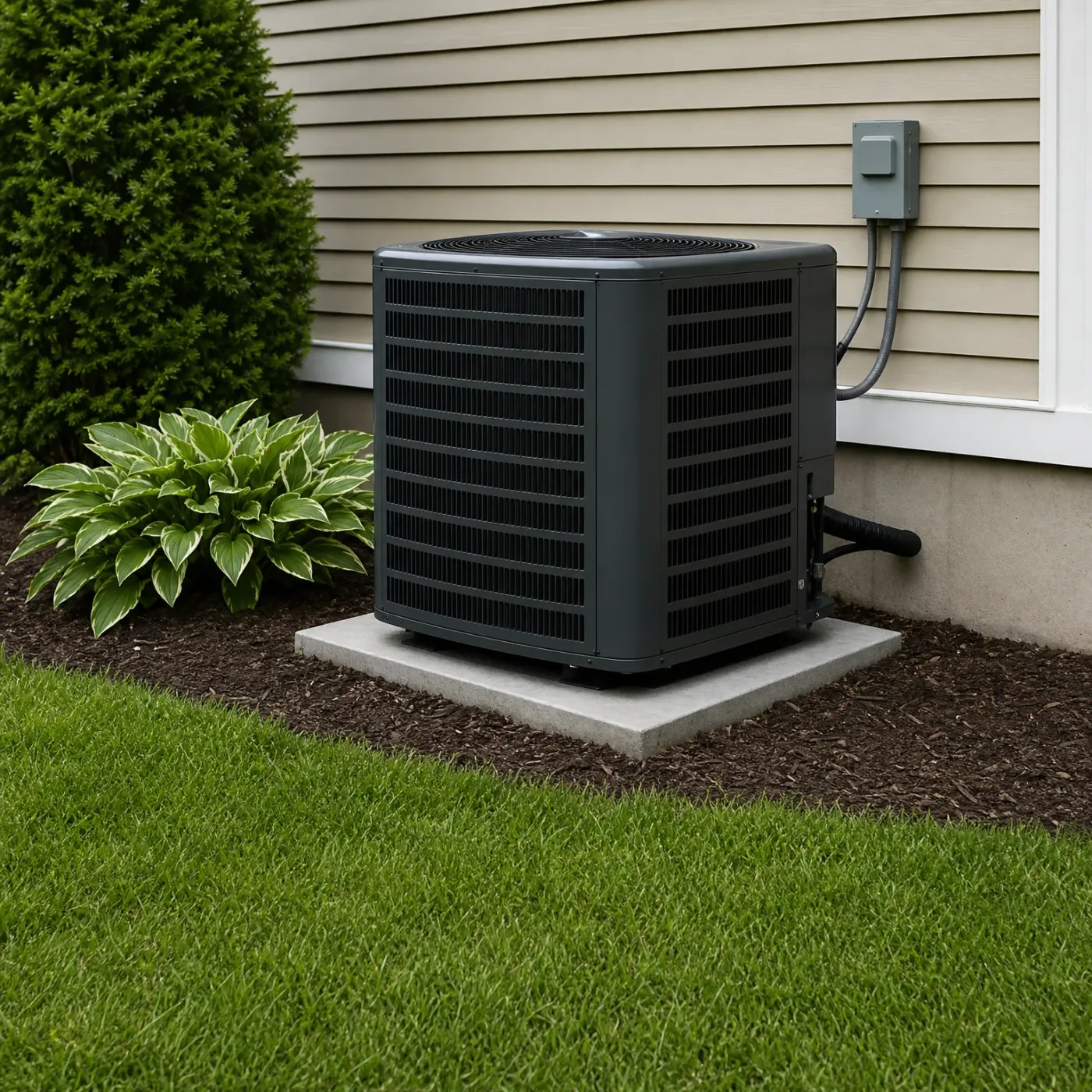
This is a heat pump doing normal work. The lines run clean into the wall, the pad is clear, and any water near it is just condensation finding its way out during a muggy stretch. Nothing here needs your attention.
Water pooling near your indoor unit or dripping from the outdoor unit is unsettling, especially when you're not sure if it's a minor nuisance or a sign something is wrong. In Fremont and the rest of Dodge County, your heat pump works through hard winters and sticky summers alike, and water showing up where it shouldn't is one of the more common calls this time of year.
Your heat pump pulls moisture out of the air as it runs, and that water is supposed to flow out through a drain line to the outside. Algae, dirt and dust build up in that line over time and block it, so the water backs up and spills out of the unit instead. A frozen outdoor coil can also cause this. When the coil thaws, whether the defrost cycle finishes on its own or the unit shuts off, that ice turns to water faster than the drain pan or line can handle it, and it ends up on your floor. A low refrigerant charge often causes that freeze-up in the first place.
Humid air hits the cold indoor coil and forms condensation.
Water drips off the coil into the drain pan below.
The condensate line carries that water outside your home.
A clog or crack lets water back up or escape.
Winter nights average 16°F
Your heat pump runs as the AC for four months straight here, June through September, so the coil is making condensation most of the summer.
Heat runs October through May
Heat here runs eight months of the year, October through May, which means the drain system barely gets a break before summer humidity starts the cycle again.
Cooling runs June through September
Nights average 16°F in December, January and February, cold enough that a cracked or frozen drain line outside can split before you notice the leak.
NOAA nClimDiv 1991-2020
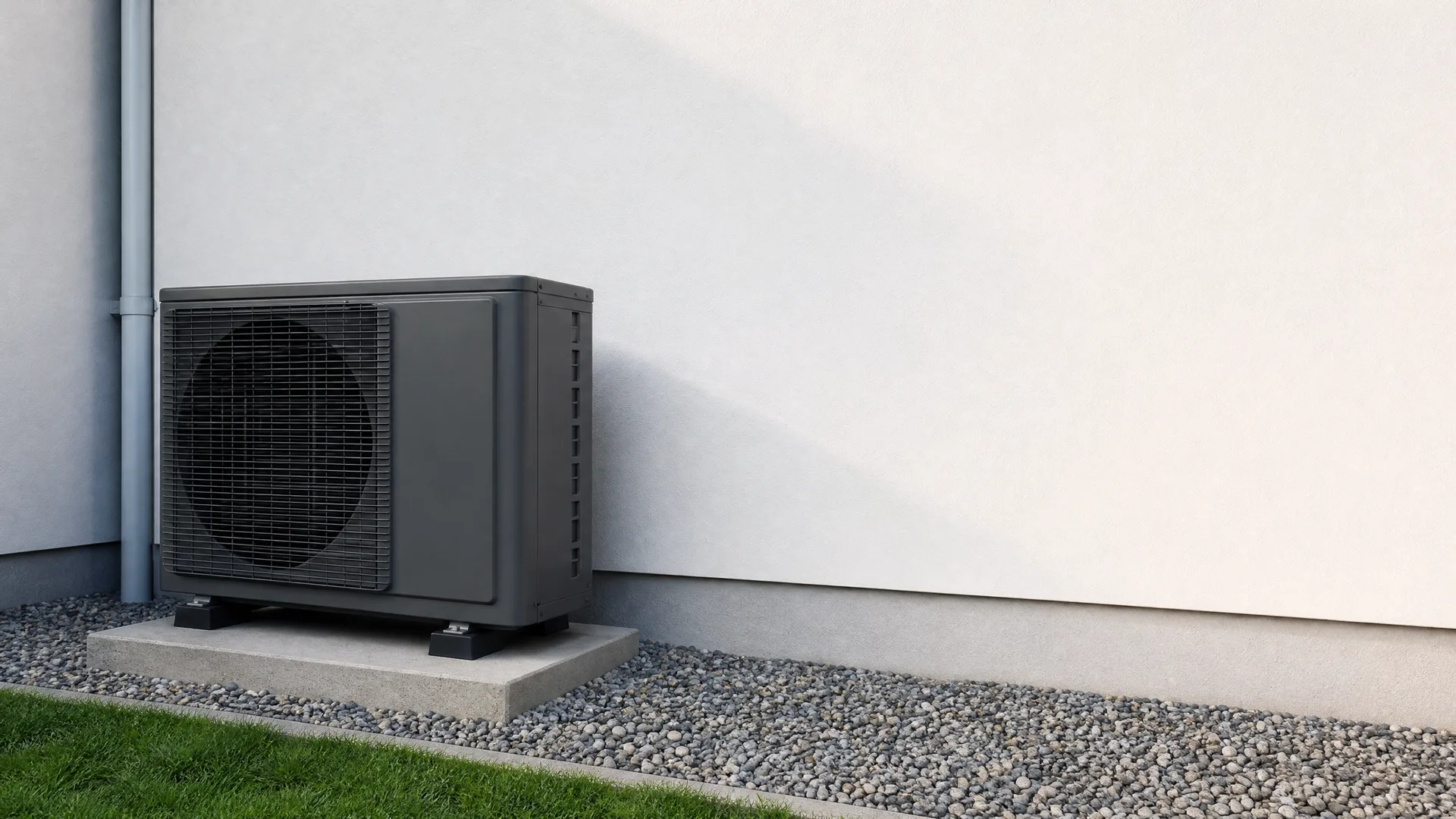
Water near the indoor unit usually means the drain line or pan has a problem, and it belongs on a finished floor or ceiling where it can cause real damage. Water dripping from the outdoor unit in summer is often just condensation finding its way off the cabinet, which is normal. The difference is location. Indoor water is almost always something to get looked at. Outdoor water, especially in July or August, might not be a problem at all.
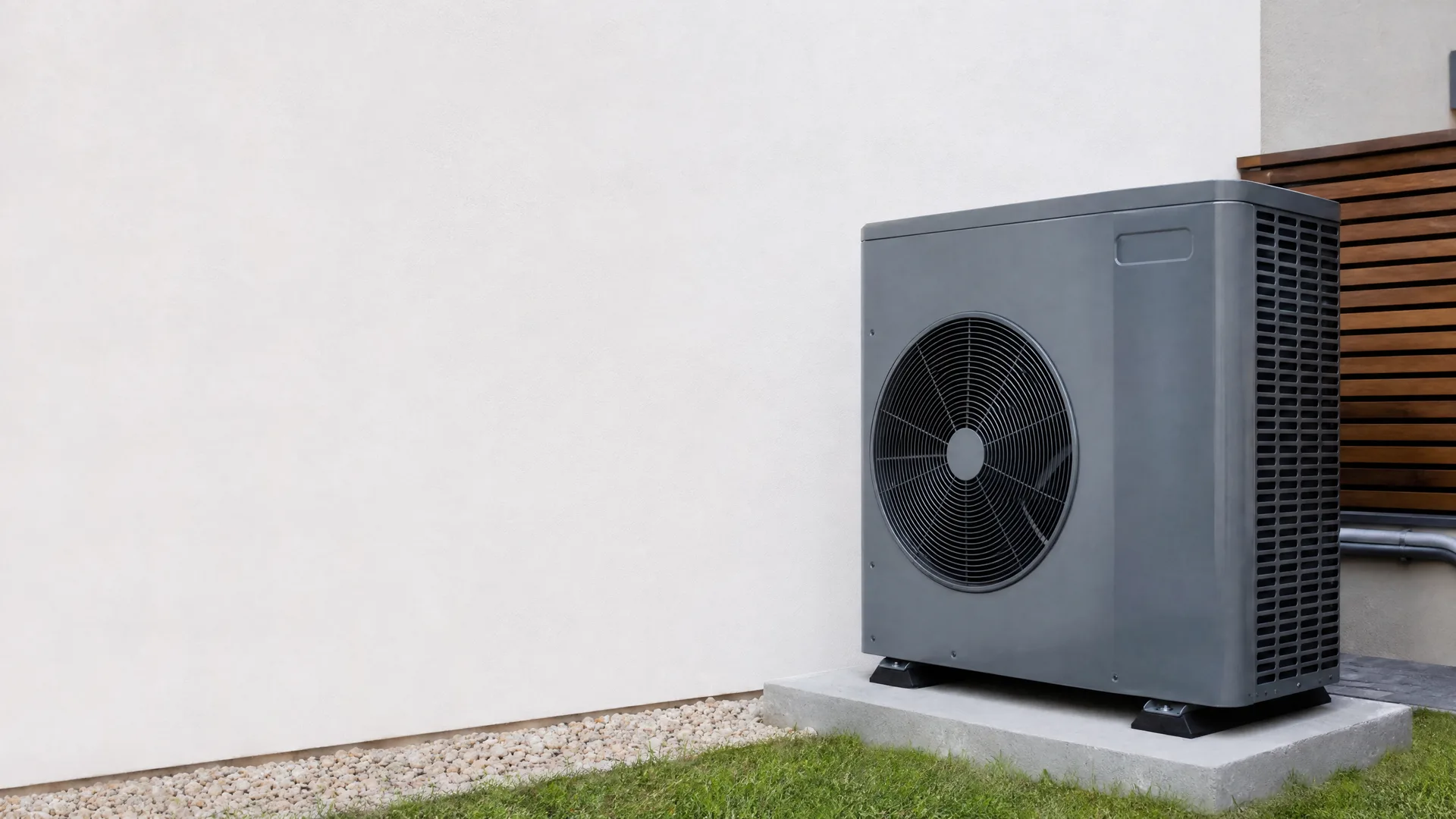
In summer, a little water under the outdoor unit is expected since the coil is pulling moisture out of the air for months at a time. A puddle indoors or a wet spot near the furnace in January is a different story, since there is no cooling happening to produce condensation. Winter moisture near your indoor unit more often points to a clogged line that never got cleared, or a pan that cracked and only shows it once something else drains into it.
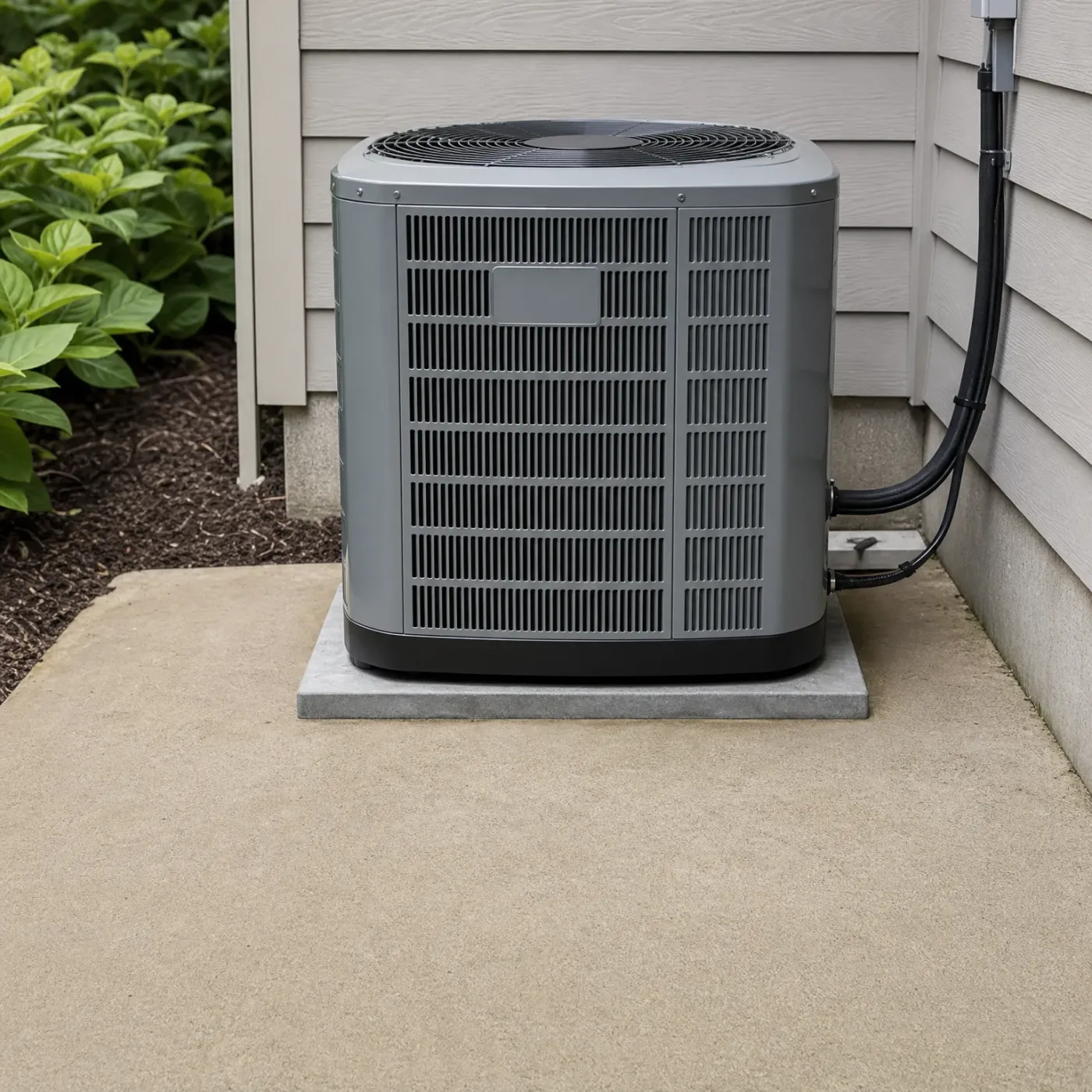
This is a heat pump doing normal work. The lines run clean into the wall, the pad is clear, and any water near it is just condensation finding its way out during a muggy stretch. Nothing here needs your attention.
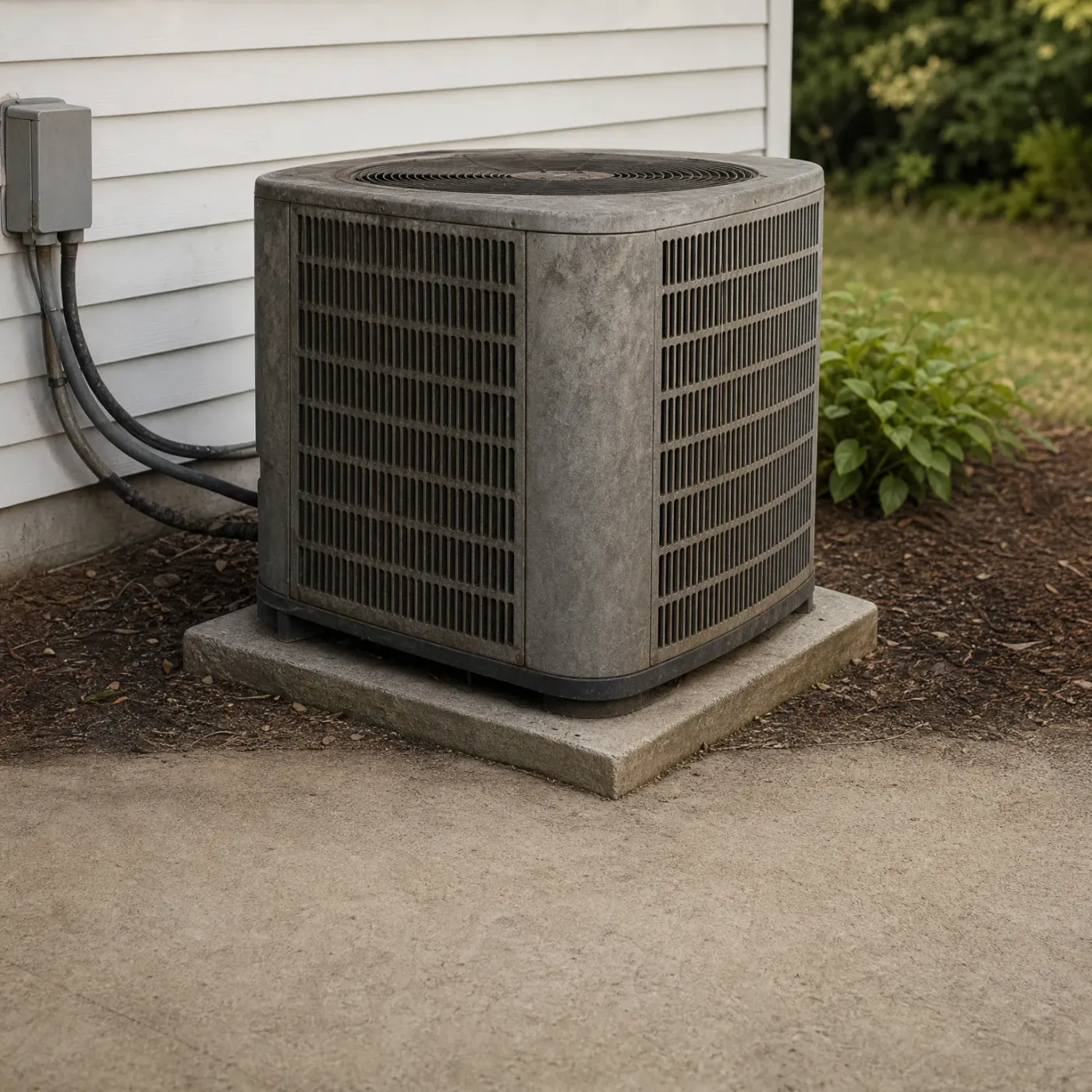
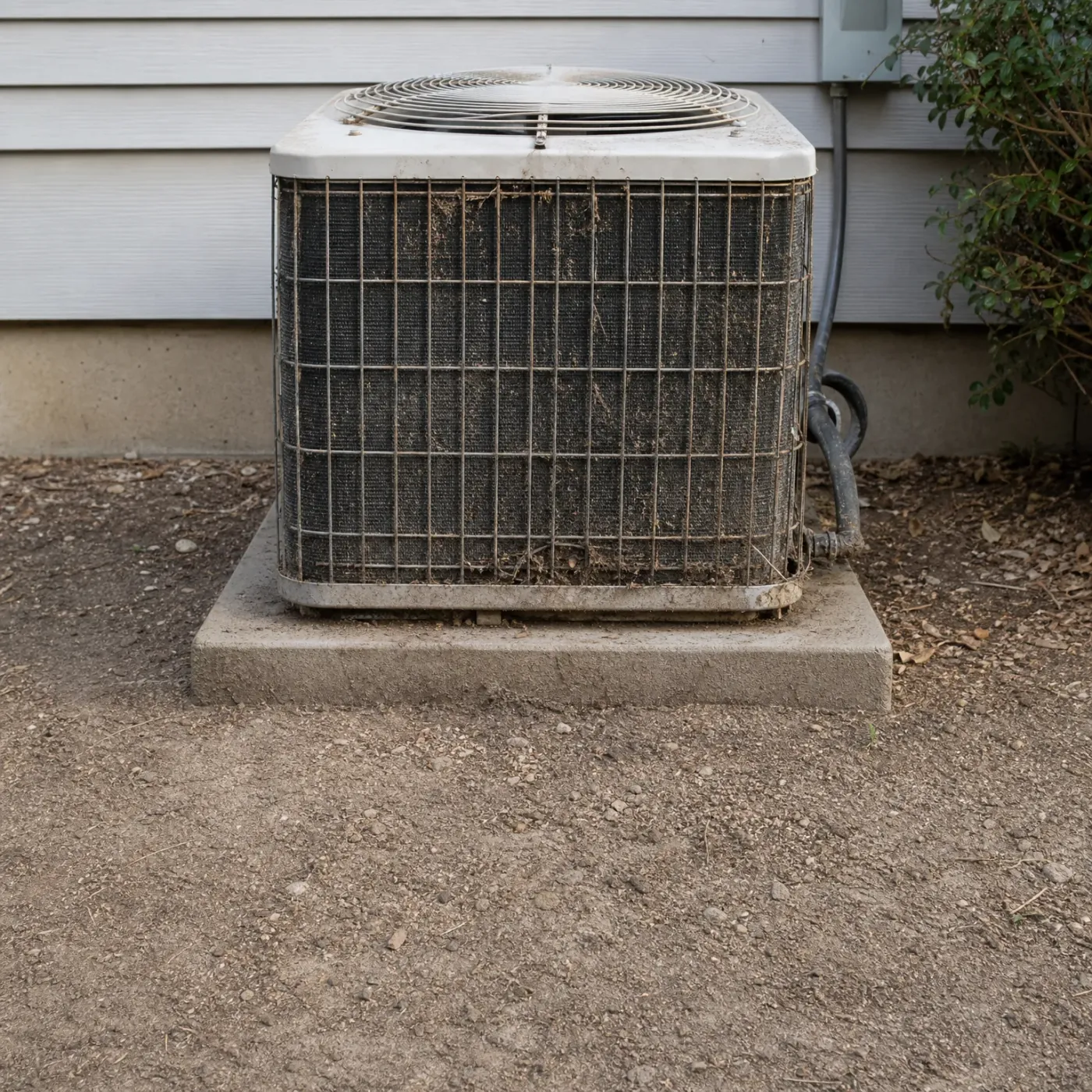
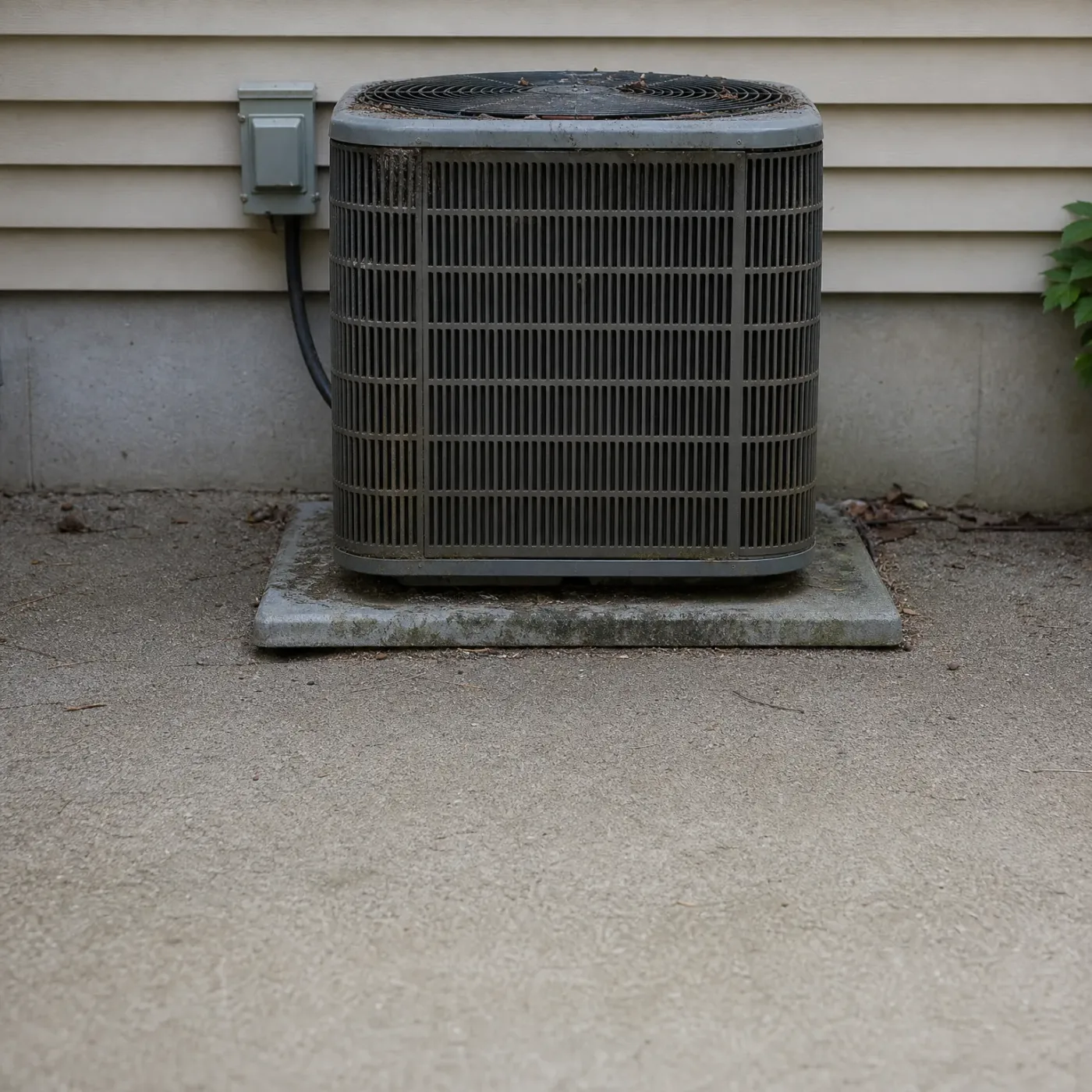
Weathered cabinets and aging lines don't cause a leak by themselves, but if your outdoor unit looks like this and you're seeing water where you shouldn't, it's worth having someone check the line and the pad underneath before it gets worse.




A clogged condensate line is the most common reason a heat pump leaks water indoors, and it builds slowly, not all at once.
Algae and dust narrow the line over months, so the drip you see this week may have started weeks ago, long before the pan ever overflowed.


A clogged line or a cracked pan does not clear itself. Left alone through a muggy Dodge County summer, the water keeps finding somewhere to go, and that somewhere is often your subfloor or ceiling drywall. Right now your options are to watch it, guess at the cause, or get someone out who can look at the coil, the pan and the line and tell you which one is actually failing. That usually means a round of calls, explaining the same drip and puddle to each company, then waiting to see who answers and comparing what they quote you. Send this request instead and that part stops being your problem. One licensed contractor near Fremont gets your information and reaches out, so you are not fielding five calls or repeating yourself. Whether it is a quick clear of the line or something more, you will know what you are dealing with instead of watching the puddle come back every few days.

It's past eleven and still warm enough that the sheets stick to you. You push them off and roll toward the window, where the glass has fogged up along the edges from the air conditioner working outside. Somewhere under the unit by the bedroom wall, you can hear a faint drip, slow and steady, hitting the ground. You get up to check the carpet near the vent and find it's damp, a dark patch spreading out from the baseboard. The ceiling fan does nothing against the thickness in the air. You stand there in the dark, barefoot on wet carpet, trying to decide if this can wait until morning.
The indoor coil sits above a pan built with a slight pitch, so gravity pulls water toward the drain instead of letting it sit. From there it should flow into a PVC line that runs downhill the entire way to outside your home. A trap or vent somewhere along that line keeps air from locking inside it, because trapped air stops water from moving even in a line that is not clogged. Some systems add a float switch in the pan that cuts power to the unit the moment water rises past where it should. If your system has a secondary pan underneath the main one, that is the last line of defense before water reaches your subfloor or ceiling, not the first. None of this applies outside. The outdoor unit has no pan and no drain line to clean, since any water running off it is just finding the ground on its own. When a contractor traces a leak in Fremont, this is the path they are checking, piece by piece, to find where it broke down.
A leak that keeps going finds the path of least resistance in your house, and that's rarely a spot you'd choose. If the indoor unit sits in a closet over finished floor, water works into the subfloor before you ever see a stain on the ceiling below. If it's in the attic, the first sign you get might be a brown ring spreading across the drywall in a bedroom. Carpet near the unit will hold moisture long enough to smell musty even after the surface feels dry. None of this happens the day the clog starts. It happens over the weeks it takes a line to go from slow to blocked, while the pan keeps filling and has nowhere else to send the overflow. By the time you notice the smell or the stain, the water has already been sitting somewhere you can't see it, and that part costs more to put right than the clog ever would have.
At 12.41 cents a kilowatt-hour, your heat pump stays one of the cheaper ways to run a house here, which is part of why Dodge County leans on them so hard through the summer. That low rate doesn't change what a leak does to your floor or ceiling. It just means the fix, once someone's out to clear the line or reset the pan, won't run up the power bill to put right.
EIA-861 2025

A heat pump leaking water is either doing exactly what it should or telling you something's wrong. Outdoor condensation on a muggy afternoon is nothing. Water near the indoor unit, a clogged line, a cracked pan, that's a repair, and it won't fix itself sitting through another Dodge County summer.
Right now the work ahead of you isn't the repair itself. It's finding someone who can look at your unit, figuring out if they're any good, and explaining the drip, the pooling, the timing all over again on the phone. Send the form and that part is done. You won't be calling around Fremont comparing quotes or repeating yourself to a third contractor. Someone qualified gets the details you already worked out here and takes it from there.


Sending the form costs nothing.
A clogged line never gets wider on its own. Send the request now instead of calling around Dodge County and explaining the same leak three different times, and you skip straight to someone who can look at your pan and lines instead of spending your evening on the phone.