Tell us about the job
Takes about a minute. No obligation.

Sizing a heat pump for Clay County means reckoning with how far outdoor temperatures fall, because a heat pump loses capacity as the cold deepens and the backup heat element has to pick up the slack. Homes in Clay County, NE run heat about eight months a year, from October through May. The compressor and the reversing valve both accumulate wear through that heating season, and a unit undersized at installation will lean on its resistance backup strips far more than its design intends. A contractor pricing the job here has to run a load calculation specific to this house and establish the right backup heat capacity before anything goes on order.
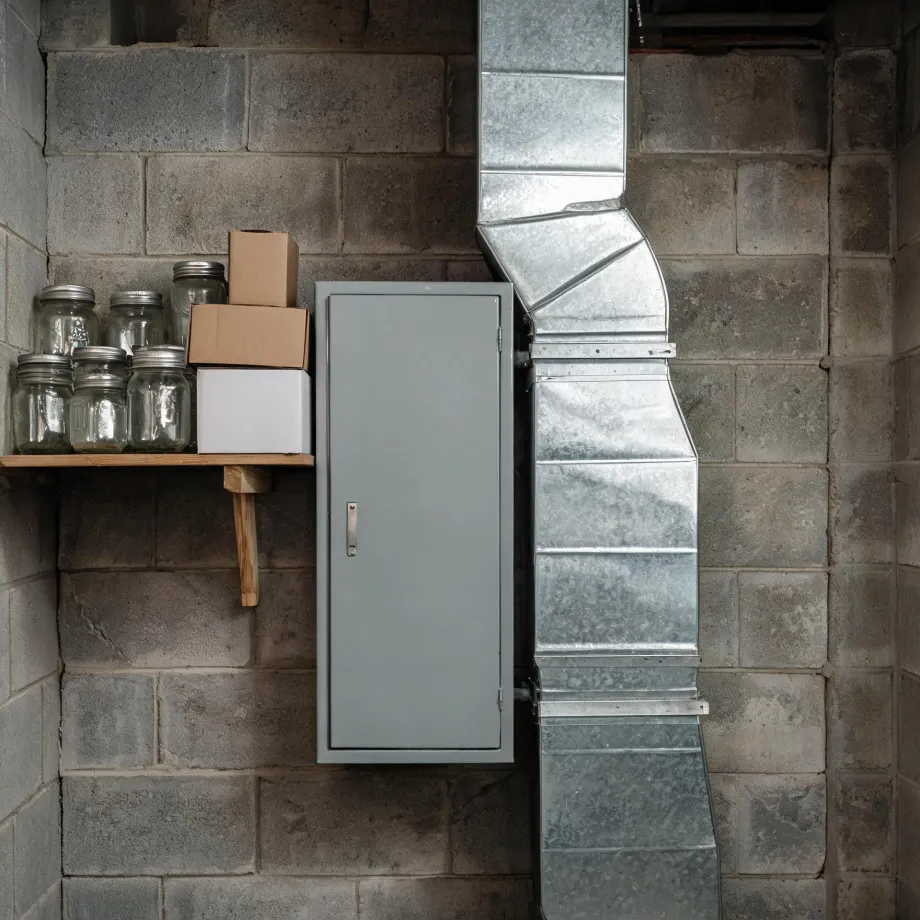
Ductwork in this part of Nebraska was laid out for a different kind of system. Half the homes in Clay County, Nebraska were built in 1954 or earlier (2020-2024 ACS 5-year). Houses built then were heated with furnaces and cooled, if at all, with window units, and the duct runs that served them were sized and routed accordingly. A contractor installing a heat pump today has to look at what those ducts can actually carry before the equipment choice is settled, because a duct system configured for high-temperature forced air moves heat pump air differently. The electrical service gets the same scrutiny, since the panel that was adequate for the original load has to be measured against what the new unit draws.
What Gets Installed With a New Heat Pump
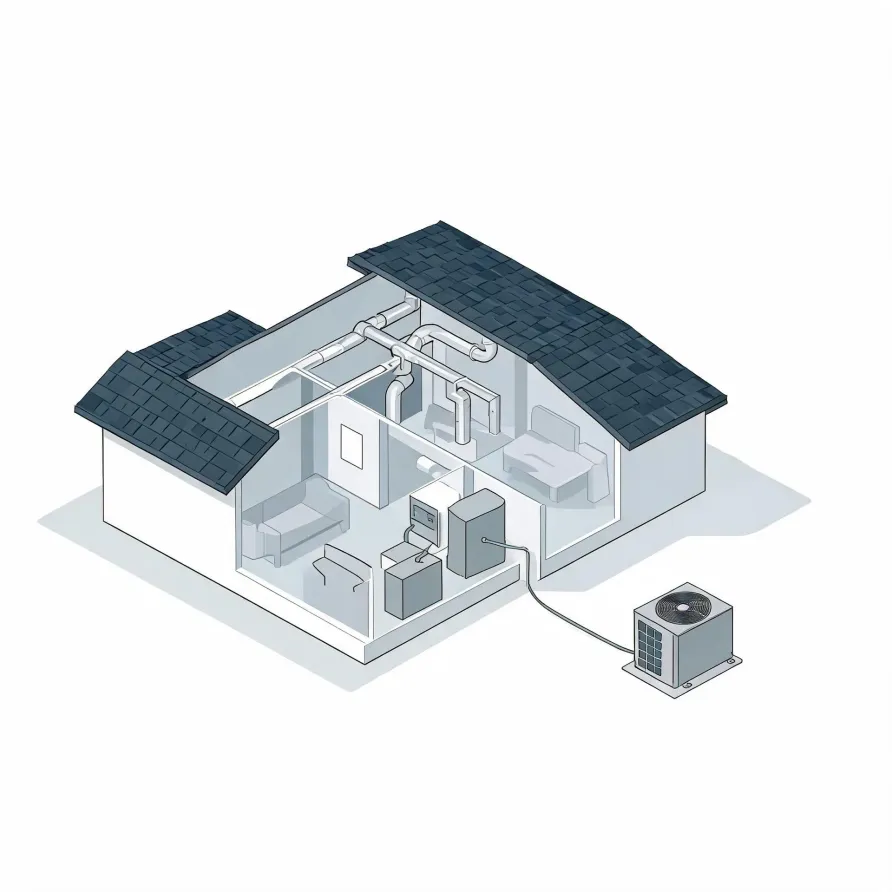
The outdoor unit is the piece a homeowner sees first, a cabinet that sits on a pad beside the house and holds the compressor and the outdoor coil. Inside, the air handler mounts in a utility space, closet, or attic and moves conditioned air through the home. Together these two units do the work of the system.
A refrigerant line set runs between the outdoor unit and the air handler, connecting the two through an exterior wall. A thermostat goes on an interior wall where it reads the temperature of the living space and tells the system when to run. A condensate drain line also runs from the air handler to carry away moisture the coil pulls from the air.
The drawing shows a typical layout, and a licensed contractor determines what applies to your specific house.
Get matched in Clay CountyClay County, Nebraska, by the numbers
252 severe weather events were recorded in Clay County, Nebraska between 2015 and 2024.
NOAA National Centers for Environmental Information, Storm Events Database, bulk CSV export, events 2015-01-01 through 2024-12-31.Half the homes in Clay County, Nebraska were built in 1954 or earlier (2020-2024 ACS 5-year).
U.S. Census Bureau, 2020-2024 American Community Survey 5-Year EstimatesClay County, Nebraska holds 2,817 housing units (2020-2024 ACS 5-year).
U.S. Census Bureau, 2020-2024 American Community Survey 5-Year EstimatesOwners occupy 81.9% of the occupied homes in Clay County, Nebraska (2020-2024 ACS 5-year).
U.S. Census Bureau, 2020-2024 American Community Survey 5-Year EstimatesHeat Pump Installation Rules for Clay County, Nebraska1 codes & standards
Licensing and Legal Requirements in Clay County, Nebraska
Nebraska requires registration rather than a licence: a contractor must be registered with the Department of Labor before performing any construction work, though anyone earning less than five thousand dollars a year from construction services is not a contractor under the Act at all.
Severe Weather Events in Clay County
The local climate puts real demands on heating and cooling equipment, and those demands vary by how hard the weather swings. A heat pump sized and installed for Clay County's conditions handles that load differently than one spec'd somewhere milder.
252 severe weather events, 2015–2024. Source: NOAA National Centers for Environmental Information, Storm Events Database.