Tell us about the job
Takes about a minute. No obligation.
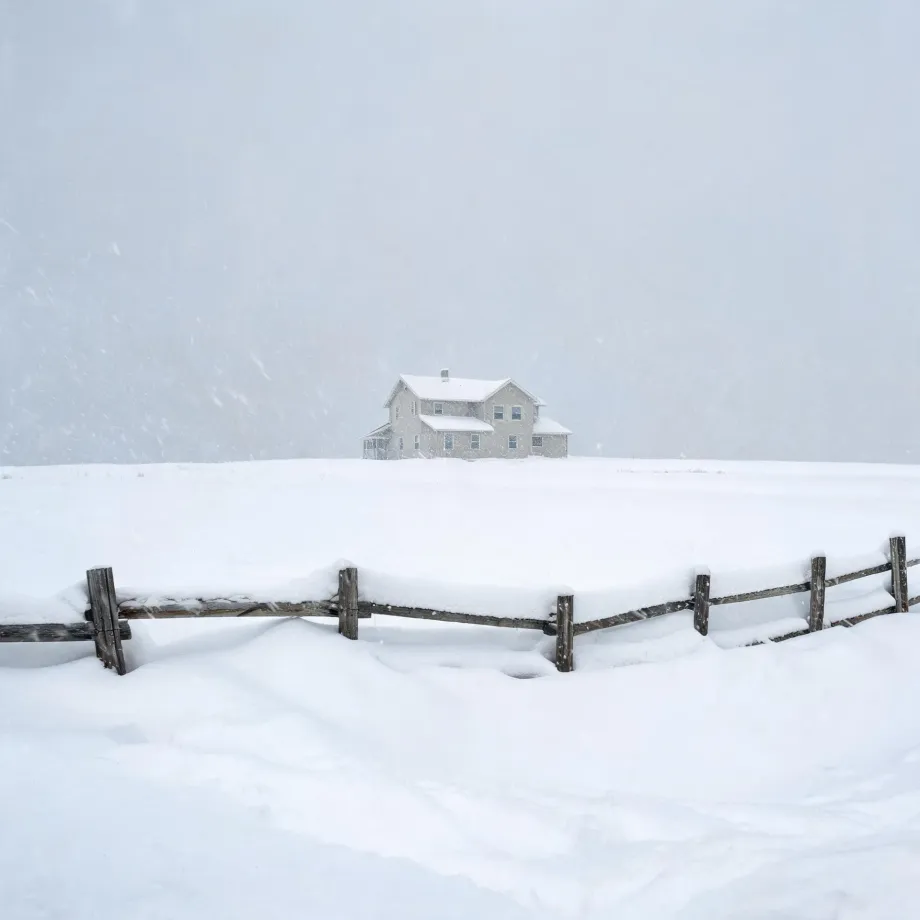
Sizing a heat pump for this county starts with how far outdoor temperatures fall and how long they stay there. Homes in Cheyenne County, NE run heat about eight months a year, from October through May. A heat pump loses heating capacity as temperatures drop, so a unit that performs well in mild weather may hand off to its backup resistance strips for weeks at a stretch when January sets in. The contractor calculating load here has to set the balance point, the outdoor temperature at which backup heat takes over, before a unit can be correctly specified. Get that threshold wrong and the backup strips carry more of the season than the equipment budget counted on.
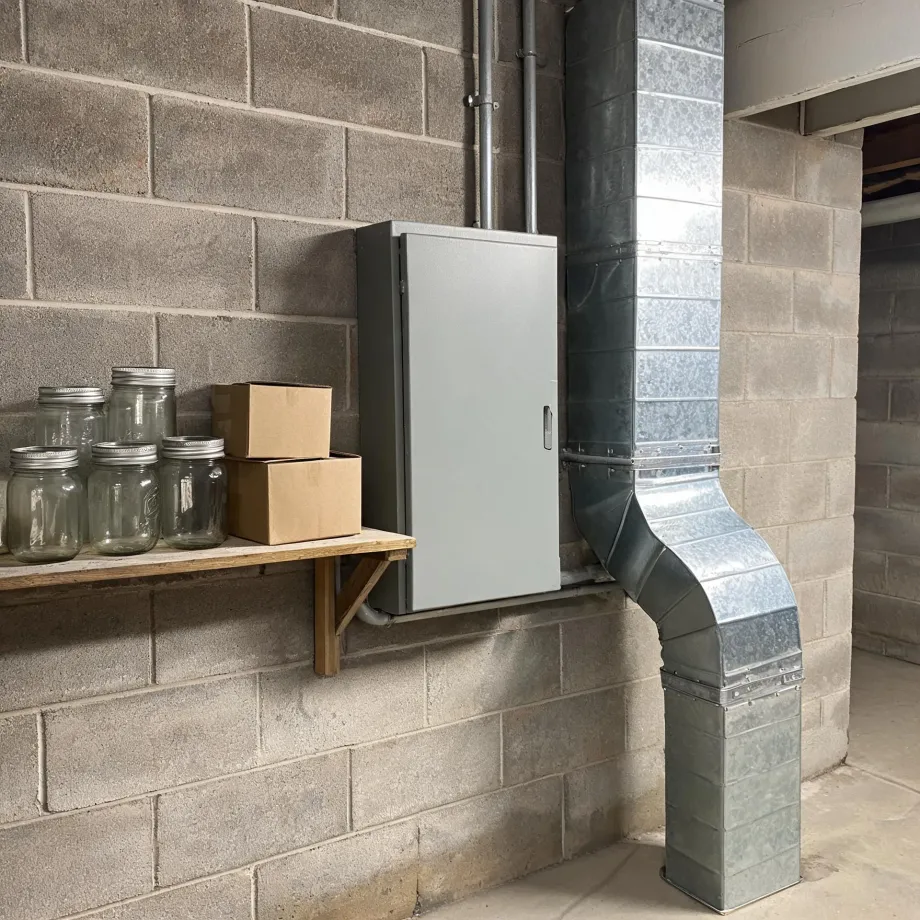
Ductwork sized and routed for older heating equipment does not move air the way a heat pump needs it to, and a contractor quoting a new installation has to assess that before the equipment conversation starts. Half the homes in Cheyenne County, Nebraska were built in 1957 or earlier (2020-2024 ACS 5-year). That era of construction also means service panels were not sized with an electric heat pump's draw in mind, so electrical capacity is the second thing a contractor opens up and checks. What a house already contains along those two lines is where the job either straightens out or gets complicated.
What Gets Installed With a New Heat Pump
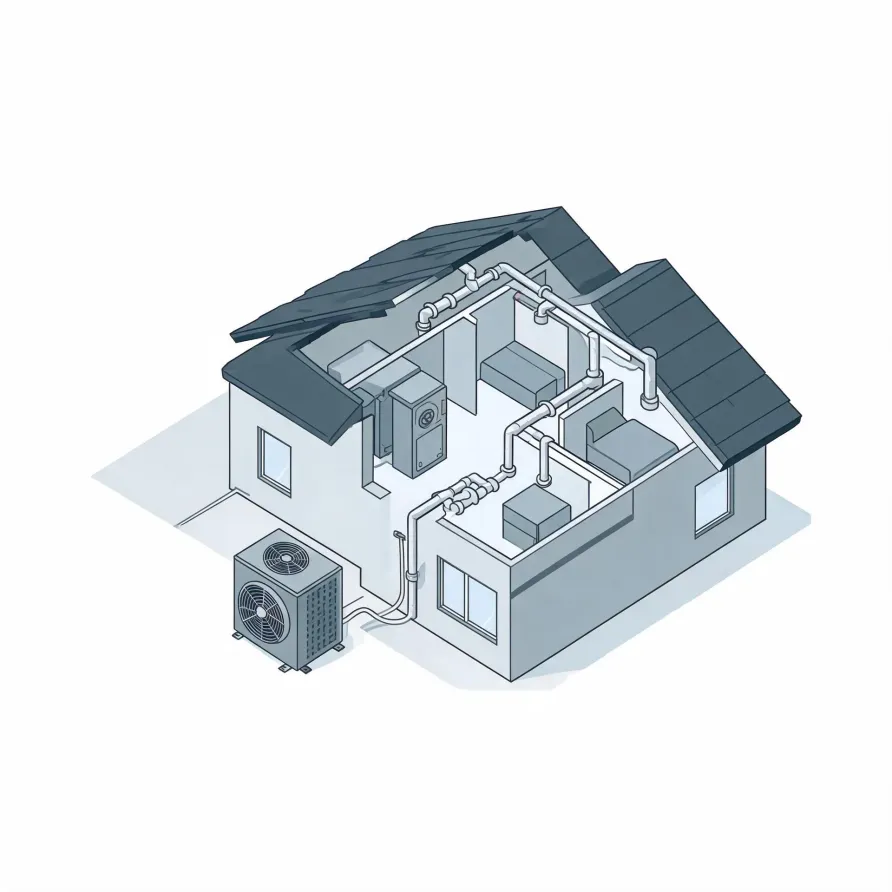
The outdoor unit is the piece a homeowner sees first: a metal cabinet set on a concrete pad outside the house, housing the compressor and the coil that exchanges heat with the outside air. Inside, the air handler mounts in a utility space, closet, or attic and circulates conditioned air through the home.
A refrigerant line set runs between the two units, carrying refrigerant through insulated copper tubing along the exterior wall and into the house. A thermostat goes on an interior wall and gives the homeowner control over the whole system.
The drawing shows a typical layout, and a licensed contractor determines what fits the specifics of this house.
Get matched in Cheyenne CountyCheyenne County, Nebraska, by the numbers
291 severe weather events were recorded in Cheyenne County, Nebraska between 2015 and 2024.
NOAA National Centers for Environmental Information, Storm Events Database, bulk CSV export, events 2015-01-01 through 2024-12-31.Half the homes in Cheyenne County, Nebraska were built in 1957 or earlier (2020-2024 ACS 5-year).
U.S. Census Bureau, 2020-2024 American Community Survey 5-Year EstimatesCheyenne County, Nebraska holds 4,888 housing units (2020-2024 ACS 5-year).
U.S. Census Bureau, 2020-2024 American Community Survey 5-Year EstimatesOwners occupy 66.7% of the occupied homes in Cheyenne County, Nebraska (2020-2024 ACS 5-year).
U.S. Census Bureau, 2020-2024 American Community Survey 5-Year EstimatesHeat Pump Installation Rules for Cheyenne County, Nebraska1 sourced standards and codes
Licensing Rules for HVAC Work in Cheyenne County, Nebraska
Nebraska requires registration rather than a licence: a contractor must be registered with the Department of Labor before performing any construction work, though anyone earning less than five thousand dollars a year from construction services is not a contractor under the Act at all.
Severe Weather Events in Cheyenne County
Weather in this part of Nebraska puts real demands on heating and cooling equipment, shaping how hard a heat pump works and how long its components last. That load is local, which is why equipment choices and installation decisions here are not the same as they are elsewhere.
291 severe weather events, 2015–2024. Source: NOAA National Centers for Environmental Information, Storm Events Database.