Tell us about the job
Takes about a minute. No obligation.

A contractor quoting a heat pump install in Dundy County has to settle two questions before anything else: what the coldest outdoor temperatures here do to the compressor's capacity, and whether a backup heat source is sized to cover the gap. Homes in Dundy County, NE run heat about eight months a year, from October through May. Through that stretch, outdoor temperatures drop well below the range where a heat pump moves heat efficiently on its own, so the backup element or furnace is not an afterthought on the spec sheet. A contractor who skips a proper load calculation leaves the homeowner with a system that leans on resistance heat through the coldest weeks, running up bills the original quote never reflected.
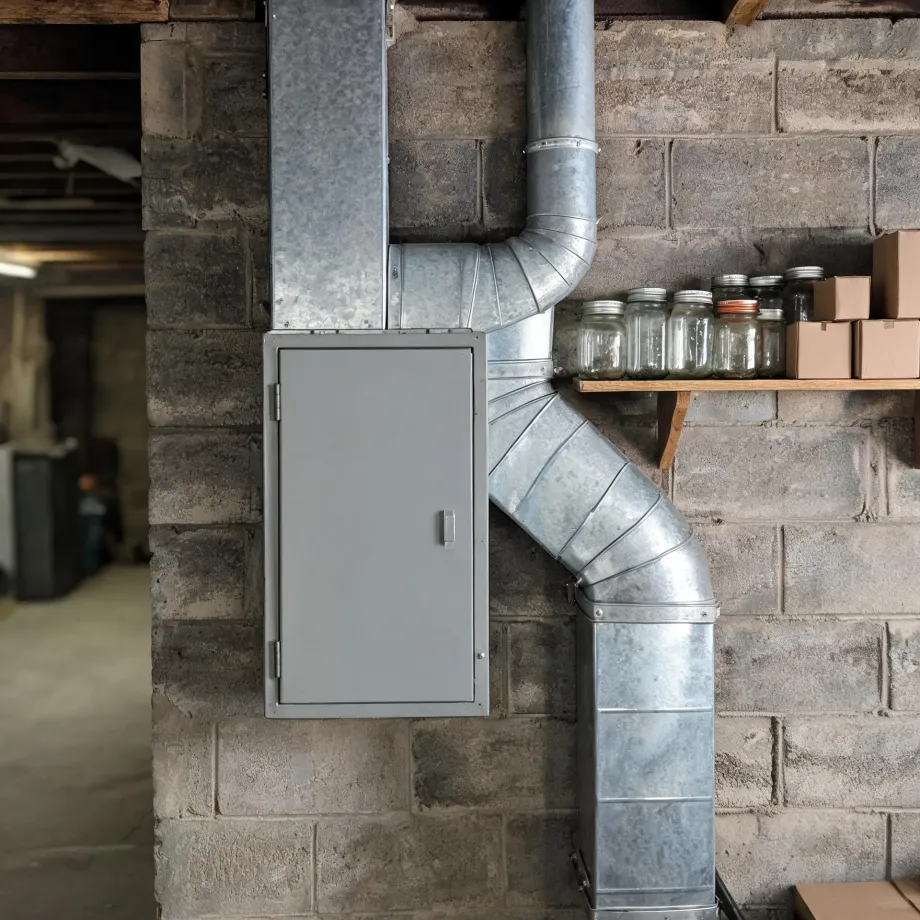
Ductwork sized and routed for a different era of heating does not automatically carry what a heat pump needs. Half the homes in Dundy County, Nebraska were built in 1948 or earlier (2020-2024 ACS 5-year). That vintage of construction means duct runs, trunk sizes, and return configurations were laid out for furnaces, not for the lower-temperature, higher-volume airflow a heat pump delivers. A contractor assessing a house here opens the duct system before anything else, because that is where the install either works on its budget or grows past it. The electrical service follows the same logic: panels from that period were not sized for modern heat pump loads, and what is already there sets what a licensed electrician has to add or replace before the unit goes in.
What Gets Installed With a New Heat Pump
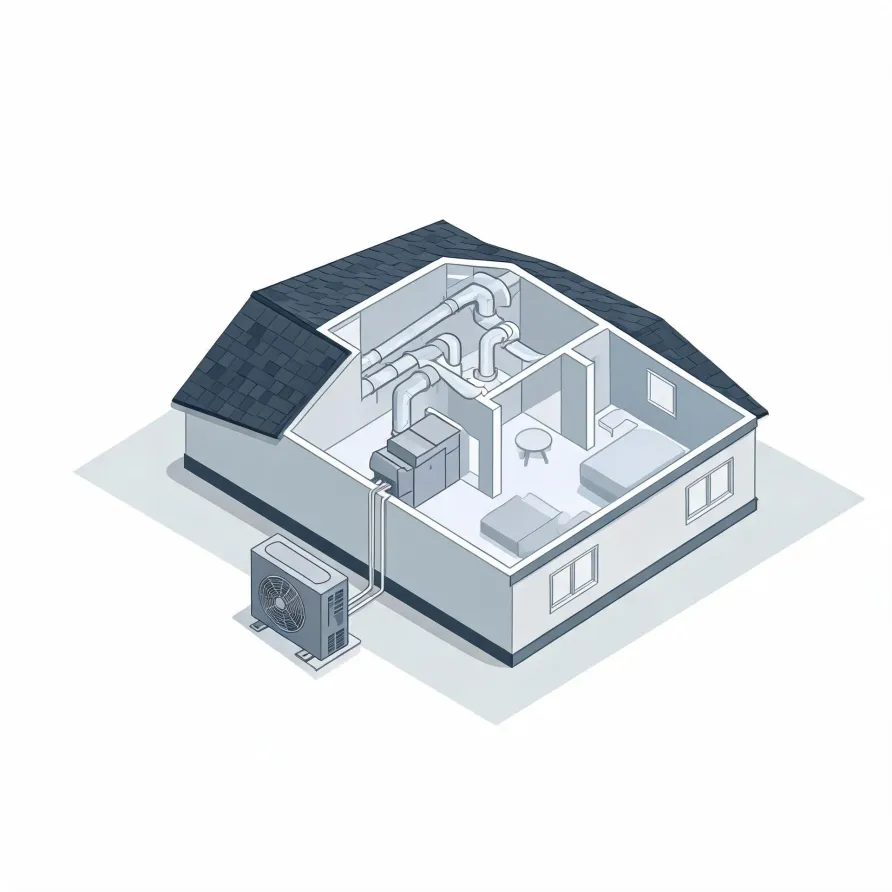
The outdoor unit is the piece a homeowner sees first, sitting on a concrete pad or bracket outside the house. It holds the compressor and the coil that exchange heat with the outside air. Inside, the air handler mounts in a mechanical room, closet, or attic and moves conditioned air through the home.
A refrigerant line set runs between the two units, connecting them through a small penetration in the wall. A thermostat goes on an interior wall where it reads the home's temperature and tells the system when to run. Some installs also include a supplemental electric resistance strip inside the air handler for backup heat.
The drawing shows a typical layout, and a licensed contractor determines which components and configurations apply to this specific house.
Get matched in Dundy CountyDundy County, by the numbers
184 severe weather events were recorded in Dundy County, Nebraska between 2015 and 2024.
NOAA National Centers for Environmental Information, Storm Events Database, bulk CSV export, events 2015-01-01 through 2024-12-31.Half the homes in Dundy County, Nebraska were built in 1948 or earlier (2020-2024 ACS 5-year).
U.S. Census Bureau, 2020-2024 American Community Survey 5-Year EstimatesDundy County, Nebraska holds 995 housing units (2020-2024 ACS 5-year).
U.S. Census Bureau, 2020-2024 American Community Survey 5-Year EstimatesOwners occupy 73.6% of the occupied homes in Dundy County, Nebraska (2020-2024 ACS 5-year).
U.S. Census Bureau, 2020-2024 American Community Survey 5-Year EstimatesHeat Pump Installation Rules for Dundy County, Nebraska1 codes, standards, and laws
What Dundy County, Nebraska Requires for HVAC Installation
Nebraska requires registration rather than a licence: a contractor must be registered with the Department of Labor before performing any construction work, though anyone earning less than five thousand dollars a year from construction services is not a contractor under the Act at all.
Severe Weather History in Dundy County
What the sky does here shapes how hard heating and cooling equipment has to work, and how long it lasts. A heat pump sized and installed for local conditions holds up better than one spec'd without that picture in mind.
184 severe weather events, 2015–2024. Source: NOAA National Centers for Environmental Information, Storm Events Database.