
Best heat pump setting for a Nebraska winter
Leave your thermostat on one setting and let the heat pump run, instead of bumping it up and down through the day. In a Nebraska winter, a heat pump that gets asked to catch up fast will lean on its backup heat strips to do it, and those cost more to run than the compressor does. Set it once in the morning, around 68, and leave it there. When the temperature outside drops into the teens and below, which happens plenty here, the unit may ice over and need to run a defrost cycle. That's normal. What isn't normal is the outdoor coil staying frosted over for hours, or the system running nonstop without warming the house. Since most homes here heat with gas furnaces, a heat pump working alongside one needs its switchover point checked so it isn't fighting the furnace or leaning on backup heat when the furnace would do the job for less.




Steady Hold vs Setback Schedule
Steady hold
- The heat pump runs longer stretches at a lower output, which is the kind of load it's built to carry most efficiently.
- Backup heat strips stay off because the system never has to make up a big temperature gap in a hurry.
- The indoor temperature stays even through the day instead of drifting down and then overshooting on the way back up.
- Since power is cheap here, the heat pump itself is already a cheap way to run the house, and a steady setting keeps it that way.
- A thermostat that isn't cycling through wide swings puts less strain on the compressor over a Nebraska winter.
Setback schedule
- Dropping the temperature overnight or while you're out saves the heat pump from running at all during that stretch.
- Getting the house back up to temperature fast is exactly what triggers the backup strips, since the heat pump alone recovers too slowly for most people's patience.
- Those strips are electric resistance heat, so the recovery period can cost more than the hours of lower output it was supposed to save.
- Most homes here heat with gas furnaces, and a gas furnace doesn't have this tradeoff, so a setback schedule means something different for a heat pump.
- A wide setback also means the system spends part of each day working to catch up rather than just keeping pace.

You set one steady temperature and leave the thermostat alone.
The outdoor unit pulls heat from the cold air outside.
A compressor moves that heat into the refrigerant line.
Warm refrigerant carries the heat to the indoor coil.
Why does your heat pump feel like it's barely keeping up?
You turn it down at night and back up in the morning, and that's when you notice it: the air coming out doesn't feel as warm, and it runs and runs without the house catching up. Some mornings you hear a second sound kick in under the usual hum, the backup heat strips picking up the slack the heat pump can't cover fast enough in single-digit cold. That costs more to run every time it happens. Left alone through a Nebraska winter, a system that's constantly chasing a temperature swing wears on itself harder than one holding steady, and a unit already due for maintenance is the one most likely to struggle on the coldest mornings.

Why the outdoor coil needs airflow
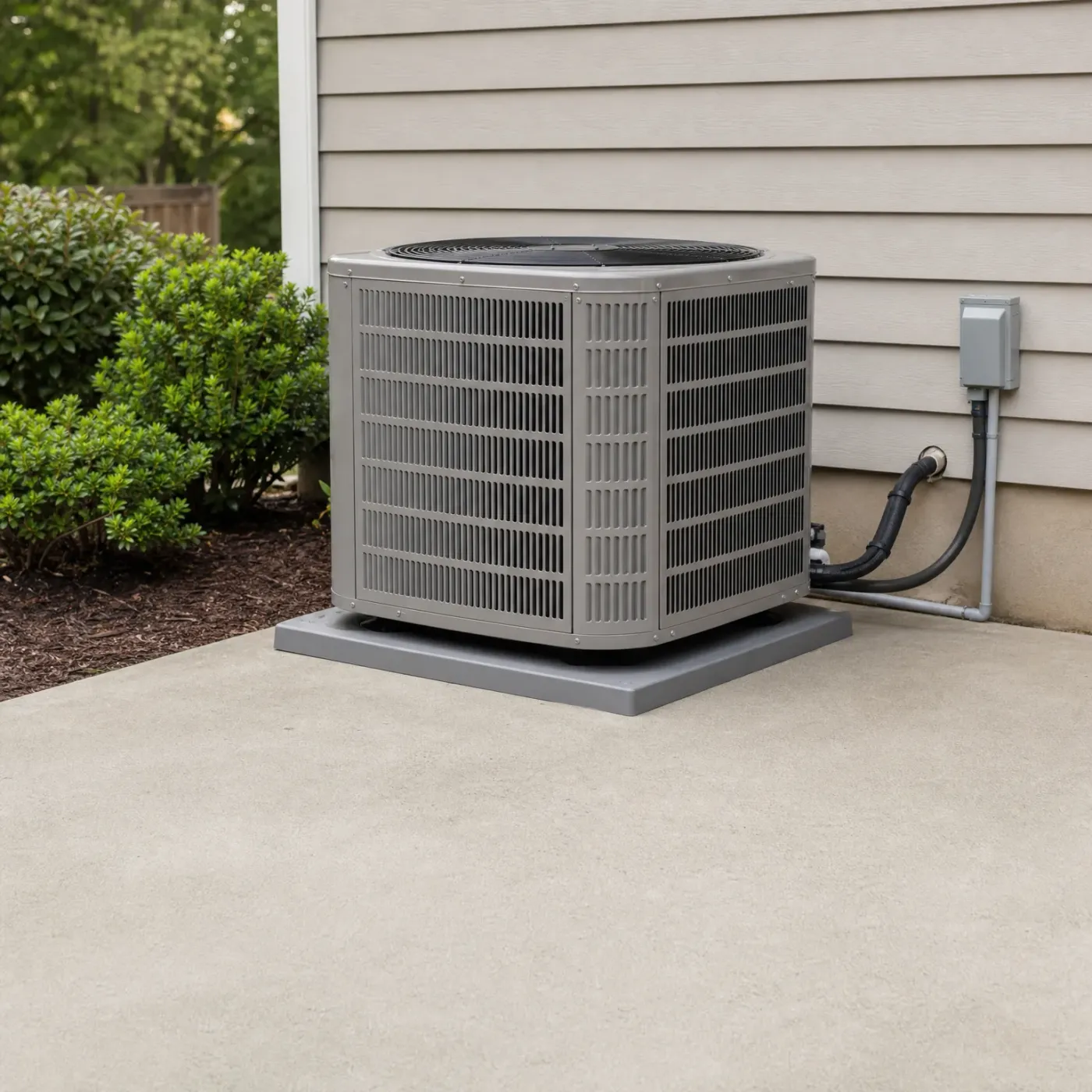
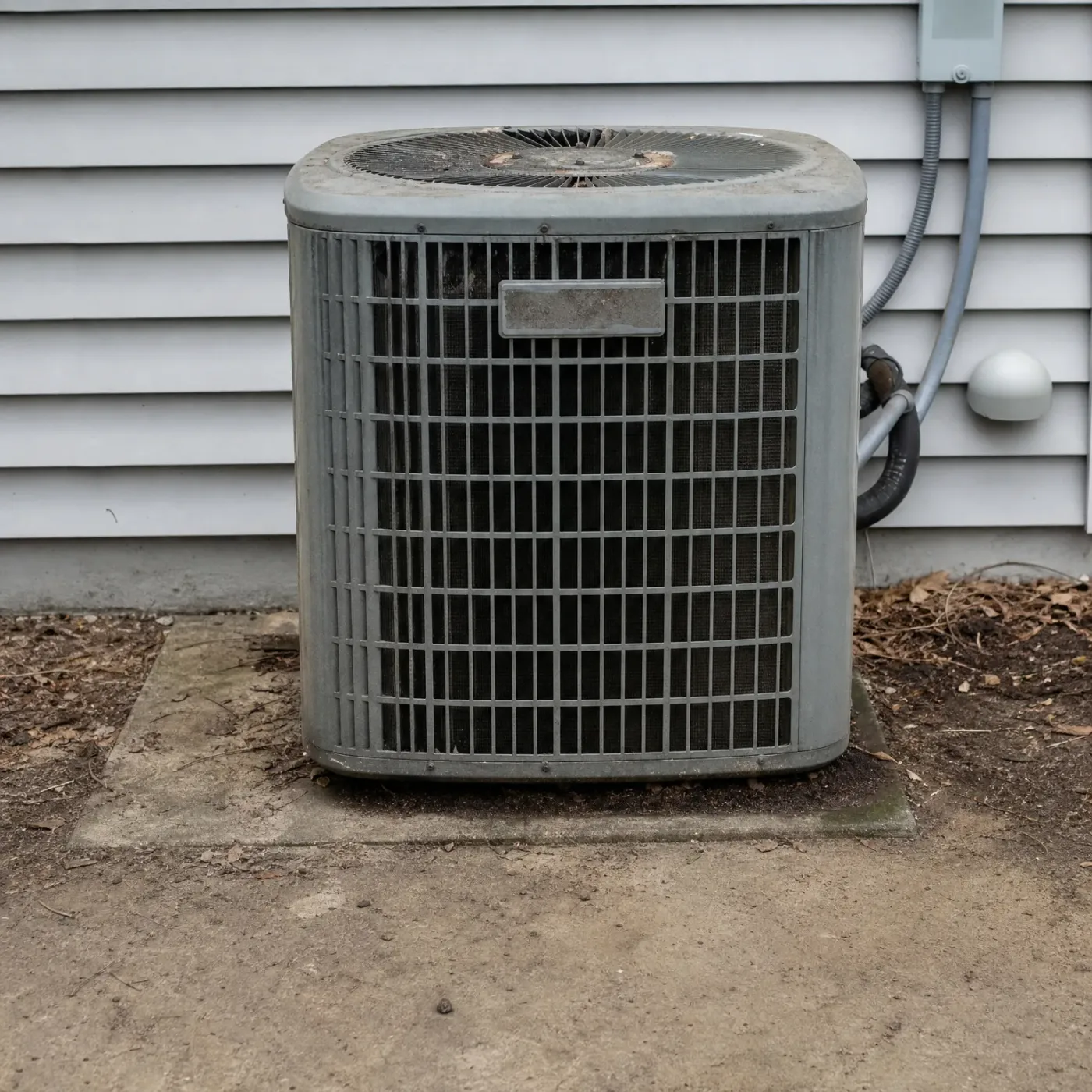
The outdoor unit pulls heat from the air even when it's cold outside, and it does that through a coil that has to stay clear. Ice forms on that coil during a Nebraska winter, and the system runs a defrost cycle to clear it. If the coil is coated in dust or the fins are bent flat, defrost takes longer and backup heat strips kick on more to cover the gap. A contractor who services heat pumps through the winter checks that coil and the airflow around it before the cold sets in.

What a steady setting asks of the filter
Running the heat pump on one steady hold means it moves air almost continuously instead of in short bursts, and all of that air passes through the filter. A filter clogged with dust makes the system pull harder to move the same amount of air, which shows up as longer run times and more strain on the compressor. Checking the filter is a small part of a maintenance visit, but it has a direct effect on how hard the unit has to work to hold that one temperature you set.
Power costs 12.05 cents per kilowatt-hour statewide
At 12.05 cents a kilowatt-hour, running the backup strips is the expensive part of your bill, not the heat pump itself. Holding one steady setting keeps the compressor doing the work instead, which is the cheaper way to heat your house.
EIA-861 2025 statewide residential average


Skip calling around
A heat pump that's never been serviced will still run on a steady setting, but a dirty outdoor coil or a low refrigerant charge makes the compressor work harder to pull the same heat out of cold air, and that's what pushes the backup strips on even when you've stopped touching the thermostat. Most people in this situation have already tried setting it and leaving it alone, and still end up calling around for someone who actually works on heat pumps, not just furnaces, since most homes around here heat with gas and not every contractor sees this equipment often. That means explaining the ice on the outdoor unit, the short cycling, the rooms that won't catch up, more than once to more than one company, then sitting with a stack of quotes you can't really compare because you don't know what any of them checked. A local contractor who services heat pumps through a Nebraska winter knows what tends to fail first in this cold and can look at yours instead of a general description of one.
One setting, checked once a year
- One steady setting all winter keeps your compressor doing the work instead of the backup strips.
- A heat pump that's never been checked still runs this way, but a dirty coil or low charge makes it lean on backup heat sooner.
- Someone who services heat pumps in Nebraska all winter knows which part usually fails first in cold like this.
- A local contractor who works on your equipment every season can spot a weak coil or a low charge before it costs you on the bill.
- One contractor means one visit and one answer, not several companies calling back with different opinions.
- The setting is free to change tonight, and what keeps it working through January is the coil, the charge and the defrost cycle underneath it.
Pick a temperature and leave the thermostat there through the winter. That part costs nothing and you can do it tonight. What decides whether it actually keeps your bill down is the equipment underneath the setting, the coil, the refrigerant charge, the defrost cycle, and those don't fix themselves. A dirty coil or a low charge makes the compressor strain to pull the same heat out of cold air, and the system reaches for the backup strips sooner than it should, even with the thermostat held steady.
That's where someone who services heat pumps in Nebraska winters earns the call. A contractor who works on this equipment every season through weather like this has seen which part usually gives out first in the cold, and knows what a struggling compressor sounds like before it shows up as a jump in your bill. A local contractor can check the coil and the charge, confirm the defrost cycle is doing its job, and tell you straight whether your system is running the way it should or leaning on backup heat more than it needs to.
You get matched with one contractor, not a handful of companies competing for the job. That means one visit, one person looking at your actual equipment, and one answer, instead of sorting through callbacks and comparing quotes from strangers who haven't seen your unit. The setting is the easy part. What happens underneath it, for the rest of the winter, is the part worth having someone look at.





Describe it once
Your request goes to one pro, not a list of companies.
No charge to send it. You decide if you hire them.